
Why Churches Plateau (And What It’s Really Telling Us)

Every church has a life cycle. Like any living organism, it moves through recognizable stages: birth, growth, plateau, decline, and, if nothing changes, death. This is not meant to be discouraging; it is simply reality. The important distinction is that while every church will experience plateau at some point, no church is meant to remain there. Plateau is not a destination. It is a transition point, and if it is not addressed, it will eventually give way to decline.

That is why plateau matters so much. It is not just a phase to endure but a signal to interpret. By the time a church recognizes that growth has stalled, deeper issues have usually been forming beneath the surface for quite some time. The plateau is revealing something about the health, alignment, and direction of the church.

If we want to lead renewal, we have to pay attention to what that signal is telling us.

1. Direction Has Become Unclear

One of the most common realities in plateaued churches is a loss of clear direction, often tied to instability or inconsistency in leadership. Whether it comes through frequent pastoral transitions or shifting priorities among key leaders, the result is the same: momentum is interrupted and vision becomes diluted.

Each leadership change requires the church to recalibrate. Trust must be rebuilt, and vision is often reinterpreted rather than reinforced. Over time, the church becomes less focused on moving forward and more accustomed to managing transitions. The issue is not always the quality of leadership, but the lack of sustained, unified direction.

Plateau often reveals a church that is active but no longer aligned around a clear and compelling sense of where it is going.

2. Mission Has Been Replaced by Maintenance

Plateaued churches are rarely inactive. In fact, many are quite busy. The problem is not a lack of activity but a shift in focus. Energy begins to move inward, toward maintaining programs, meeting internal expectations, and preserving what already exists.

Fellowship and community, which are essential to church life, gradually take precedence over mission. The church becomes more concerned with caring for those who are already present than reaching those who are not. This shift is rarely intentional, but it is significant. Invitations decrease, fewer new people are reached, and stories of life change become less frequent.

What plateau reveals in this case is a subtle but important redefinition of success. Stability begins to matter more than transformation, and maintenance quietly replaces mission.

3. Effectiveness Is No Longer Evaluated

As churches move out of a growth phase, there is often a tendency to rely on what has worked in the past without asking whether it is still working in the present. Programs, events, and structures continue, not because they are producing fruit, but because they are familiar and have a history of success.

The issue is not tradition itself, but the absence of evaluation. Healthy, growing churches continually ask whether their methods are still effective in reaching people and making disciples. Plateaued churches, on the other hand, often assume effectiveness and focus their energy on sustaining existing systems.

This shift changes the questions leaders ask. Instead of evaluating impact, they begin preserving activity. Plateau reveals when a church has stopped measuring outcomes and started protecting what is comfortable.

4. Leadership Is Present but Not Empowered

Another common factor in plateaued churches is not the absence of leadership, but the diffusion of it. Decision-making often becomes overly complex, requiring broad consensus or multiple layers of approval. While collaboration is valuable, excessive consensus can slow momentum and dilute vision.

In these environments, it becomes difficult to act with clarity or urgency. New ideas take longer to implement, risk is minimized, and innovation is often quietly resisted by the system itself rather than by any one individual.

What plateau reveals here is a leadership structure that values agreement over advancement. Without clear and empowered leadership, even the best vision struggles to gain traction.

Plateau Is a Crossroads, Not a Conclusion

Every church will pass through plateau, but no church is meant to remain there. Left unaddressed, plateau naturally leads to decline, and decline, if ignored, eventually leads to death. The life cycle is predictable in that sense, but it is not irreversible.

Plateau is an opportunity for honest evaluation and intentional realignment. It exposes where direction has been lost, where mission has been replaced, where effectiveness is no longer measured, and where leadership has become constrained.

Renewal begins when those realities are acknowledged and addressed with clarity and courage.

Churches do not drift into renewal. They choose to realign before decline takes hold.

When Faithful People Leave: Understanding “Scaffolding” in Church Revitalization

Revitalization rarely unfolds in a clean or linear way. It carries both burden and blessing, joy and heartbreak, momentum and resistance, often at the same time. One of the most difficult moments for any revitalization pastor is this:

Faithful, committed, generous people leave.

Not the fringe.
Not the disengaged.
But often those who stood with you at the very beginning.

A church I am currently working with has just walked through this, which made it feel like the right time to reflect on this important reality.

The Pain No One Warns You About

In every church, these individuals or couples often appear as a gracious provision from God.

They show up when things are uncertain and steady your resolve. They serve without hesitation, give generously, step into gaps others avoid, and consistently speak life into the vision.

During a fragile season of transition, they are not just helpful, they are often essential.

Which is why it cuts so deeply when they sit down and say, “We think it’s time for us to move on.”

For many leaders, the moment feels disorienting. It can even feel like betrayal.

But it may not be.

The Scaffolding Principle

Steve Sjogren and Rob Lewin, in Community of Kindness, offer a helpful framework for understanding this experience through what they call “scaffolding people.”

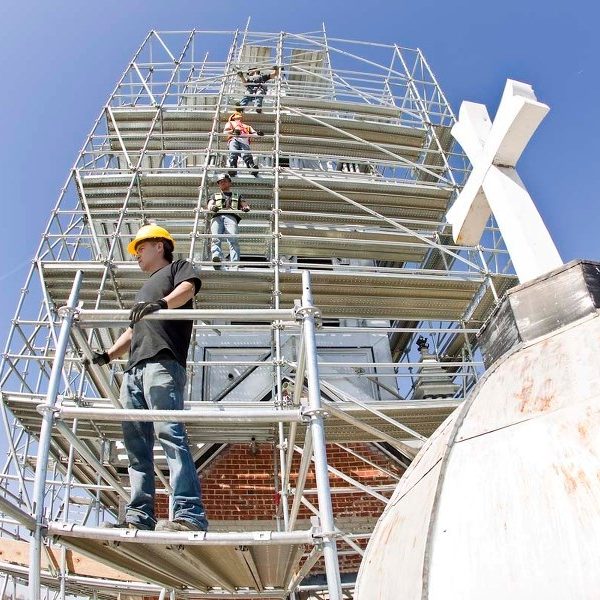
In construction, scaffolding plays a vital role. It provides the necessary support and access while a structure is being built. Yet it is never intended to remain. Once the building reaches a certain level of stability, the scaffolding is removed because it has fulfilled its purpose.

A similar pattern often unfolds in ministry.

Some people serve for a season rather than a lifetime. They offer strategic support rather than ongoing presence. They help build what is needed for a particular phase but are not assigned to remain for what comes next.

This is not a reflection of lesser commitment. It is a reflection of different callings within the unfolding work of God.

Scaffolding in Revitalization Contexts

While this principle is often discussed in the context of church planting, it is just as evident, and sometimes even more pronounced, in seasons of revitalization.

Why? Because transition tends to draw a particular kind of person.

These individuals are often energized by new leadership, responsive to changing environments, and eager for opportunities where they can contribute quickly and meaningfully. They step in with readiness and purpose, and for a time, they are exactly what the church needs.

It can be helpful to think of them as “home missionaries.” They invest their time, offer their gifts, give generously, and bring a level of energy that can accelerate momentum in critical moments.

Their impact is often catalytic.

But their assignment may not be permanent.

Why Their Departure Hurts So Much

The pain is not simply that they leave; it is rooted in what they represented.

These were people you trusted and relied on, people you assumed would be part of the long-term future. When they step away, it can feel as though something foundational has shifted, or even been lost.

It is often at this point that many pastors make a critical mistake by trying to hold on.

A Word of Caution: Don’t Cling to Scaffolding

When scaffolding people begin to step away, emotions can run high, and the instinct is often to persuade, convince, negotiate, or even recast the vision in an effort to keep them. Yet this response is rarely wise. In many cases, trying to hold on to people whose season is ending creates more harm than good over time.

The construction metaphor is helpful here. If scaffolding remains in place after the structure is complete, what once provided support can quickly become obstructive, misaligned, and even dangerous.

The same can happen in ministry. When people stay beyond their season, they can unintentionally shift from being a source of strength to a source of tension. At times, this shows up as resistance, misalignment with direction, or even attempts to redirect the vision itself.

What once functioned as a gift can, over time, become a burden.

How to Recognize Scaffolding People

You often identify scaffolding people in hindsight, but there are common characteristics:

  • They arrive already spiritually mature and ready to serve
  • They have a long history of involvement in multiple churches
  • They show loose denominational attachment
  • They demonstrate above-average generosity or hospitality
  • They speak frequently about the importance of belonging

That final characteristic is often the most revealing, especially when you listen carefully to how they describe their departure. Phrases like “I don’t feel important anymore” or “We’re looking for a place where we belong” are common.

These statements are not necessarily expressions of criticism. More often, they signal that their season of investment and alignment has come to a natural close.

A Better Way to Respond

When scaffolding people tell you they are leaving, your response carries weight, not only for them but for the overall health and culture of the church. How you handle this moment will shape how others understand both leadership and transition.

A more constructive approach begins with sincere gratitude. Take time to thank them for their friendship, their service, and the specific ways they contributed to the mission of the church. Naming what they brought brings clarity and honour to their role.

Where appropriate, it can also be helpful to affirm their contribution publicly. This reinforces a culture of appreciation and helps the congregation interpret their departure in a healthy way, framing it as a transition rather than a loss or abandonment.

Finally, release them with grace. Resist the urge to hold on. Instead, bless them, commission them, and trust that God is already at work in what comes next for them. At the same time, trust that God will continue to provide what your church needs for the season ahead.

Reframing the Narrative

Not everyone who comes is meant to remain, and not everyone who leaves should be understood as a loss.

Some are entrusted to you for a season of building, while others are called to help sustain what has been established.

Discernment in revitalization lies in recognizing the difference and responding accordingly.

Final Thought

If you find yourself in a season where key people are leaving, it does not necessarily mean something has gone wrong. It may be a sign that something is taking shape, that what was needed for a time has served its purpose.

In that sense, the scaffolding is coming down, and it is meant to.

What remains, and what God continues to build, was never intended to depend on it.


I am grateful to Rodney Harrison for first helping me see the importance of “scaffolding people.”

The Power of Positive Church Members in Revitalization

Every church that experiences renewal has one thing in common: people who believe God is not finished yet.

Positive church members are not just helpful, they are essential. They bring energy, unity, and forward momentum. They help a church move from maintenance to mission and from survival to impact. When a congregation is filled with people like this, revitalization becomes more than a strategy. It becomes a shared movement.

Every church will face moments of tension or hesitation. That is part of any meaningful change. But the deeper story of revitalization is not resistance. It is the steady influence of people who are committed to growth, aligned around the mission, and willing to move forward together.

I have had the privilege of walking through revitalization with people like this. Many are still serving today, continuing to build a church that is vibrant and life-giving. Their faithfulness has shaped the culture in lasting ways. They are a reminder that the strength of a church is not found in programs but in people.

As a church leader, one of your primary responsibilities is to cultivate that kind of culture. When you invest in positive contributors, you create an environment where the mission can flourish and where people can grow into all God has called them to be.

So what does that kind of person look like?

1. They understand and embrace the mission

Positive church members know why the church exists. They are not guessing or assuming. They have clarity, and that clarity shapes how they live and serve.

They filter opportunities, ideas, and decisions through the mission of the church. This keeps them focused and aligned. It also keeps the church from drifting into distractions.

When people understand the “why,” commitment deepens. Teaching and reinforcing the mission regularly helps everyone stay connected to what matters most. It creates unity and a shared sense of purpose.

2. They look for better ways to do ministry

Positive members are not content to coast. They are always asking how the church can grow, reach more people, and serve more effectively.

They think creatively and act constructively. They bring ideas, but they also bring solutions. They are willing to try, learn, and improve.

Leaders should pay close attention to these people. Develop them. Trust them with responsibility. Encourage them to bring others along. When positive people are empowered, they multiply influence and help carry the vision forward.

3. They work hard and remain teachable

There is a consistent pattern with people who strengthen a church. They show up, they serve, and they keep growing.

They ask questions like “What is next?” and “Who else can we reach?” They bring both effort and humility. They are willing to learn, adjust, and keep moving forward.

Their attitude becomes contagious. When people see joy in service and commitment in action, it raises the level of engagement across the church. Momentum begins to build because others are inspired to join in.

4. They think “we” instead of “me”

Positive church members see the church as a shared calling. They are not focused on personal preference. They are focused on collective mission.

They speak with encouragement. They support one another. They take responsibility for the health of the church, not just their own experience within it.

This mindset changes everything. A “we” culture fosters unity, strengthens relationships, and creates a sense of ownership. It positions the church to accomplish far more together than any individual could alone.


Moving Forward

Revitalization is not ultimately driven by plans or programs. It is carried by people.

When you invest in people who understand the mission, seek growth, work faithfully, and live with a team mindset, you are building a foundation for lasting renewal.

So consider a simple next step. Who are the positive people in your church right now? How can you encourage them, develop them, and give them meaningful responsibility?

Pour into those who are ready to move forward. As you do, you will begin to see something powerful take shape: a church filled with people who love Jesus, love His church, and are fully committed to His mission.

That is where real revitalization begins.

Plan for Problems and Obstacles in Church Revitalization

If you’re leading a church, you already know that good intentions alone don’t guarantee success. . Proverbs reminds us of this truth: “Don’t go charging into a battle without a plan.” (Proverbs 20:18 GNT) and “A sensible man watches for problems ahead and prepares to meet them. The simpleton never looks and suffers the consequences.” (Proverbs 22:3 LB).

When a congregation steps into renewal, good intentions and spiritual enthusiasm are essential—but they’re not enough. Revitalization requires disciplined planning and honest assessment of what may stand in the way.

Face the Hard Question

Ask yourself and your leadership team, “If this revitalization effort fails, it will be because…?”

Be brave enough to finish that sentence. The answers often reveal your greatest opportunities for growth. Perhaps the vision isn’t clearly shared. Maybe old leadership structures resist change. It could be fatigue, financial instability, or unaddressed conflict.

Identifying obstacles early isn’t pessimism—it’s preparation. By naming potential problems before they grow, leaders can meet challenges on their terms rather than letting crises dictate the timetable.

Meet Problems on Your Own Timetable

In revitalization, problems rarely disappear when ignored. They only wait for the moment when the church is weakest. A neglected issue—be it a strained relationship, unclear communication, or unrealistic timeline—eventually surfaces.

A wise leader chooses to meet problems proactively, not reactively. Preparing for obstacles means being ready to confront hard truths and pursue peace before stress and emotion take over.

Nobody Is 100% Successful

The journey of renewal is never linear. Even faithful leaders experience detours and disappointments. Moses faced rebellion halfway to the Promised Land. Nehemiah encountered opposition while rebuilding the wall. Jesus Himself faced misunderstanding and rejection in His ministry.

No revitalization effort is perfect, and no leader is flawless. But every challenge can become a moment of spiritual formation—an opportunity to deepen trust, refine vision, and strengthen unity.

Grace meets us not in uninterrupted success but in persistent faithfulness. Planning for problems ensures that when setbacks come, the church has resilience, support, and clarity to move forward in grace rather than collapse in frustration.


Practical Planning Steps for Church Revitalization

Here are five practical ways to plan for problems and obstacles in a revitalizing church:

  1. Name the barriers early. Before launching changes, gather your leaders to identify possible resistance points—tradition, trust gaps, or fatigue—and discuss strategies to soften their impact.

  2. Develop a contingency mindset. Set aside time and budget for the unexpected. Repairs, resignations, or resource challenges will arise. Planning margin prevents crisis-driven decision-making.

  3. Create “red flag” indicators. Watch for early warning signs of trouble—declining engagement, growing negativity, or communication breakdowns—and address them immediately.

  4. Build a resilient leadership circle. Surround yourself with spiritually mature leaders who can offer honest evaluation when your optimism outruns reality. Healthy collaboration is the best safeguard against burnout.

  5. Stay anchored in prayer and mission. Revitalization plans need spreadsheets and timelines, but they thrive on spiritual dependence. Problems shrink when the mission stays central and prayer remains constant.


Planning for problems doesn’t contradict faith—it strengthens it. Wise leaders prepare with realism and hope, trusting that obstacles are not interruptions but invitations to deeper growth. Every challenge becomes a chance to see God’s faithfulness at work, renewing both the people and the vision.

So as you guide your church through revitalization, resist the temptation to rush ahead. Pause, plan, and prepare. Problems will come, but they don’t have to win. A mission-rooted plan, guided by discernment and prayer, transforms obstacles into momentum for renewal.

“A sensible man watches for problems ahead and prepares to meet them.” (Proverbs 22:3, LB) — that’s not fear speaking. It’s faith with foresight.

Key Paths for the Local Church: Walking the Road to Renewal

“Go and make disciples of all nations… teaching them to obey everything I have commanded you.” — Matthew 28:19–20

One of the clearest signs of church decline is when the mission of making disciples quietly fades into the background. Programs take its place. Maintenance replaces mission. And before long, the church is busy doing many things—but not the main thing.

Revitalization begins when a church rediscovers its calling to make disciples and reengages the community with the love and power of Jesus Christ. Renewal is not just about better attendance or new paint on the walls—it’s about reigniting the purpose for which the church exists.

If your congregation is ready to walk the road of renewal, here are key paths that can help you find your footing again.


1. Place a Larger Emphasis on Disciple-Making

The heartbeat of the local church must always be disciple-making. Without it, we drift into maintenance mode. Teach your people that every believer is a disciple and every disciple is a disciple-maker.

When a church invests deeply in people—teaching them to know, love, and obey Jesus—spiritual life begins to flow again. Renewal starts with one disciple who says, “Yes, Lord. Use me.”


2. Show Your Faith in and to the Community (Acts 2:42)

The early church didn’t just believe in Jesus privately; they displayed His love publicly. They served, gave, and shared life together so that the watching world saw the gospel in action.

Renewal happens when faith becomes visible—when the church becomes known not just for its building but for its presence in the neighborhood.

Be the kind of church that if it closed tomorrow, your community would notice.


3. Share Your Life Within the Community (2 Corinthians 8:3–5)

Church vitality grows when believers give themselves away. The churches Paul commended didn’t just give their resources—they gave their lives.

Small acts of kindness, shared meals, and open homes become powerful evangelistic tools. When your people see community not as a crowd but as family, hearts start to awaken again.


4. Remember: The Church Is People (1 Thessalonians 2:8)

Buildings, programs, and budgets matter—but they are not the church. People are.

Renewal begins when leaders rediscover the joy of loving, mentoring, and walking with people. As Paul said, “We were delighted to share with you not only the gospel of God but our lives as well.”

People are not obstacles to renewal—they are renewal.


5. Equip Others for the Harvest

Every believer has a role in God’s mission. Pastors are not called to do all the ministry but to equip others for it (Ephesians 4:12).

When you help people identify their gifts and step into the harvest field, the church’s capacity for ministry multiplies. Renewal spreads faster when ministry moves from the pulpit to the pews.


6. Develop New Leaders for Leadership

New seasons require new leaders. Renewal-minded churches intentionally develop leaders who will take the next generation of ministry forward.

Mentor young believers. Delegate responsibility. Create space for others to lead. The future belongs to churches that make room for emerging voices and fresh energy.


7. Move from Self-Preservation to Self-Sacrifice

Many declining churches are stuck in survival mode—protecting what they have instead of investing it in what God is doing next.

Jesus didn’t call us to preserve our comfort but to carry our cross. Renewal happens when a church shifts from “What will keep us alive?” to “What will help others find life in Christ?”

Sacrifice always precedes resurrection.


8. Listen, Discern, and Respond to God’s Leading

It’s tempting to copy another church’s revitalization model. But the Spirit of God doesn’t do carbon copies. Renewal is contextual—unique to your people, your community, and your calling.

Don’t imitate someone else’s strategy; listen for the Lord’s voice. Pray. Discern. Obey. Renewal is not manufactured—it’s discovered in the presence of God.


9. Empower the Laity to Serve Others

A revitalized church is filled with active members who love, serve, and give themselves away. Create pathways for people to minister in real ways—serving meals, mentoring youth, praying for the sick, visiting neighbors.

When laity engage, the pastor is no longer a performer but a coach, and the whole church becomes the ministry team.


10. Face Your Reality with Honesty and Hope

Renewal starts with truth. Pretending things are fine when they’re not helps no one. Healthy churches face hard realities—decline, division, or drift—and invite God to transform them.

Truth is not an enemy of renewal. It’s the soil in which new growth takes root.


11. Rediscover Your Changing Mission Field

Look around your community. Who is there now that wasn’t twenty years ago? What has shifted culturally, economically, or spiritually?

Many churches don’t realize how much their neighborhood has changed. Renewal begins when we open our eyes to the mission field right outside our doors.


12. Help Your People Dream Again

Decline often suffocates imagination. Renewal breathes it back. Invite your people to dream about what God could do in your midst.

Ask: What if God gave us a fresh wind of His Spirit? What if we saw new believers, new families, new ministries rise up? The Holy Spirit uses sanctified imagination to stir faith.


13. Start Now

Don’t wait for perfect timing, more money, or better conditions. Renewal begins with one faithful decision—today.

Yes, revitalization is costly. It demands time, prayer, sacrifice, and teamwork. But the cost of doing nothing is far greater. The good news? You don’t have to walk it alone.

When pastors and lay leaders join hearts and hands, renewal becomes more than a dream—it becomes a movement.


Final Encouragement

Every church, no matter how small or struggling, can experience renewal when it commits to the mission of making disciples, loving people, and following Jesus boldly into the future.

The paths are clear. The harvest is ready. The question is—will we take the first step?

How to Conduct an Exegesis of Your Community

Most pastors are trained to exegete Scripture—but far fewer have been trained to exegete their community.

Yet if church revitalization is about joining God in His mission, then understanding the people and place you are called to serve is not optional. It is essential. You cannot faithfully apply the gospel where you have not carefully listened.

Community exegesis is the discipline of reading your context as attentively as you read the biblical text.


Why Community Exegesis Matters

Too many churches operate on assumptions:

  • “This is a family community.”
  • “People here aren’t interested in church.”
  • “We’ve always done it this way because it works here.”

The problem is not that these statements are always wrong—it’s that they are often untested.

In a Canadian context shaped by post-Christendom realities, shifting demographics, and increasing spiritual ambiguity, assumptions are one of the fastest paths to irrelevance.

Community exegesis helps you move from:

  • Assumption → Insight
  • Activity → Alignment
  • Presence → Mission

What Is Community Exegesis?

Community exegesis is the intentional process of:

Observing, interpreting, and discerning what God is already doing in your local context so you can join Him effectively.

Just as biblical exegesis asks:

  • What does the text say?
  • What does it mean?
  • How should we respond?

Community exegesis asks:

  • What is happening in our community?
  • What does it reveal about people’s lives, struggles, and openness?
  • How should we engage missionally?

Community exegesis is not a one-time project; it is a way of leading. Missional leaders cultivate congregations that keep listening, keep learning, and keep repenting of assumptions that place the church at the centre instead of Christ’s mission. Over time, this posture forms a people who can say, with integrity, that they are not merely in their community but truly for it and with it.


Four Key Movements in Community Exegesis

1. Observation: See What Is Actually There

Start by disciplining yourself to see, not assume.

Walk your neighbourhood. Sit in local cafés. Visit parks, community centres, and gathering places.

Pay attention to:

  • Who is present (age, ethnicity, family structure)
  • When people gather (times, rhythms, patterns)
  • Where people naturally connect
  • What is missing (services, supports, community spaces)

You are not collecting data for a report—you are learning to see people as God sees them.


2. Listening: Hear the Stories Beneath the Surface

Data tells you what is happening. Listening tells you why.

Have intentional conversations:

  • With local business owners
  • With school staff
  • With community service workers
  • With residents in different life stages

Ask questions like:

  • “What are the biggest challenges people face here?”
  • “What do people worry about?”
  • “Where do people find support?”

In your context—especially if your church is engaging in family services or community aid—this step is critical. People will often reveal spiritual openness through personal struggle long before they express it in theological language.


3. Discernment: Identify Patterns of Receptivity

Not everyone is equally open to spiritual engagement at the same time.

As you exegete your community, begin to identify:

  • Transitions (new movers, new parents, retirees)
  • Tensions (financial stress, relational breakdown, health crises)
  • Connections (networks, relational clusters, influencers)

These are not opportunities to exploit—they are invitations to serve wisely and compassionately.

Discernment asks:

Where is God already softening hearts?


4. Alignment: Shape Ministry Around Reality

This is where many churches fail.

They gather insight—but continue with the same programming.

Community exegesis must lead to action:

  • Adjust ministries to meet real needs
  • Create “side doors” for connection (relational entry points beyond Sunday)
  • Reallocate resources toward areas of receptivity
  • Evaluate every ministry through a simple lens:
    Does this help us engage our actual community?

If not, it may need to be reworked—or released.


Common Mistakes to Avoid

1. Treating It as a One-Time Project

Your community is always changing. Exegesis must be ongoing.

2. Over-Relying on Demographics Alone

Statistics are helpful—but they do not replace relationships.

3. Confusing Activity with Effectiveness

Busy churches are not necessarily fruitful churches.

4. Ignoring What You Discover

Insight without implementation leads to stagnation.


A Simple Framework to Start

If you need a place to begin, use this four-question diagnostic:

  1. Who lives here?
  2. What are they going through?
  3. Where do they naturally gather?
  4. How can we serve and engage them meaningfully?

Work through these questions with your leadership team. Then revisit them regularly.


Final Thought

You would never preach a sermon without first studying the text.

Why would you lead a church without studying your community?

Community exegesis is not a technique—it is a posture.

It is the decision to slow down, listen deeply, and align your church with the real lives of the people God has placed around you.

And when you do, you will begin to see something shift:

Not just better strategy—
but clearer participation in the mission of God.


Ready to Take the Next Step?

If your church is ready to move beyond assumptions and begin aligning your ministry with your actual community, Mission Shift can help.

We work with pastors and leadership teams to:

  • Diagnose community realities
  • Identify points of receptivity
  • Build actionable revitalization strategies

Let’s help you read your community—and respond with clarity and confidence.

Having a Church Planting Mindset in Revitalization

When churches begin the journey of revitalization, the conversation often focuses on survival.

Leaders ask questions like:

  • How can we attract new people?
  • How can we rebuild ministries that have faded away?
  • How can we stabilize attendance and finances?

These are understandable concerns. When a church has been declining, survival feels urgent.

But revitalization requires more than survival thinking.

It requires a shift in mindset.

One of the most powerful shifts a church can make is moving from a maintenance mindset to a church-planting mindset.

This does not necessarily mean immediately launching a new congregation. Rather, it means embracing the same missional posture and multiplication thinking that healthy church plants often possess.

A Biblical Vision for Growth

Ephesians 4:7–16 gives us a clear picture of how the church is meant to grow.

Christ gives leaders—apostles, prophets, evangelists, pastors, and teachers—to equip God’s people for works of service so that the body of Christ may be built up until it reaches maturity.

Notice the emphasis.

The church grows when people are equipped, when every member contributes, and when the body builds itself up in love.

Healthy churches are not built around a few people doing ministry while everyone else watches. They are communities where every part does its work.

This is exactly the kind of culture that church plants often develop from the beginning.

What a Church Planting Mindset Looks Like

Church plants usually start with limited resources, small numbers, and uncertain futures. Yet many of them thrive because they share a common mindset.

They think missionally.

They are willing to experiment.

They expect everyone to contribute.

They focus outward rather than inward.

When a revitalizing church adopts this mindset, something begins to change.

Instead of asking, “How do we maintain what we have?” leaders begin asking, “How do we reach the people around us?”

That shift is transformational.

Four Questions Every Church Should Ask

A helpful framework for thinking about revitalization and growth is to ask four simple questions.

1. Why Do People Come?

People usually come because something attracts them.

It might be the preaching, the worship, the children’s ministry, or the warmth of the congregation.

Attraction is not a bad thing. In fact, it reflects the incarnation principle—the church engaging its community in meaningful ways so that people encounter Christ through His people.

But attraction alone is not enough.

2. Why Do People Stay?

People stay when they find involvement.

Visitors become participants when they build relationships, find meaningful ways to serve, and discover a sense of belonging.

Healthy churches move people quickly from spectators to participants.

3. How Does a Church Become Healthier?

Church health grows through reproduction.

Disciples make disciples.

Leaders develop new leaders.

Ministries raise up new ministries.

A church that reproduces spiritually is a church that is becoming healthier.

4. How Does a Church Grow Exponentially?

Exponential growth happens through multiplication.

This is where the church-planting mindset becomes so important.

Instead of thinking only about growing one congregation, the church begins to think about expanding the mission of Christ into new places and among new people.

Multiplication may include:

  • launching new ministries,
  • starting new gatherings,
  • planting new congregations,
  • or partnering with others to reach new communities.

Why a Church Planting Mindset Revitalizes Churches

Interestingly, many declining churches rediscover life when they begin thinking like church planters.

Why?

Because a church-planting mindset shifts the focus outward.

It restores a sense of mission.

It raises up new leaders.

It inspires faith and vision.

When a church begins asking, “Who else needs the gospel in our community?” the entire culture begins to change.

Energy replaces complacency.

Vision replaces nostalgia.

Mission replaces maintenance.

From Preservation to Mission

Many churches spend enormous energy trying to preserve the past.

But revitalization is not primarily about preserving what once was.

It is about rediscovering why the church exists in the first place.

The church was never meant simply to gather people together. It was meant to send them into the world with the gospel.

When a church adopts a church-planting mindset, it begins to rediscover that calling.

A Final Thought

If your church is in decline, planting another church might feel unrealistic.

But adopting a church-planting mindset is not unrealistic at all.

In fact, it may be the very thing that restores life to your congregation.

Because sometimes the path to renewal begins when a church stops asking,

“How do we keep what we have?”

and starts asking,

“Where is God calling us to multiply?”

Building the Right Team for Church Renewal

One of the quieter—but very real—challenges in church revitalization involves staff who are no longer able to carry the ministry forward.

Most churches attempting revitalization are already operating on very tight budgets. Resources are limited, giving is often declining, and every dollar must be used wisely. Yet in many situations, leaders find themselves in a difficult position: they are paying staff members who are simply not equipped to do the work the church now requires.

This is rarely a simple problem.

The Legacy Staff Challenge

In many declining churches, staff members have served faithfully for years—sometimes decades. They were hired during a different season of the church’s life when the expectations of their role were much different.

Take a common example.

A church secretary may have faithfully produced the weekly bulletin for twenty years. In that era, the bulletin was the primary communication tool of the church. But today, communication looks very different. Churches need websites, social media engagement, digital newsletters, online registration, and other forms of communication that didn’t even exist when that secretary began the job.

The challenge is not about loyalty or dedication.

The challenge is capacity and training.

If someone has spent twenty years typing a bulletin but has little understanding of websites, media, or digital communication, the church may struggle to move forward in a world where those skills are now essential.

It Isn’t Only Administrative Staff

While administrative roles often highlight this challenge, it must also be said that pastoral staff can sometimes become a hindrance to revitalization as well.

Pastors and ministry leaders may have served faithfully for many years, but they may no longer have the energy, vision, or leadership capacity required for the difficult work of renewal. Revitalization requires courage, adaptability, and a willingness to lead people through significant change. Not every leader is prepared—or willing—to guide a church through that kind of journey.

In some cases, a pastor may be deeply loved by the congregation but resistant to the very changes the church must embrace in order to survive. When that happens, the revitalization effort can stall before it ever gains momentum.

This reality can be particularly painful because pastoral relationships are deeply personal. Yet the same principle still applies: leadership must align with the mission the church is trying to accomplish.

Why Change Is So Difficult

Making changes in these situations can be incredibly complicated.

Church staff members often have deep relational roots in the congregation. They may have family members, lifelong friendships, and strong supporters throughout the church. Their presence is tied not just to a job description but to relationships and shared history.

Because of this, replacing or restructuring staff can feel like pulling a thread in a tightly woven fabric. Leaders worry about upsetting people, damaging relationships, or creating conflict in an already fragile congregation.

In many cases, church leaders delay addressing the issue simply because the emotional cost feels too high.

The Cost of Avoiding the Problem

But ignoring the issue carries its own consequences.

When key positions are filled by individuals who are unable to meet the current demands of ministry, the church’s progress slows—or stops altogether. New initiatives struggle to gain traction. Communication falters. Opportunities are missed.

In a revitalization setting, where momentum is already difficult to build, ineffective staffing can quietly stall the entire process.

Churches trying to move forward often find themselves trapped between two competing realities: they do not want to disrupt the relationships that hold the church together, yet they desperately need new energy, new skills, and new leadership capacity.

Navigating the Tension

Addressing this issue requires both wisdom and compassion.

Revitalization leaders must remember that the people involved are not problems to be solved—they are individuals who have often served faithfully for many years. Their contributions to the life of the church should be honoured and respected.

At the same time, revitalization demands honest evaluation. Churches must ask whether current staff structures actually support the mission they believe God is calling them toward.

Sometimes the solution may involve training and development, helping long-serving staff members learn new skills.

Sometimes it means restructuring roles so that people can serve in areas where their gifts are strongest.

And occasionally, it may require the difficult step of bringing in new leadership capacity to move the church forward.

Honouring the Past While Preparing for the Future

Church revitalization is rarely comfortable. It involves difficult conversations, complex relationships, and leadership decisions that affect real people.

The goal is never to discard those who have served faithfully. Rather, the goal is to honour the past while preparing the church for the future.

Healthy churches understand that staffing must align with mission. When the needs of the mission change, the structure of the staff must sometimes change as well.

For revitalizing churches, the challenge is not simply finding new people.

It is finding the courage to build the right team for the season of ministry ahead.

8 Components That Hold Back Church Revitalization

Scripture: “Let us throw off everything that hinders and the sin that so easily entangles. And let us run with perseverance the race marked out for us.” — Hebrews 12:1

Church revitalization sounds inspiring—but anyone who’s been through it knows it’s a grind. It’s not just about fixing systems; it’s about confronting mindsets, habits, and unhealthy patterns that quietly choke the life out of a congregation.

They are the hidden weights that keep a church from regaining spiritual vitality and missional energy. Let’s take a closer look at some of the biggest ones.


1. A “We Can’t Do It” Mentality

Before a church can be revitalized, it has to believe that renewal is possible. Many congregations suffer from a collective low self-esteem—they’ve lost confidence that God can still do something new among them.

But the truth is: “God can do all things.” The problem isn’t God’s power; it’s our perspective. When people stop expecting God to move, they stop preparing for it. Faith must come before fruit.


2. A Church Unwilling to Work Hard

Revitalization is not for the lazy or faint of heart. A turnaround requires at least 3-5 years of hard work. Many churches say they want renewal, but few are willing to do the heavy lifting—prayer, outreach, discipleship, and culture change.

Church decline happens passively; revitalization requires passion and persistence.


3. Pastors Who Refuse to Lead

Not every pastor has the desire or skill to lead a turnaround. About 30% of struggling churches are revitalized by their current leader; the rest often need new leadership.

A revitalization pastor must be bold, visionary, and teachable—willing to lead with courage even when it means confronting stagnation and comfort zones. Leadership silence is a form of surrender.


4. A Closed Church Culture

If visitors feel unwelcome the moment they step into the building, revitalization is already in trouble. A church that isn’t friendly to outsiders becomes a closed system—slowly dying in its own familiarity.

Healthy churches open their doors and hearts to new people, understanding that God often sends revitalization through relationships.


5. An “Us vs. Them” Spirit

In many declining churches, long-time members—often the patriarchs and matriarchs—see revitalization as a threat. They fear that new people or new ideas will erase their legacy.

But real renewal doesn’t dishonour the past; it builds upon it. Wise leaders help legacy members see themselves as mentors, not gatekeepers, in the new season of ministry.


6. No Vision for the Future

Without a clear, Spirit-led vision, the church drifts. Many congregations suffer from vision fatigue—they’ve seen too many “plans” fizzle out.

Revitalization demands a fresh, compelling vision rooted in biblical mission, not personal preference. When people can see where God is taking them, they begin to move again.


7. Fear of Change

Change is hard, especially for churches that have been around for decades. But comfort is the enemy of growth. People often cling to old habits because change feels like loss.

Yet every act of renewal involves risk—and every risk is an act of faith. Churches that refuse to change end up preserving their traditions instead of advancing their mission.


8. Burnout and Apathy

Sometimes the greatest obstacle to renewal is exhaustion. Leaders and volunteers can only run so long without rest. I  encourage the “90-Day Push”—seasons of focused effort followed by intentional rest and regrouping.

Sabbath rhythms are essential to sustaining long-term revitalization. Burned-out people can’t build up others.


Final Thoughts

These components—fear, fatigue, control, and complacency—don’t have to define your church’s future. When leaders name and address them honestly, the Holy Spirit can begin to breathe new life where there was once only survival.

Revitalization starts when a church decides: “We believe God can still do something here.”

10 Critical Errors That Derail Church Revitalization

“Unless the Lord builds the house, the builders labor in vain.” — Psalm 127:1

Church revitalization is not for the faint of heart. It’s a journey that tests faith, endurance, and leadership. Yet, too often, pastors and leaders sabotage the process—sometimes without realizing it. Here are ten critical errors that can derail a church’s revitalization efforts—and how to avoid them.


1. Not Bathing Everything in Prayer

Revitalization is a spiritual work before it is a strategic one. Programs and plans can’t revive what only the Spirit can breathe life into. Prayer must not just begin the process—it must sustain it. Without consistent, corporate prayer, the work remains human, not holy.


2. Moving Too Fast

Leaders eager to see change sometimes sprint when the congregation is still catching its breath. Fast change without relational trust leads to resistance, misunderstanding, and burnout. Revitalization requires pacing—fast enough to inspire hope, slow enough to carry the people with you.


3. Moving Too Slow

On the flip side, indecision and delay can drain momentum. When a church recognizes the need for change but leadership hesitates, people lose confidence. Revitalization leaders must balance patience with action—waiting on God, but not wasting time.


4. Ignoring the Past Success of the Church

Every declining church has a story of God’s faithfulness. Ignoring or dismissing that legacy alienates longtime members and erases the church’s identity. The key is to rediscover, not reinvent—to honour the past while shaping a future that builds on those foundations.


5. Not Embracing Conflict

Conflict is inevitable where there is change. Too many leaders mistake peacekeeping for peacemaking. Avoiding hard conversations doesn’t create unity—it delays transformation. Healthy conflict, handled with grace and truth, becomes a refining fire for the church.


6. Dreaming Too Small

If God is truly leading, the dream should stretch faith. Some leaders aim for survival when God wants revival. Ask bigger questions: What could God do here if we truly trusted Him? Churches that pray bold prayers often see bold results.


7. Trying to Save a Church That Can’t Be Saved

Sometimes, the most faithful thing a leader can do is help a dying church die with dignity—so that its resources can fuel new life elsewhere. Not every congregation can be revitalized, but God can still redeem every story.


8. Not Having a Long-Term Approach

Revitalization is not a campaign; it’s a culture shift. It takes years, not months. Leaders who expect instant turnaround set themselves—and their people—up for frustration. Faithfulness over time is the key.


9. Ignoring the Emotional Cost of Change

Change is hard. For some, it feels like grief. Leaders must shepherd people through loss, uncertainty, and fear. Empathy, listening, and compassion are as vital as vision and courage.


10. Not Protecting Your Family

Ministry burnout often starts at home. Revitalization can consume every ounce of energy, but your first ministry is to your family. Guard your time, nurture your marriage, and rest. A leader’s health determines the church’s health.


Final Thought

Revitalization isn’t about fixing a church—it’s about renewing hearts. The process will test your faith, patience, and perseverance. But when the work is bathed in prayer and anchored in God’s power, the same Spirit who raised Christ from the dead can breathe new life into His church again.