
Are You in Your Groove — or Stuck in a Rut?

Keeping Church Revitalization Going

Church revitalization is never finished.

There is no point at which a church can declare, “We’ve arrived.”
Communities change. Culture shifts. Generations think differently. Technology accelerates. Expectations evolve. If the church stops adapting, it does not remain steady — it declines.

A humorous commercial from Chick-fil-A captures this perfectly. A man stands in his workplace breakroom, waist-deep in a hole in the floor, eating his lunch. A coworker walks in and remarks, “Tom, you’re really stuck in that rut.” Tom responds defensively, “What rut? I thought I was in a groove.” The coworker replies, “Classic rut thinking.”

It’s funny because it’s true.


Groove vs. Rut

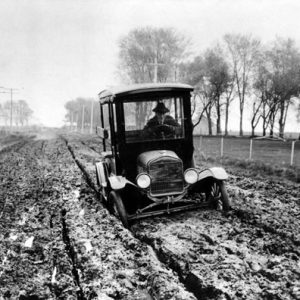
If you have ever driven down a muddy dirt road, you know the difference.

Grooves help guide you. They create smoother travel.

Ruts, however, are grooves worn too deep. When you fall into a rut:

  • Steering becomes difficult
  • The vehicle undercarriage scrapes
  • Movement is restricted
  • Eventually, you get stuck

Grooves are helpful.
Ruts are dangerous.

In leadership terms:

  • A groove is operating in your strengths, aligned with mission, energized by vision.
  • A rut is when the system determines your direction instead of your mission.

Churches slip into ruts when they sanctify structures that once worked but no longer serve the mission.

What once fueled growth becomes the very thing preventing it.


Satisfaction Leads to Atrophy

Think about physical fitness.

Once you reach your goal weight or stamina level, you cannot stop exercising. If you do, decline begins immediately. Muscles weaken. Endurance fades. Strength deteriorates.

The same is true in revitalization.

After a church moves from unhealthy to healthy, the temptation is preservation. Leaders instinctively try to protect what worked in order to prevent regression.

But systems that worked in one season will not work forever.

The danger of revitalization is not failure — it is success without adaptation.

The very patterns that brought renewal can become future obstacles if they are idolized.

Failure to adapt likely contributed to the church’s earlier decline. Repeating that pattern will recreate it.


The Acceleration of Change

In 2010, then-CEO of Google, Eric Schmidt, famously noted that humanity was creating as much information every two days as it had from the dawn of civilization until 2003. That statistic is now outdated — because change has accelerated even further.

Cultural norms shift rapidly.
Communication platforms rise and fall.
Demographic patterns reshape communities.
Expectations evolve.
Engagement habits transform.

What worked ten years ago may not work today.
What works today may not work five years from now.

Some leaders resist this pace.

But Scripture reminds us that transformation is central to the Christian story.

Everything God created moves and develops. Everything He touches is transformed. The only constant is God Himself and His unchanging Word.

The Gospel is not a message of stagnation — it is a message of radical change:

  • Death to life
  • Darkness to light
  • Sin to righteousness
  • Earth to heaven

“In a flash, in the twinkling of an eye… we will be changed.” — I Corinthians 15:52

If the message we proclaim is transformation, then we cannot fear adaptation.

Faithfulness is not sameness.


Anticipating What’s Next

Healthy leadership is forward-looking.

Strong churches regularly evaluate:

  • Whether their current ministries still align with their mission
  • Whether their structures are serving people or simply preserving tradition
  • Whether their systems will remain effective in the next cultural season

Waiting until decline becomes visible is reactive leadership.
Preparing before decline begins is strategic leadership.

Momentum can hide vulnerabilities.
Growth can conceal structural weaknesses.
Comfort can mask complacency.

Wise leaders ask: If nothing changes in our approach over the next five years, what will the result be?


Keep Revitalizing

Church revitalization is not a one-time project.

It is a posture of continual alignment with mission.

Now that your church is healthier, it is time to prepare for the next season of renewal.

Because one day:

  • Your groove will deepen.
  • Your strengths will calcify.
  • Your systems will age.
  • Your successes will tempt you to settle.

And grooves become ruts when left unchecked.

Stay anchored in Scripture.
Stay sensitive to the Spirit.
Stay courageous in leadership.

Learn from the past — but do not replicate it.
Anticipate the future — and lead into it.

Jesus has no interest in stagnant religious thinking. He is always leading His church forward.

“I press on toward the goal…” — Philippians 3:14

The question is not whether change is coming.

The question is:
Are you steering — or are you stuck?

From Survival to Sustainability: Developing Revitalizers in the Local Church

One of the most urgent challenges facing the church today is not simply declining attendance or aging congregations—it is the shortage of leaders equipped to guide churches through renewal and revitalization.

Biblically and historically, the primary place for developing new church revitalizers has always been the local church, or a close network of local churches. This conviction is why I continue to believe deeply in the importance of local church associations and regional partnerships. Renewal leaders are not best formed in isolation or abstraction, but in real congregations facing real challenges.

Just as church revitalizers must personally embrace their God-given responsibility to raise up other leaders, healthy local churches must embrace their responsibility to develop their own future ministers and revitalizers. Renewal cannot be outsourced indefinitely. It must be cultivated.

When churches commit to building revitalizers from within, several critical benefits emerge.


1. Multiplication Solves the Leadership Crisis

A church-based approach to revitalizer development creates a model that can be multiplied almost endlessly. Every local church—or cluster of churches—becomes a learning environment for new leaders.

If every church intentionally developed even one or two leaders for church renewal, the leadership shortage we currently face would quickly diminish. Multiplication, not centralization, is the biblical solution.


2. Holistic Formation Happens Best in the Local Church

Revitalization is not merely a technical skill—it is spiritual, relational, and deeply practical. Development is far more effective when it takes place inside the life of a congregation, where theology, leadership, conflict, mission, and faith intersect daily.

The local church provides the context needed to form leaders who are spiritually grounded, emotionally resilient, and practically competent.


3. The Right People Get the Right Training

The leaders who most need revitalization training are not those watching from the sidelines—they are those already engaged in renewal work.

When training is rooted in the local church, we move away from preparing the wrong people and toward equipping those already carrying the weight of leadership. Training becomes timely, relevant, and immediately applicable.


4. Flexibility Meets a Changing World

Church revitalization does not follow a single template. One size does not fit all.

Across cultures, denominations, education levels, and ministry contexts, revitalizers emerge with different strengths and needs. A church-based model allows for flexibility, customization, and responsiveness to rapidly changing ministry environments.

Rigid systems struggle to keep pace. Local churches adapt naturally.


5. Sustainable Development Requires Local Ownership

When the local church supports the development of its own leaders, it maintains responsibility for—and ownership of—the process. This creates systems that are self-supporting, self-sustaining, and self-propagating.

A church that equips future revitalizers ensures continuity of mission, long-term health, and the ongoing work of renewal in its own context.


6. Leaders Are Built Over a Lifetime

Revitalizer development is not a short-term program—it is a lifelong journey. The most effective training does not end after a course or credential but continues throughout a leader’s ministry.

Healthy churches create cultures of ongoing learning, reflection, and growth.


7. Evaluation Is Strongest in Community

Those best equipped to help shape and evaluate emerging revitalizers are the people who know them best—local leaders, mentors, and congregants who work with them regularly.

Local evaluation fosters clarity, accountability, and meaningful progress toward well-defined goals.


A Final Word

The future of church revitalization will not be secured by distant institutions alone. It will be secured when local churches reclaim their role as leadership incubators, intentionally raising up men and women called to guide congregations toward renewal.

Churches that build revitalizers are not only renewing themselves—they are investing in the future mission of the Church.

What Is Your Trajectory? Decline or Restart?

I sat with a group of church leaders burdened by a sobering reality. Their congregation had dwindled to fifteen active adults, and they were convinced the end was inevitable. “There’s no hope for survival,” they told me.

After listening carefully, I invited them to see their situation through a different lens.

Fifteen people is not a death sentence. In fact, it’s a fairly normal starting point for a church plant.

So I challenged them to consider a disruptive idea: What if you stopped measuring yourselves as a failing church and started seeing yourselves as a founding team? What if the healthiest decision wasn’t to prop up the old structure, but to lay it down and begin again?

That single shift exposed the real issue. The problem wasn’t size. It was trajectory.

Fifteen People: Good News or Bad News?

Only fifteen adults. Is that good or bad?

The answer depends entirely on your trajectory.

If you are a church planter just starting out, fifteen adults gathered with excitement, vision, and a heart for their community is a very good thing. But if you are an aging congregation of fifteen people scattered through an empty sanctuary, the emotional and spiritual reality feels very different.

Context matters.

The same number of people can represent birth or death—depending on trajectory.

From Death to Birth

Here’s the hard truth: simply calling an older church a “restart” does not change its trajectory.

For a restart to work, the church must be willing to:

  • Pause the old expression of ministry
  • Gather in a smaller, more appropriate space
  • Reframe the remaining people as a core group
  • Acknowledge that the former church has effectively died

Only then can the trajectory shift from death to birth.

But this is not easy.

The aging process must be reversed. The diseases that caused decline must be diagnosed and eradicated. A compelling, Christ-centered vision for a preferred future must be cast—and the remaining disciples must be willing to fully buy into it.

As Jesus reminded us, “What is impossible with man is possible with God.” (Luke 18:27)

Mission Drift and the Loss of First Love

New churches are typically outward-focused and missionally driven. Older churches, left unchecked, tend to turn inward.

There is no biblical mandate for a church to exist primarily to meet the preferences of its members. The church at Ephesus learned this the hard way. They had drifted from their first love and turned inward—and Jesus warned them plainly: change your trajectory or I will shut you down.

Restarting a church means returning to the basics of why the church exists in the first place.

“You have forsaken the love you had at first… Repent and do the things you did at first.” (Revelation 2:4–5)

A restart is not about preserving nostalgia—it’s about restoring mission.

Diagnosing and Treating Church Disease

New churches focus on:

  • Gospel proclamation
  • Disciple-making
  • Leadership development
  • Multiplication

Older churches are often weakened by diseases that cause the body to feed on itself. These diseases—left untreated—will infect a restart just as easily as they destroyed the original church.

At the root of most church disease is vision drift: when the focus shifts from Christ and His mission to the organization itself.

Before restarting, churches must be willing to confront these realities through repentance, clarity, and discipline.

Vision: One Church, One Direction

A healthy restart requires a fresh vision that is:

  • Christ-centered
  • Grounded in Scripture
  • Aligned with God’s mission
  • Clearly articulated by the lead pastor

There will be many ideas, preferences, and suggestions in a restart process—and they should be listened to. But ultimately, vision must be singular.

Diversity of people is healthy.
Diversity of vision is deadly.

More than one vision is di-vision.

The responsibility for casting vision belongs to the lead pastor. Creating buy-in is essential—especially when some are tempted to cling to the past. Honouring the past is appropriate, but the pastor must consistently remind the congregation: that church no longer exists.

A new day has dawned.

Submission, Unity, and Missional Focus

A restart church requires disciples who are willing to submit to leadership, set aside personal preferences, and embrace sacrifice for the sake of the mission.

There is no room for consumer Christianity in a missional church.

Unity flows from a shared focus on Christ and His mission. That unity eradicates disease and establishes a future-oriented trajectory marked by growth and multiplication.

Why Vision Beyond the Local Church Matters

A vision that reaches beyond the local congregation toward global mission is far more energizing than one focused solely on internal care.

I once worked with a church led by a pastor passionate about church planting and global evangelization. The church thrived. When that pastor left, the leadership turned inward to “take better care of the members.”

Within two years, attendance was cut in half.

People don’t give their lives to inward-focused institutions. Mature followers of Christ want to be part of something bigger than themselves. They want to reach their community. They want global impact. They want to be part of a church with a future.

Choosing Your Trajectory

Restarting a church is difficult—but it is not impossible.

With a renewed focus on the Word of God and the mission of Jesus, a compelling vision for a preferred future can inspire faithful disciples to let go of disease-ridden patterns from the past and embrace new life.

The question every declining church must answer is not “How many people do we have?” but rather:

What is our trajectory? Decline—or restart?

Seven Rules of Change Every Leader Should Know

Why Change Feels So Difficult

Every pastor leading a church through revitalization eventually discovers this truth: people don’t resist change—they resist loss.
When something familiar feels threatened, even the most faithful can become fearful.

Harvey Robbins and Michael Finley, in their book Why Change Doesn’t Work, identify seven timeless principles about human behaviour and transformation—truths that have remained the same “for forty thousand years.”

Change is more than strategy—it’s about understanding people.


1. People Do What They Believe Is in Their Best Interest

Most church members aren’t trying to be difficult. They simply respond to what feels safe or meaningful. If they can see how a proposed change helps the church thrive and honours Christ, they are far more likely to embrace it.


Leadership lesson: Always connect vision to purpose. Show people why it matters eternally.


2. People Are Not Naturally Anti-Change

Contrary to popular belief, most people don’t hate change—they hate meaningless change. When change has positive meaning and clear direction, people will often get behind it with enthusiasm.


Leadership lesson: Cast a redemptive vision, not just a logistical one.


3. People Thrive Under Creative Challenge but Wilt Under Negative Stress

A challenge can bring out the best in a team—but fear and pressure shut them down. Church revitalization flourishes when leaders inspire rather than intimidate.


Leadership lesson: Replace guilt with grace, and anxiety with adventure.


4. People Are Different—One Solution Won’t Fit All

Every congregation is a blend of personalities, generations, and spiritual experiences. No single plan will reach everyone the same way.


Leadership lesson: Be flexible. Tailor communication, pace, and involvement to meet people where they are.


5. People Believe What They See

Actions speak louder than announcements. If leaders consistently model faith, humility, and perseverance, people will trust the process.


Leadership lesson: Live the change before you lead the change.


6. Long-Term Change Begins with a Clear Vision

Before anything transforms externally, leaders must first visualize the desired outcome internally. Renewal begins in the imagination—when leaders dream with God about what could be.


Leadership lesson: See it. Pray it. Live into it.


7. Change Is an Act of the Imagination

Transformation doesn’t begin with a committee—it begins with hope.
To imagine a revitalized church is to partner with the Holy Spirit in the creative work of renewal.


Leadership lesson: You can’t lead change if you can’t envision it. Dream boldly.


Bringing It All Together

These seven rules remind us that church change isn’t primarily about systems—it’s about souls. Understanding how people think, fear, and grow allows you to lead with wisdom and patience.

If you want to see your church come alive again, start with vision. See what God sees.
And remember: change is an act of faith, not frustration.


Reflection Prayer

Lord, awaken my imagination for what You can do in Your church.
Help me to lead with wisdom, patience, and hope.
Show me how to communicate change with clarity and compassion.
May our congregation see not just what we are leaving behind, but what You are leading us toward.
Amen.

Decision-Making That Holds Under Pressure

Poor decisions often reveal their damage slowly. Long after the moment has passed, families feel the strain, churches carry the consequences, and leaders wonder how things went so wrong. Scripture offers a sharp contrast to this pattern in the decision-making of Mordecai and Esther.

The process Mordecai and Esther followed remains deeply relevant for homes and churches today. Their story reminds us that faithful decision-making is less about instinct and far more about formation.


1. Good Decisions Use Godly Methods

Mordecai and Esther did not rush to action. They relied on spiritual practices that anchored their leadership in God rather than emotion or fear. Scripture highlights several of these methods:

  • Prayer and crying out to God (Esther 4:1)
  • Fasting (4:16)
  • Obedience to God’s Word (3:2)
  • Godly counsel (4:15–16)

In seasons of uncertainty, these practices shaped both posture and clarity. Wise leaders know that the right tool must be used at the right time.

Prayer, for example, is always available. Many leaders pray constantly—sometimes quietly and briefly throughout the day. Those short prayers matter. But wisdom also means knowing when prayer alone is not the appropriate response. Not every decision requires fasting, and not every conversation requires extended spiritual retreat. Discernment matters.

Fasting, in Scripture, is most often connected to corporate mourning, repentance, leadership selection, and affliction. Likewise, obedience to God’s Word is not optional. Mordecai’s refusal to bow to Haman was not stubbornness—it was faithfulness rooted in Scripture.

Finally, good decision-makers value godly counsel. Not the kind that confirms what we already want to do, but the kind that prayerfully tells us what we need to hear. Without that kind of counsel, leaders drift into isolation and self-deception.


2. Good Decisions Flow from Facts

Esther 4:7–8 is striking in its attention to detail. Phrases like “everything that had happened,” “the exact amount of money,” “a copy of the written decree,” and “explain it to her” all point to the same truth: wise decisions are grounded in accurate information.

Good leaders do not guess. They gather facts, understand implications, and communicate clearly.

Too many decisions—especially in churches—are made without counting the cost. Enthusiasm replaces analysis. Emotion overrides wisdom. The result is unnecessary stress on families, finances, and ministries.

When leaders fail to consider long-term consequences, the burden rarely falls on them alone. It spills over onto spouses, staff, and congregations. Counting the cost is not a lack of faith; it is an expression of stewardship.


3. Good Decisions Often Involve Risk

Esther’s words are among the most sobering in Scripture: “If I perish, I perish” (4:16).

Faithful leadership does not eliminate risk—but it does clarify which risks are worth taking. Mature leaders know the difference between hills worth dying on and issues that simply are not.

If you want a ministry with no risk, you will eventually have a ministry with no power, no joy, and no lasting fruit. Jesus Himself confronted people with costly obedience. Faith, by definition, requires trust beyond certainty.

For pastors and leaders, remaining in a difficult assignment may involve significant risk—emotionally, relationally, and vocationally. When God calls, obedience often precedes clarity.


Reflection for Leaders and Churches

The story of Mordecai and Esther invites honest self-examination. Consider these questions carefully:

  • Have you—or leaders in your church—made emotion-based, knee-jerk decisions after a difficult Sunday, a contentious meeting, or personal conflict?
  • Have decisions been made without all the facts, resulting in stress for your marriage, family, or congregation?
  • Have poor decisions gone unrecognized by those who made them, while causing confusion and pain for others?
  • Which godly methods—prayer, fasting, obedience to Scripture, and godly counsel—have you modeled and taught recently? Are any being overlooked?

Decisions Shape Destiny

Mordecai and Esther remind us that decision-making is never merely practical—it is deeply spiritual. The methods we use, the facts we gather, and the risks we take all reveal what we truly trust.

In moments of pressure, leaders do not rise to the occasion; they fall back on their formation. When decisions are anchored in godly methods, clear facts, and courageous faith, God uses them not only to preserve His people—but to advance His purposes for generations to come.

When Yesterday Becomes Your Best Day

A church is in need of revitalization when it believes its best days are behind it.

“We remember the fish which we used to eat free in Egypt, the cucumbers and the melons and the leeks and the onions and the garlic.” Numbers 11:5

Few statements in Scripture are as jarring as Israel’s complaint in the wilderness. After more than 400 years of slavery, God had delivered His people with power, signs, and wonders. And yet, standing on the edge of freedom, they looked back and described slavery as free.

That is a sobering distortion of memory.

A church in need of revitalization is often a church that believes it is free—when, in reality, it has become enslaved.


When Slavery Starts to Feel Like Freedom

Churches can be enslaved in many ways. Some are trapped in the past. Others are bound by tradition, budgets, fear, or unhealthy leadership dynamics. Still others are constrained by internal control, unresolved conflict, or church politics.

What makes this so dangerous is that slavery rarely announces itself as bondage. It often disguises itself as stability, predictability, or faithfulness. Like Israel in the wilderness, churches begin to remember the “free meals” of the past while forgetting the chains that came with them.

As pastors and leaders, part of our calling is to discern where God is moving—and to recognize when our ministries have become enslaved to programs, routines, and predictable environments rather than animated by the Spirit of God.

That raises an important question: How can you tell when your church is in need of revitalization?


Indicators That a Church Has Settled Into Bondage

Here are some common warning signs:

  • Does your church value business meetings more than evangelistic or missional engagement?
  • Do visitors leave as quickly as they arrive?
  • Is there more anxiety about temporarily moving the Lord’s Supper table for a children’s event than prayerful concern for those children to come to Christ?
  • Does pastoral leadership grow anxious when preaching or teaching moves toward change?
  • Is there genuine expectancy and joy in worship—or just familiarity?
  • Is affection for the past stronger than hope for the future?
  • Is there deep concern when a donor nameplate is missing from a pew?
  • Is the church budget dominated by tightly designated line items that leave little room for mission?

When these patterns emerge, the church may feel stable—but stability is not the same as faithfulness.


“The Good Old Days” and What We Really Mean

“The good old days” is often code language for don’t mess with my stuff.

Those days may indeed have been good in some ways—but they were not without conflict, financial stress, politics, fear, or drama. What made them feel safe was not perfection, but predictability.

Israel’s slavery offered predictable meals. Never mind the beatings. Never mind the oppression. Never mind the generational misery. At least life felt known.

Churches do the same thing. They cling to familiar patterns—not because those patterns are fruitful, but because they are familiar.

Ironically, when someone says, “The good old days,” it often opens the door to revitalization.


Using the Past to Invite the Future

When I hear that phrase, I almost always respond with curiosity rather than correction. I ask people to tell me their stories—what made those days so meaningful.

And the stories are often beautiful.

I have heard accounts of intense seasons of prayer, month-long revival meetings, miraculous healings, last-minute financial provisions, powerful preaching, and joyful worship. For many churches, those truly were good days.

After listening, I ask two simple questions:

  • Wouldn’t you like to see that happen again?
  • Wouldn’t it be wonderful if this generation—your children and grandchildren—experienced the same move of God?

Almost without exception, the answer is yes.

And that is where revitalization begins.

As people reflect more deeply, they often recall that those “good days” were not static. They involved change, sacrifice, risk, and obedience. The church adapted. Leaders stepped out in faith. People met God where He was working.


Why Rob the Next Generation?

Why would we deny the next generation the opportunity to experience God’s power, provision, and presence?

This is the moment when pastoral leadership matters most—when the pastor says, “Follow me. We are going to pursue all that God has for us, for the sake of the next generation.”

Yes, it will look different. After all, the desert does not look like the Jordan. But God is no less present in the journey than in the destination.


Guarding Against Mission Drift

Ministry always carries the risk of mission drift. Churches settle into routines, routines become habits, and habits slowly replace obedience.

Pastors and leaders are not immune. Stability can feel like relief after years of hard work. But if we are not careful, resting turns into settling, and settling turns into dependence on systems rather than the Spirit.

Nothing reveals this more clearly than when slavery is remembered as freedom.


The Only “Good Old Days” That Matter

The only true “good old days” are the ones we are living right now—with faith, obedience, and anticipation for what God will do next.

When we step away from obedience and faith, we stop living toward God’s future and begin clinging to God’s past. Revitalization calls us forward—not to abandon our story, but to continue it.

Yesterday was not meant to be your church’s best day.

By God’s grace, the best days are still ahead.

Before You Talk About Revitalization, Ask These Five Questions

Church revitalization has become a popular conversation in recent years. Conferences, books, consultants, and denominational initiatives all promise pathways to renewed health and growth. But before you ever talk about how to revitalize a church, there are deeper, more foundational questions that must be asked.

In my experience, skipping these questions almost guarantees frustration—for pastors, leaders, and congregations alike. Revitalization is not a technique problem; it is a discernment problem.

Here are five questions I believe must be answered before attempting to help revitalize a church.


1. Can This Church Be Saved?

There is an even harder question behind this one: Is the church worth saving?

I realize how uncomfortable—and even arrogant—that may sound. But the reality is that some churches are deeply toxic. I have known congregations that have never kept a pastor longer than two years. They are brutal to leaders. They are not looking for renewal or growth; they want a caretaker who will maintain the status quo, fill the pulpit multiple times a week, and provide pastoral care—without leading change.

When anyone attempts to lead differently, the message is clear: We were here before you came, and we’ll be here after you’re gone.

Even if such a church avoids eventual closure, what is the realistic outcome? Will a pastor actually be able to lead? Can meaningful change be made? Organizationally speaking—and spiritually as well—nothing of value happens without change. The gospel does not change, but methods, structures, and cultures must.

A church unwilling to confront these realities may survive on paper, but it will not thrive in mission.


2. Is This the Right Location?

Location matters—not because the message changes, but because communities do.

Demographics shift over time. People move out. New people move in. Neighborhoods age, gentrify, diversify, or decline. A church must honestly ask whether it reflects—or is willing to represent—the community around it.

If a congregation is surrounded by a changing mission field but remains committed to serving only the people it once reached, revitalization becomes nearly impossible. The question is not whether the community needs the church; it is whether the church is willing to engage the community it actually has.

And here is the hard follow-up: if the church is unwilling to adapt to its context, is there a more receptive area where the gospel resources invested here could bear greater fruit?


3. Is This the Best Use of Resources?

This may be the most difficult question of all.

Would Kingdom dollars, leadership energy, and time be stewarded more wisely elsewhere? The longer a church has been plateaued or declining, the longer—and harder—the revitalization process will be. In some cases, the resources required to sustain one struggling congregation could plant multiple new churches.

To be clear, I believe deeply in revitalization. Established churches play a vital role in the Kingdom: theological depth, historical presence, community trust, and generational continuity matter. But believing in revitalization does not mean avoiding hard stewardship questions.

If leaders are unwilling to ask whether this is the wisest use of Kingdom resources, the likelihood of meaningful progress is slim.


4. Is Everyone Willing to Pay the Price?

Revitalization is hard. In many ways, it is harder than church planting.

Change will be painful. Some people will resist. Some will leave. The work will take longer than expected, cost more than anticipated, and feel heavier than imagined. Leaders must ask: Will change be accepted—or merely tolerated until conflict erupts?

Can you take the hits that inevitably come with leading change? Will the board and key leaders stand with you when resistance grows? Is your family fully supportive and prepared for the emotional and relational strain?

Revitalization demands resilience, unity, and sacrifice. Without them, even the best strategy will collapse.


5. Are You the Right Leader?

Finally, this question brings everything into focus.

Do your experience, passions, and skill sets align with the realities of revitalization? Would you be more effective in another context—planting, leading a growing church, serving in a different ministry role? And beneath all of that lies the most important question: Is God calling you to this?

I believe God often gives us wide latitude in where we serve. The harvest is plentiful, and workers are needed everywhere—church planters, missionaries, healthy leaders, faithful believers in secular vocations, and revitalizers. But there are also moments when God calls a leader to a specific place for a specific season.

When that call is clear, everything else becomes secondary. If God is calling you to this work, obedience matters more than comfort, success, or certainty.


Ask These Questions First

Answer these five questions honestly. Wrestle with them prayerfully. Invite trusted voices into the conversation. Only then does it make sense to talk about strategies, models, and action plans.

Get the why and the who right first—and then we can talk about the how.

Credible Church Revitalization Takes More Courage Than You Think

It takes courage for church leaders to begin the arduous task of leading a congregation through revitalization. But I would suggest it takes even more courage to stay the course and finish what was started.

Before we go any further, we need to clarify an important phrase: credible revitalization. Because not all revitalization efforts are created equal—and many fail precisely because they never were credible in the first place.

What Is Credible Revitalization?

The key word is the adjective: credible.

When something is credible, it is believable, authentic, real, trustworthy, reliable, and capable of accomplishing what it sets out to do. Credible revitalization is wholehearted. It is deeply committed. It is honest about the cost and realistic about the timeline. It is the real thing.

By contrast, incredible revitalization—despite how positive that word may sound—literally means unbelievable, inauthentic, unreliable, and incapable of producing lasting results. Sadly, “incredible” is an apt description of many church revitalization initiatives. They look good on paper, sound inspiring from the pulpit, and generate early enthusiasm—but they lack the depth and perseverance required to bring real change.

Why does this happen?

There are countless reasons revitalization efforts stall or collapse, but one rises to the top again and again:

Church leadership fails to persevere.

Revitalization requires time, energy, emotional resilience, and sustained commitment. When leaders pull back too soon, even the most promising effort withers before it can take root.

Here are six of the most common reasons leaders struggle to stay the course.


1. Lack of Unity Among Leaders

Revitalization demands a united leadership front. When senior leaders fracture into camps—some committed to change, others hesitant or resistant—the congregation inevitably follows. Factions form. Conversations become political. Trust erodes.

Without unity at the top, the church loses the collective resolve needed to face the inevitable challenges of revitalization, and the effort collapses under the weight of internal conflict.


2. Lack of Immediate Results

Many churches arrive at decline after decades of accumulated decisions, habits, and assumptions. Yet once revitalization begins, leaders often expect visible results almost overnight.

A few program tweaks are made. A new ministry is launched. Attendance doesn’t spike. Giving doesn’t surge. Momentum feels slow.

And impatience sets in.

Revitalization rarely produces quick wins. It often takes months—or years—for new direction, culture, and trust to mature. When leaders interpret slow progress as failure, they abandon the effort prematurely.

This impatience is often intensified by past failed attempts. Leaders remember previous revitalization efforts that fizzled out and assume the current one will do the same—ironically ignoring the fact that those earlier efforts may have failed for the very same reason: a lack of perseverance.


3. Choosing Improvement Over Transformation

Most churches are deeply program-driven. As a result, revitalization is often reduced to improving existing programs rather than transforming the church’s culture.

The problem? Programs almost always serve insiders.

Better programs may benefit those already attending, but they rarely address the deeper issue behind long-term plateau and decline: an inward focus that no longer engages the surrounding community.

Credible revitalization requires a fundamental shift—away from insider maintenance and toward outward mission. That kind of change is not cosmetic. It demands a reorientation of priorities, values, and expectations. It requires transformation, not just improvement.


4. Pushback When Theory Becomes Reality

Many congregations support change—in theory.

They can rally around vision statements, strategic plans, and inspirational language about reaching the lost. They genuinely believe they are ready for change.

But when change becomes tangible—when beloved traditions are altered, preferences challenged, or comforts disrupted—support often evaporates. What felt inspiring in concept feels threatening in practice.

Some people discover they were never prepared for real change at all. Pushback grows. Resistance hardens. Leaders feel blindsided. Momentum slows.

Revitalization doesn’t fail because people dislike the mission—it fails because real change costs more than many expected.


5. Underestimating the Degree of Difficulty

Revitalization is hard. There’s no mystery here.

Leaders often underestimate the emotional, spiritual, and relational complexity involved. They assume that clear decisions and improved ministries will naturally produce alignment and growth. They assume people will follow simply because leadership has spoken. They assume the community will respond because the plan looks solid.

Those assumptions rarely hold.

Revitalization disrupts systems, exposes fears, surfaces grief, and demands leadership stamina far beyond what many anticipate.


6. Unwelcomed Success

This final reason may sound counterintuitive—but it’s very real.

Sometimes revitalization fails not because it doesn’t work, but because it does.

New people arrive. They don’t know the rules. They don’t fit the culture. They bring messiness, noise, and discomfort.

Here’s a real example:
An aging inner-city church launched a Wednesday evening ministry for neighborhood children. Attendance exploded—over one hundred kids showed up weekly. But the children used rough language and damaged facilities. Custodial complaints followed. Tensions rose.

Instead of adapting, the church canceled the ministry.

The success was real—but it wasn’t welcomed.


The Courage to Finish

These six realities reveal the true nature of church revitalization. It is complex. It is disruptive. It is demanding. And it is deeply spiritual.

It takes courage to begin.
But it takes even greater courage to finish.

Credible revitalization is not about quick wins or image management. It is about faithful perseverance—staying the course long enough for real transformation to take hold.

And that kind of courage is rare—but it is exactly what renewal requires.

Embracing Change as a Spiritual Discipline

Facing Change with Honesty Before God

When it comes to church renewal, the greatest barrier isn’t programs, budgets, or buildings—it’s fear.
Fear whispers that the church doesn’t have the strength, energy, or faith to take on something new.
But what if change isn’t just a practical necessity—what if it’s also a spiritual discipline?

Tom Cheyney challenges pastors and church members alike to sit with their fears before the Lord. He suggests a simple, but powerful, exercise:

Write down the specific changes that cause you anxiety—those “what ifs” that keep you clinging to the familiar—and bring them honestly before God in prayer.

Because when we name our fears, they lose their power. When we surrender them, God begins to replace fear with faith.


A 30-Day Challenge Toward Joy

Cheyney offers a practical spiritual rhythm:

Take 30 days to pray for joy in the midst of change.

For one month, begin each prayer time by bringing your list of fears to the Lord. Then thank Him for the potential blessings that could come if your church embraced renewal.
Each day, pray through Scripture—passages of hope, faith, and perseverance.
Ask the Holy Spirit to transform anxiety into anticipation.

This isn’t about denying reality or ignoring challenges. It’s about retraining the heart to see change through the lens of God’s promises rather than through human insecurity.


Choosing Joy Over Fear

Joy is not a feeling—it’s a choice of faith.
When fear says, “You can’t handle this,” joy answers, “The Lord is my strength.”

A church that chooses joy begins to rediscover its purpose. Members start praying with expectation again. Leaders regain energy. The congregation begins to anticipate God’s next move instead of dreading what might be lost.

Change no longer feels like punishment—it becomes a pathway to promise.


Handing Fear Over to God’s Altar

Many churches live paralyzed because leaders have never placed their fears on the altar. They cling to security rather than surrendering to God’s sovereignty.

But Cheyney reminds us that renewal requires a spiritual exchange:

“Lay your fear on the altar so that God might stretch you and show you the great things He can still do in your church.”

Perhaps the Spirit is prompting you to do just that.
Take the next thirty days to pray for joy, surrender control, and let God rekindle your imagination for what’s possible.

If you will give God one month of sincere faith, He can begin a work that may reshape your church’s future.


Reflection Prayer

Lord, I confess that change often frightens me.
I want to control outcomes, but You call me to trust.
Replace my fear with joy, my anxiety with peace, and my hesitation with holy boldness.
Teach me to see change as a sacred invitation—to witness Your power again.
In Jesus’ name, Amen.

The Hidden Barrier to Church Revitalization (And Why It Might Be You)

If you’re still carrying most of the ministry in your church on your own shoulders, here’s a hard but hopeful truth:
you may be unintentionally slowing the very revitalization you long to see.

Many pastors do this out of faithfulness, not ego. You visit the sick, run the programs, solve the problems, answer the emails, and keep things moving—often because it feels like no one else will. Somewhere along the way, doing the ministry quietly replaced developing ministers.

The results are predictable:

  • Pastors burn out
  • Churches stagnate
  • Congregations remain dependent instead of discipled

And the biblical vision of the priesthood of all believers never fully takes root.

The Good News You May Be Overlooking

God has already given you what you need.

The leaders, servants, and ministers your church requires for renewal are likely already sitting in your pews. Your most important role as a revitalization pastor is no longer to personally carry every ministry—but to discover, develop, and deploy the people God has already placed among you.

Revitalization accelerates the moment pastors stop asking, “How do I do more?” and start asking, “Who do I need to invest in?”


Why Recruiting Volunteers Feels So Hard Today

Let’s be honest: the old strategies don’t work anymore.

There was a time when a well-placed appeal from the pulpit could fill most volunteer roles. That era is gone. Today’s families are stretched thin by work, sports, travel teams, side hustles, and endless digital distractions. The church is no longer the default commitment.

Also, trying to shame or guilt people into serving isn’t just ineffective—it’s unhealthy.

An empty role is actually better than a reluctant volunteer who feels pressured and disengaged.

The real issue isn’t a lack of willing people.
It’s a lack of intentional development pathways.


A Better Way Forward: Stop Filling Positions—Start Developing People

Healthy, revitalizing churches don’t recruit volunteers the way organizations fill job openings. They cultivate disciples who discover their calling.

Here are key shifts that move churches from pastor-centered ministry to a multiplying lay ministry culture:

Look for potential, not perfection

Stop waiting for ready-made experts. Start paying attention to people with character, curiosity, compassion, and a teachable spirit. Many future leaders are overlooked simply because no one ever invited them to grow.

Never do ministry alone

Make it a personal rule: if you’re doing ministry, bring someone with you. Hospital visits, outreach events, small groups, setup teams—every moment becomes an apprenticeship when someone is invited to observe and participate.

People don’t learn ministry from announcements.
They learn it by walking alongside someone who’s doing it.

Let lay people do the work of ministry

Ephesians 4:12 is clear: leaders are called to equip the saints for the work of ministry. Your calling is not to perform for the church but to prepare the church.

When pastors insist on doing everything themselves, they unintentionally teach the congregation that ministry belongs to professionals.

Create a simple leadership pathway

Effective development follows a clear rhythm:

  • Mentor intentionally
  • Teach the “why” and the “how”
  • Provide low-risk opportunities to serve
  • Launch people with encouragement and support

This is how ministry multiplies without overwhelming the pastor.

Become a permission-giving church

Lower the barriers. Invite experimentation. Encourage new ideas. Allow people to try, fail, learn, and try again. Help them discover spiritual gifts instead of forcing them into roles that don’t fit.

Vitality grows where people feel trusted.

Build teams, not committees

Committees discuss ministry.
Teams do ministry.

Younger generations especially prefer teams—they want to contribute quickly, learn as they go, and serve alongside others. Teams are less intimidating, more relational, and far more effective at integrating new people.


The Bottom Line

Healthy, revitalizing churches are no longer one-person shows.

They are communities where the pastor shifts from being the primary minister to the primary equipper.

When you invest in developing lay ministry systems, you:

  • Relieve unsustainable pressure on yourself
  • Multiply the church’s impact
  • Create space for new people to belong and serve
  • Build a leadership pipeline for the future

The era of guilt-driven volunteering is over.
The era of permission-giving, apprenticeship-based, team-oriented ministry has arrived—and it’s far more fruitful.

So take a breath. Look around your congregation. And ask God a better question:

“Who have You already brought here that I need to invest in?”

Then start developing them.
The future health and mission of your church depends on it.