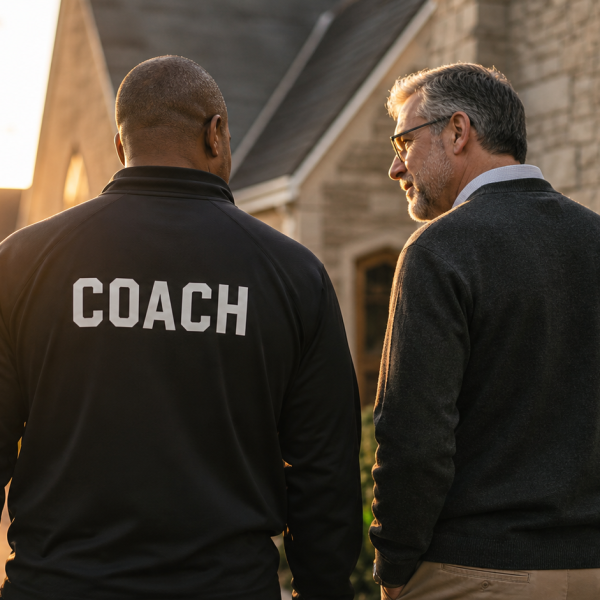

The Power of Positive Church Members in Revitalization

Every church that experiences renewal has one thing in common: people who believe God is not finished yet.

Positive church members are not just helpful, they are essential. They bring energy, unity, and forward momentum. They help a church move from maintenance to mission and from survival to impact. When a congregation is filled with people like this, revitalization becomes more than a strategy. It becomes a shared movement.

Every church will face moments of tension or hesitation. That is part of any meaningful change. But the deeper story of revitalization is not resistance. It is the steady influence of people who are committed to growth, aligned around the mission, and willing to move forward together.

I have had the privilege of walking through revitalization with people like this. Many are still serving today, continuing to build a church that is vibrant and life-giving. Their faithfulness has shaped the culture in lasting ways. They are a reminder that the strength of a church is not found in programs but in people.

As a church leader, one of your primary responsibilities is to cultivate that kind of culture. When you invest in positive contributors, you create an environment where the mission can flourish and where people can grow into all God has called them to be.

So what does that kind of person look like?

1. They understand and embrace the mission

Positive church members know why the church exists. They are not guessing or assuming. They have clarity, and that clarity shapes how they live and serve.

They filter opportunities, ideas, and decisions through the mission of the church. This keeps them focused and aligned. It also keeps the church from drifting into distractions.

When people understand the “why,” commitment deepens. Teaching and reinforcing the mission regularly helps everyone stay connected to what matters most. It creates unity and a shared sense of purpose.

2. They look for better ways to do ministry

Positive members are not content to coast. They are always asking how the church can grow, reach more people, and serve more effectively.

They think creatively and act constructively. They bring ideas, but they also bring solutions. They are willing to try, learn, and improve.

Leaders should pay close attention to these people. Develop them. Trust them with responsibility. Encourage them to bring others along. When positive people are empowered, they multiply influence and help carry the vision forward.

3. They work hard and remain teachable

There is a consistent pattern with people who strengthen a church. They show up, they serve, and they keep growing.

They ask questions like “What is next?” and “Who else can we reach?” They bring both effort and humility. They are willing to learn, adjust, and keep moving forward.

Their attitude becomes contagious. When people see joy in service and commitment in action, it raises the level of engagement across the church. Momentum begins to build because others are inspired to join in.

4. They think “we” instead of “me”

Positive church members see the church as a shared calling. They are not focused on personal preference. They are focused on collective mission.

They speak with encouragement. They support one another. They take responsibility for the health of the church, not just their own experience within it.

This mindset changes everything. A “we” culture fosters unity, strengthens relationships, and creates a sense of ownership. It positions the church to accomplish far more together than any individual could alone.


Moving Forward

Revitalization is not ultimately driven by plans or programs. It is carried by people.

When you invest in people who understand the mission, seek growth, work faithfully, and live with a team mindset, you are building a foundation for lasting renewal.

So consider a simple next step. Who are the positive people in your church right now? How can you encourage them, develop them, and give them meaningful responsibility?

Pour into those who are ready to move forward. As you do, you will begin to see something powerful take shape: a church filled with people who love Jesus, love His church, and are fully committed to His mission.

That is where real revitalization begins.

Revitalization Begins with Listening, Not Doing

If you spend any time in church revitalization circles, you’ll hear the same question: “What should we do?”

It sounds like the right question. It isn’t.

That question assumes revitalization begins with action, with strategies, systems, and execution. Scripture points in a different direction. Revitalization does not begin with doing. It begins with listening.

The Problem: We’re Already Listening, Just Not to God

Most leaders are not failing to listen. We are listening to the wrong voices.

We listen to statistics, critics, podcasts, conferences, and often our own ambitions. Even our prayers can become one-sided conversations where we do all the talking. In a ministry culture that rewards activity and innovation, listening becomes secondary, if it happens at all.

I’ve sat in meetings where hours were spent mapping out what to do next, and not a single minute was given to asking what God might already be saying. We left with a plan, but no discernment.

That isn’t revitalization. It’s just activity without direction.

The Order Matters: Listen, Then Lead

As leaders, we are called to listen and then lead, in that order.

We have no business leading God’s people if we have not first heard from God. Scripture makes it clear that God speaks and that those entrusted with spiritual leadership carry the responsibility of discerning His voice. When leaders fail to listen well, the consequences are not theoretical. They are often deeply damaging.

Activity without discernment is not leadership.

Why Listening Is Foundational to Revitalization

1. Listening Renews Strength

Isaiah 40 grounds this reality. Those who wait on the Lord renew their strength.

Revitalization is demanding work. It stretches you emotionally, spiritually, and relationally. Without divine renewal, you will not sustain it. Listening is not passive. It is the means by which God strengthens His leaders for the work ahead.

2. Listening Clarifies Direction

Nehemiah models a pace most of us resist.

Before he approached the king about rebuilding Jerusalem, he spent months praying, fasting, and waiting. Only after receiving clarity from God did he act. Many leaders reverse that pattern. We act quickly and seek clarity later. It becomes “ready, fire, aim.”

Listening aligns action with God’s direction rather than our assumptions.

3. Listening Re-centers the Work

Revitalization cannot be driven by our preferences, timelines, or ambitions.

God has never asked, “What do you want to do?” The better question is always, “Lord, what do You want to do?”

Listening displaces ego. It recenters the work on God’s purposes rather than our plans.

Scripture Is Clear: God Speaks, But We Must Hear

Throughout the Old Testament, the prophets spoke with a consistent authority: “Thus says the Lord.” Their role was not to generate ideas but to faithfully communicate what they had heard. These calls to return to God echo across generations and are often ignored, with sobering consequences.

Jesus continues this emphasis in the New Testament. At the end of the Parable of the Sower, He says, “He who has ears to hear, let him hear.” The issue is not the seed. The issue is how it is received. When the Word is not rightly received and applied, it does not produce a harvest.

In Revelation, Jesus repeatedly tells the churches, “He who has an ear, let him hear what the Spirit says to the churches.”

God is speaking.

The question is whether we are listening.

Failure to listen is not a minor oversight. It is disobedience.

A Slower, Better Starting Point

This may feel unsatisfying if you are looking for a strategy or a checklist. But that instinct, to begin with action, is where many revitalization efforts go wrong.

The better path is slower. It is quieter. It is more dependent.

Do not rush to act.
Wait.
Pray.
Listen.

God will make clear what needs to be done and when. That clarity is not given to the hurried. It is given to those who are willing to be still long enough to hear His voice.

Revitalization does not begin when the church starts moving.

It begins when leaders start listening.

Plan for Problems and Obstacles in Church Revitalization

If you’re leading a church, you already know that good intentions alone don’t guarantee success. . Proverbs reminds us of this truth: “Don’t go charging into a battle without a plan.” (Proverbs 20:18 GNT) and “A sensible man watches for problems ahead and prepares to meet them. The simpleton never looks and suffers the consequences.” (Proverbs 22:3 LB).

When a congregation steps into renewal, good intentions and spiritual enthusiasm are essential—but they’re not enough. Revitalization requires disciplined planning and honest assessment of what may stand in the way.

Face the Hard Question

Ask yourself and your leadership team, “If this revitalization effort fails, it will be because…?”

Be brave enough to finish that sentence. The answers often reveal your greatest opportunities for growth. Perhaps the vision isn’t clearly shared. Maybe old leadership structures resist change. It could be fatigue, financial instability, or unaddressed conflict.

Identifying obstacles early isn’t pessimism—it’s preparation. By naming potential problems before they grow, leaders can meet challenges on their terms rather than letting crises dictate the timetable.

Meet Problems on Your Own Timetable

In revitalization, problems rarely disappear when ignored. They only wait for the moment when the church is weakest. A neglected issue—be it a strained relationship, unclear communication, or unrealistic timeline—eventually surfaces.

A wise leader chooses to meet problems proactively, not reactively. Preparing for obstacles means being ready to confront hard truths and pursue peace before stress and emotion take over.

Nobody Is 100% Successful

The journey of renewal is never linear. Even faithful leaders experience detours and disappointments. Moses faced rebellion halfway to the Promised Land. Nehemiah encountered opposition while rebuilding the wall. Jesus Himself faced misunderstanding and rejection in His ministry.

No revitalization effort is perfect, and no leader is flawless. But every challenge can become a moment of spiritual formation—an opportunity to deepen trust, refine vision, and strengthen unity.

Grace meets us not in uninterrupted success but in persistent faithfulness. Planning for problems ensures that when setbacks come, the church has resilience, support, and clarity to move forward in grace rather than collapse in frustration.


Practical Planning Steps for Church Revitalization

Here are five practical ways to plan for problems and obstacles in a revitalizing church:

  1. Name the barriers early. Before launching changes, gather your leaders to identify possible resistance points—tradition, trust gaps, or fatigue—and discuss strategies to soften their impact.

  2. Develop a contingency mindset. Set aside time and budget for the unexpected. Repairs, resignations, or resource challenges will arise. Planning margin prevents crisis-driven decision-making.

  3. Create “red flag” indicators. Watch for early warning signs of trouble—declining engagement, growing negativity, or communication breakdowns—and address them immediately.

  4. Build a resilient leadership circle. Surround yourself with spiritually mature leaders who can offer honest evaluation when your optimism outruns reality. Healthy collaboration is the best safeguard against burnout.

  5. Stay anchored in prayer and mission. Revitalization plans need spreadsheets and timelines, but they thrive on spiritual dependence. Problems shrink when the mission stays central and prayer remains constant.


Planning for problems doesn’t contradict faith—it strengthens it. Wise leaders prepare with realism and hope, trusting that obstacles are not interruptions but invitations to deeper growth. Every challenge becomes a chance to see God’s faithfulness at work, renewing both the people and the vision.

So as you guide your church through revitalization, resist the temptation to rush ahead. Pause, plan, and prepare. Problems will come, but they don’t have to win. A mission-rooted plan, guided by discernment and prayer, transforms obstacles into momentum for renewal.

“A sensible man watches for problems ahead and prepares to meet them.” (Proverbs 22:3, LB) — that’s not fear speaking. It’s faith with foresight.

When You Feel Like Quitting: The Power of Staying for Church Revitalization

Every pastor eventually faces a difficult moment: the realization that they can no longer inspire their congregation to move from the comfort of their seats to actively serving others in the streets. For many, this is the tipping point. They dust off their resumes and begin searching for a new assignment, convinced their calling to that particular church has ended.

But is it really over? Research indicates that significant spiritual and numerical growth in a church often occurs between years five and seven of a pastor’s tenure. Yet the average pastor stays only about half that long. What could happen in God’s kingdom if both the congregation and the pastor committed to working together for His glory in their local church?

Church revitalization demands a different mindset—one rooted in long-term strategic progress. A church in need of renewal requires a leader who stays committed, even in the hardest seasons of ministry, rather than fleeing when things get tough.

I understand the temptation. No one dreams of serving in difficult places. As a revitalizer myself, I’d love every assignment to feel like a Christian utopia: no complaints, overflowing offering plates, and families with children filling the pews every week. The reality, however, is often quite different. The hard, undersized, struggling church is frequently the exact place where revitalization ministry is most needed—and most fruitful.

Lessons from Moses: Called and Equipped for the Hard Places

In my devotions, I came across a passage in Exodus 35:4-9 that deeply challenged and encouraged me. It reminded me that God not only calls us but also equips us for the specific place where we serve. Moses faced incredibly challenging people while leading God’s work, and I suspect many pastors and revitalizers today encounter similar obstacles.

The temptation is real: “If only I had the right people in the right town, everything would be better.” But when a church pushes back against leadership instead of moving forward in unity, the revitalizer must learn to pare down personal ambitions and lean into God’s plan.

Moses discovered he could not build the tabernacle alone. God called him to lead the project, but the materials, resources, and willing hands had to come from the very people he was serving. In the same way, a church revitalizer is called to serve with the people, not against them. The leader’s role is to cast vision, offer encouragement, and help uncover and deploy the gifts already present in the congregation.

The Four “Everyone” Principles for Revitalization

The church is for everyone, and effective revitalization involves encouraging four key “everyone” principles drawn from the example of Moses and the Israelites.

1. Everyone Has a Heart to Serve

Through prayer, Moses saw that each person had a unique part to play (see Exodus 35:20-21). A revitalizer seeking to change the culture of a church must tap into the spiritual power that comes only from connecting people deeply with prayer.

Prayer cannot be an afterthought in revitalization efforts. Dedicated times of prayer—both personal and corporate—are essential to break yokes of bondage, heal old wounds, and free hearts to serve God with renewed passion and sanctification.

“A revitalizer who is going to help change the culture must tap into the spiritual power only found in plugging the people into prayer.”

2. Everyone Has an Ability to Help

Moses realized he couldn’t construct the tabernacle through his own effort alone. Revitalizers must recognize the same truth: hard work and personal dedication are not enough. Transformation requires a team.

Like Moses, leaders in revitalization are called to encourage, share, and help expose the talents God has placed in His people. Even those who feel physically limited can contribute powerfully through prayer and financial generosity. It takes the whole body working together to turn a dying congregation into a living, thriving witness.

3. Everyone Gives God Glory Through What They Have

Revitalizers must regularly pause, look at their church with fresh eyes, and ask God to reveal the gifts He has already deposited in the people. No leader can do this work alone, but with God, all things are possible.

In Exodus 35:4-19, Moses called the entire community to bring what God had commanded—not through demands or manipulation, but by leading them to respond to God’s direct call on their lives.

4. Everyone Is Called to Give Freely

Everything in revitalization must be done for God’s glory, not the leader’s. Moses never took credit for the people’s response. God used their faithfulness to meet every need—so much so that the offerings eventually had to be restrained because they had more than enough (Exodus 36:6-7).

When the people of a church fully surrender to God’s call on their individual lives, the needs of the church can be met by the church itself.

A Divine Opportunity, Not a Mistake

Every church is unique and must be approached as such. A revitalizer cannot simply repeat methods that worked elsewhere. Instead, they must seek what God specifically wants to do in this location, with these people.

The current setting is not an accident. It is a divine opportunity to freely give ourselves to the Savior and watch Him bring new life.

Serving in a small, struggling church is never easy. Leading revitalization in a congregation that clings tightly to the past is even harder. Yet Scripture provides a clear, time-tested plan—no need for reinvention. As Moses remained faithful to God’s call, today’s revitalizers must hold fast to their calling, their location, and the people God has entrusted to them.

With God’s help, and through the faithful participation of His people, revitalization will come.

What about you? If you’re a pastor, revitalizer, or church member feeling the weight of a hard season, take heart. God equips those He calls, and He often does His greatest work in the most unlikely places—when His people choose to stay and serve together for His glory.

Key Paths for the Local Church: Walking the Road to Renewal

“Go and make disciples of all nations… teaching them to obey everything I have commanded you.” — Matthew 28:19–20

One of the clearest signs of church decline is when the mission of making disciples quietly fades into the background. Programs take its place. Maintenance replaces mission. And before long, the church is busy doing many things—but not the main thing.

Revitalization begins when a church rediscovers its calling to make disciples and reengages the community with the love and power of Jesus Christ. Renewal is not just about better attendance or new paint on the walls—it’s about reigniting the purpose for which the church exists.

If your congregation is ready to walk the road of renewal, here are key paths that can help you find your footing again.


1. Place a Larger Emphasis on Disciple-Making

The heartbeat of the local church must always be disciple-making. Without it, we drift into maintenance mode. Teach your people that every believer is a disciple and every disciple is a disciple-maker.

When a church invests deeply in people—teaching them to know, love, and obey Jesus—spiritual life begins to flow again. Renewal starts with one disciple who says, “Yes, Lord. Use me.”


2. Show Your Faith in and to the Community (Acts 2:42)

The early church didn’t just believe in Jesus privately; they displayed His love publicly. They served, gave, and shared life together so that the watching world saw the gospel in action.

Renewal happens when faith becomes visible—when the church becomes known not just for its building but for its presence in the neighborhood.

Be the kind of church that if it closed tomorrow, your community would notice.


3. Share Your Life Within the Community (2 Corinthians 8:3–5)

Church vitality grows when believers give themselves away. The churches Paul commended didn’t just give their resources—they gave their lives.

Small acts of kindness, shared meals, and open homes become powerful evangelistic tools. When your people see community not as a crowd but as family, hearts start to awaken again.


4. Remember: The Church Is People (1 Thessalonians 2:8)

Buildings, programs, and budgets matter—but they are not the church. People are.

Renewal begins when leaders rediscover the joy of loving, mentoring, and walking with people. As Paul said, “We were delighted to share with you not only the gospel of God but our lives as well.”

People are not obstacles to renewal—they are renewal.


5. Equip Others for the Harvest

Every believer has a role in God’s mission. Pastors are not called to do all the ministry but to equip others for it (Ephesians 4:12).

When you help people identify their gifts and step into the harvest field, the church’s capacity for ministry multiplies. Renewal spreads faster when ministry moves from the pulpit to the pews.


6. Develop New Leaders for Leadership

New seasons require new leaders. Renewal-minded churches intentionally develop leaders who will take the next generation of ministry forward.

Mentor young believers. Delegate responsibility. Create space for others to lead. The future belongs to churches that make room for emerging voices and fresh energy.


7. Move from Self-Preservation to Self-Sacrifice

Many declining churches are stuck in survival mode—protecting what they have instead of investing it in what God is doing next.

Jesus didn’t call us to preserve our comfort but to carry our cross. Renewal happens when a church shifts from “What will keep us alive?” to “What will help others find life in Christ?”

Sacrifice always precedes resurrection.


8. Listen, Discern, and Respond to God’s Leading

It’s tempting to copy another church’s revitalization model. But the Spirit of God doesn’t do carbon copies. Renewal is contextual—unique to your people, your community, and your calling.

Don’t imitate someone else’s strategy; listen for the Lord’s voice. Pray. Discern. Obey. Renewal is not manufactured—it’s discovered in the presence of God.


9. Empower the Laity to Serve Others

A revitalized church is filled with active members who love, serve, and give themselves away. Create pathways for people to minister in real ways—serving meals, mentoring youth, praying for the sick, visiting neighbors.

When laity engage, the pastor is no longer a performer but a coach, and the whole church becomes the ministry team.


10. Face Your Reality with Honesty and Hope

Renewal starts with truth. Pretending things are fine when they’re not helps no one. Healthy churches face hard realities—decline, division, or drift—and invite God to transform them.

Truth is not an enemy of renewal. It’s the soil in which new growth takes root.


11. Rediscover Your Changing Mission Field

Look around your community. Who is there now that wasn’t twenty years ago? What has shifted culturally, economically, or spiritually?

Many churches don’t realize how much their neighborhood has changed. Renewal begins when we open our eyes to the mission field right outside our doors.


12. Help Your People Dream Again

Decline often suffocates imagination. Renewal breathes it back. Invite your people to dream about what God could do in your midst.

Ask: What if God gave us a fresh wind of His Spirit? What if we saw new believers, new families, new ministries rise up? The Holy Spirit uses sanctified imagination to stir faith.


13. Start Now

Don’t wait for perfect timing, more money, or better conditions. Renewal begins with one faithful decision—today.

Yes, revitalization is costly. It demands time, prayer, sacrifice, and teamwork. But the cost of doing nothing is far greater. The good news? You don’t have to walk it alone.

When pastors and lay leaders join hearts and hands, renewal becomes more than a dream—it becomes a movement.


Final Encouragement

Every church, no matter how small or struggling, can experience renewal when it commits to the mission of making disciples, loving people, and following Jesus boldly into the future.

The paths are clear. The harvest is ready. The question is—will we take the first step?

Raising Hope in the Small Church: How Pastors Can Lead the Way to Renewal

“Do not despise these small beginnings, for the Lord rejoices to see the work begin.” – Zechariah 4:10

When we talk about church revitalization in smaller congregations, it’s important to start with this truth: small does not mean weak.

As Karl Vaters reminds us, “small” doesn’t mean unhealthy, insular, poorly managed, or settling for less. In fact, small churches are often some of the most resilient, faithful, and adaptable congregations anywhere. Abraham Lincoln once said, “God must really love the small church—He made so many of them.”

Smaller congregations are uniquely positioned to experience renewal because they can pivot quickly, respond personally, and rediscover community in deep, authentic ways.

But renewal in a small church doesn’t begin with a program—it begins with a pastor who believes again.

I’ve walked alongside many pastors in the renewal journey. Some are thriving and full of hope. Others feel weary, unsure, or even ready to give up. What I’ve learned is that there are certain attitudes and habits that either ignite or extinguish renewal.

Today, I want to highlight the positive traits and practices that characterize pastors who lead small churches into fresh seasons of growth and spiritual vitality.


1. Focused Pastors Make Focused Churches

Distraction is one of the great enemies of renewal. Successful revitalizers are pastors who learn to focus their attention on what matters most: God’s presence, people, and purpose.

Put down the phone. Look people in the eye. Listen deeply. Every time you give undivided attention to someone, you’re raising the spiritual temperature of your church. Focus builds trust, and trust builds momentum.


2. Action Beats Aspiration

Dreams are powerful, but change happens through consistent action. The healthiest renewal leaders are doers. They turn vision into steps, steps into habits, and habits into transformation.

Talk inspires—but follow-through changes lives. Every week you take one faithful step forward, your congregation sees that revitalization is not a fantasy—it’s a future.


3. Surround Yourself with Encouragers

You become like the people you spend the most time with. Thriving pastors intentionally build relationships with other leaders who challenge, inspire, and lift them up.

If you want to grow in faith, hang out with people of faith. If you want to become a soul winner, walk with those who share Jesus naturally. Energy and hope are contagious—make sure you’re catching the right kind.


4. Celebrate Others’ Successes

In a culture of comparison, it’s easy to resent someone else’s renewal story. But when one church thrives, we all win.

Celebrate pastors and churches who are seeing renewal. Learn from them. Pray for them. Joy multiplies when shared, and blessing flows through generosity of spirit.


5. Be Decisive and Disciplined

Healthy churches are led by leaders who are proactive, not passive. Renewal-minded pastors plan, prioritize, and prepare. They don’t put things off—they prayerfully act.

Discipline doesn’t stifle the Spirit; it partners with Him. The Spirit blesses consistency. Faithfulness in the little things today opens doors for greater things tomorrow.


6. Listen More Than You Speak

Great leaders are great listeners. When you take time to listen—to your people, to your leaders, and to the Lord—you learn what’s really happening beneath the surface.

Listening communicates love. It tells your people, “You matter. Your voice matters.” Pastors who listen well lead well.


7. Stay Connected and Engaged

Renewal begins with relationship. Pastors who stay connected to their people—through visits, phone calls, and personal conversations—keep the pulse of their congregation alive.

Connection combats isolation, both yours and theirs. A connected pastor creates a connected church.


8. Keep Learning and Growing

Small church pastors are some of the busiest leaders around, but learning can’t stop when ministry begins. The most effective revitalizers are lifelong learners—curious, humble, and always growing.

Read books. Take courses. Ask questions. Learn from churches different than yours. Every new insight becomes another tool for the Spirit to use.


9. Lead with Kindness

People are drawn to warmth, not criticism. A kind pastor builds bridges where harshness builds walls.

You don’t have to be flashy to be effective—but you do need to be approachable. Every guest who feels seen and welcomed in your church is one step closer to encountering Christ.


10. Persevere When It’s Hard

Every pastor who has led a turnaround has felt the temptation to quit. Renewal rarely happens quickly. But the truth is, the difference between a declining church and a reviving one is often a pastor who just kept going.

Don’t give up on your people. Don’t give up on yourself. And above all, don’t give up on God’s ability to breathe new life into old places. He still specializes in resurrection.


Wrapping It Up: Hope for the Small Church

If you’re leading a small church, take heart—you are standing in one of God’s favourite mission fields.

Your size is not your setback; it’s your advantage. You can move with agility, connect with authenticity, and model renewal personally.

Revitalization isn’t about copying a megachurch model or finding a “magic pill.” It’s about rediscovering the power of prayer, presence, and persistence.

So keep learning. Keep loving. Keep leading. And most of all—keep believing that God can renew your church through you.

BIG Lessons for Survival as a Church Revitalizer and a Church in Renewal!

In a world that never stops shifting, churches face a stark choice: adapt or fade. As a church revitalizer, I’ve walked alongside congregations teetering on the edge of irrelevance. The truth? Change is the new norm—regardless of your opinion about it. If you’re not open to it, the change swirling around you will defeat you. Comfort and stability? That’s the bad news for a declining church. Change is what’s needed to succeed.

Let’s dive into the BIG Lessons that can breathe life into your ministry. These aren’t theories—they’re battle-tested truths from the front lines of renewal.


1. Change Unlocks New Doors

Change allows you to embrace new opportunities and challenges.

But here’s the catch: Change is often the enemy of the current rank and file. People cling to the familiar like a life raft. Yet, the right change at the right time can spark rapid growth and turnaround success. Churches that evolve attract fresh faces—prospects eager to grow with you. Meanwhile, churches paralyzed by fear of change draw in the status quo: folks who live in dread of the new.


2. Fear Kills Vision—Leadership Conquers Fear

Many lay people fear change, so a strong Church Revitalizer is needed to lead them through the shifts required to keep the church alive.

Churches must see change as opportunity, not threat. It’s the gateway to the growth you’ve been praying for. Your role? Cast vision relentlessly. Be the steady hand guiding them through the storm.


3. Unleash Your Change-Makers

Discover the farmers, hunters, and wizards in your church who can initiate change for the masses.

Every congregation has them:

  • Farmers – Patient nurturers who cultivate long-term growth.
  • Hunters – Bold go-getters who chase new opportunities.
  • Wizards – Creative innovators who dream up what’s next.

Churches that embrace change consistently and repeatedly grow—and explode with new prospects. Change isn’t a liability. It’s your greatest asset.


4. Guard Your Inner Circle

Churches with a low view of pastoral leadership often reject the very change the leader is called to bring.

These naysayers will fight tooth and nail to defeat progress. Laggards toward change will slow you down. Don’t let staff or volunteers who hinder renewal sit in your confidence group—they’ll sabotage the mission.

Instead, surround yourself with change agents. They’re the fuel for a renewed church.


5. Innovate Early, Innovate Often

Churches which innovate more easily change.

Start small: Not all change is costly. Embrace the easy wins—the ones that cost nothing but courage. A new greeting team. A fresh worship flow. A community outreach tweak.

Your church’s stance on change matters more than the changes themselves. A culture that expects adaptation will outpace one that resists it.


6. Amplify the Positive

Change requires positive voices proclaiming its effectiveness for success to happen.

Drown out the critics with stories of lives transformed, attendance rising, and hope restored. Celebrate every step forward. Momentum is contagious.


The Bottom Line

Churches that change attract change agents. Change agents help you reach the goal of a renewed church.

So, revitalizer: Will you lead the charge? Will your church step into the future—or cling to the past?

The choice is yours. But remember: In renewal, change isn’t optional. It’s survival.

Rethink Church: Leading in a Digital Age

In pastoral leadership, it is easy to get stranded in what once worked.

I hear it often from pastors of declining congregations:

“I am doing everything I’ve done for the past twenty years… but it’s not working anymore.”

That is not failure.

That is reality.

Welcome to ministry in a rapidly shifting culture.


When What Worked No Longer Works

Let’s be clear:

What you did in the past was not wrong.

In fact, it probably worked—really well.

It may have built a strong church, formed committed believers, and produced real transformation. But here is the tension:

Faithfulness to the past does not guarantee effectiveness in the present.

Many of the models we still rely on were shaped in a different cultural moment—one where assumptions about church, community, and even attention spans were completely different.

The issue is not theology.

The issue is methodology.


Culture Is No Longer Moving Slowly

There was a time when cultural shifts took decades.

Ministry from the 1940s to the early 1960s?
Structurally similar.

Even into the seeker-sensitive and church growth movements of the 70s–90s, change was still somewhat gradual.

That world no longer exists.

Today, culture shifts at the speed of technology.

And if we are honest, many churches are still operating with a pre-digital mindset in a fully digital world.


The World Has Already Changed

Look around your community.

  • Restaurants now let you order and pay from a screen at your table
  • Air travel is becoming fully on-demand through personal devices
  • Grocery stores and retail spaces are built around self-checkout
  • Education has moved into interactive, digital, and hybrid environments

What’s the common thread?

People are being trained to engage differently.

They expect:

  • Immediate access
  • On-demand interaction
  • Personalised engagement
  • Digital integration into everyday life

And then they walk into church…

…and sit passively.


The Church Is About People—So This Matters

This is not about chasing trends.

The church is about people.
And people have changed.

Which means how we engage, disciple, and communicate must also adapt.

This does not mean abandoning:

  • The authority of Scripture
  • The message of the gospel
  • The mission of the Church

But it does mean rethinking how those truths are lived out and communicated.


The Real Question: Are You Teachable?

Before strategy comes posture.

Rethinking church does not start with systems.
It starts with the leader.

Ask yourself:

  • Am I teachable?
  • Am I open to doing things differently?
  • Do I believe there could be a better approach than the one I’ve always used?
  • Am I willing to experiment for the sake of mission?

Because here is the truth:

An unteachable leader cannot lead a revitalizing church.


Technology Is Not the Goal—Mission Is

Many churches think they are adapting because they livestream their services.

That is a start.

But it is not a strategy.

If we are serious about rethinking church, we need to ask deeper questions:

  • How does technology shape our discipleship pathway?
  • Are we equipping people beyond Sunday through digital tools?
  • Are we creating engagement or just broadcasting content?
  • Are we discipling people the way they actually learn today?

Consider this:

Students are learning in interactive, digital, and self-directed environments all week long.

Then they come to church… and sit through a lecture.

That gap is not neutral.

It is costly.


Rethinking Church Is Not Optional

If we want to reach people today—especially emerging generations—we must learn to:

  • Contextualise without compromising
  • Innovate without drifting
  • Engage without losing depth

This is not about becoming trendy.

It is about becoming effective again.


The Bottom Line

Rethinking church is not about abandoning the past.

It is about refusing to be trapped by it.

The gospel does not change.
The mission does not change.

But methods must.

So the real question is not:

“Will the church go for it?”

The real question is:

Will you?

Ask Better Questions: A Discipline for Church Revitalizers

If you are leading a church through revitalization, you already know this:
there are very few easy answers.

What worked twenty years ago often no longer works. What is working in another church may not translate cleanly into your context. And the pressure to “figure it out” can push you toward quick solutions instead of wise ones.

This is where one of the most overlooked leadership disciplines becomes essential:

Learning to ask better questions.

Moving Beyond “What Are They Doing?”

Many pastors naturally look for models:

  • What is that growing church doing?
  • What program are they running?
  • What strategy are they using?

There is nothing wrong with that—but it is incomplete.

Revitalization is not about copying activity; it is about understanding process.

Instead of stopping at what, begin pressing into how:

  • How did they lead their people through change?
  • How did they handle resistance?
  • How did they move from where they were to where they are now?
  • What failed before something finally worked?

These are the questions that reveal the real story—and the real lessons.

Challenging Assumptions in Your Own Church

Every church carries assumptions, especially in seasons of decline:

  • “We tried that before.”
  • “That won’t work here.”
  • “Our people would never go for that.”

A revitalizer cannot afford to accept those statements at face value.

Better questions help you gently challenge those assumptions:

  • What exactly did we try—and how did we implement it?
  • What was different about our context then compared to now?
  • What might we do differently if we tried again?

Often, the issue is not the idea itself, but how it was introduced, led, or sustained.

Learning From Others Without Losing Your Context

One of the great gifts in ministry is the ability to learn from other leaders. Conversations with fellow pastors, denominational leaders, or ministry practitioners can be incredibly fruitful—if you ask the right questions.

Don’t just ask for their success stories. Ask about their process:

  • How long did change actually take?
  • What resistance did you encounter?
  • What mistakes did you make early on?
  • What would you do differently now?

And then—this is critical—do not treat their answers as a blueprint.

Treat them as raw material.

Revitalization is always local. You are not called to replicate another church; you are called to faithfully lead your church toward renewed health and mission.

Turning Answers Into Insight

When someone shares an idea or approach, your work has just begun.

Effective revitalizers:

  • Examine what they hear
  • Reflect on how it fits their context
  • Adjust it to align with their mission and people
  • Implement it carefully and prayerfully

In other words, they do not imitate—they discern.

This is slow work. But it is the kind of work that leads to lasting change rather than short-lived momentum.

Creating a Culture of Questions

This discipline is not just for you as the pastor—it is something to model and multiply.

Imagine a leadership culture where your team regularly asks:

  • Why are we doing this ministry?
  • How is this helping us make disciples?
  • What needs to change for us to be more effective?
  • Where might God already be at work that we are missing?

These kinds of questions shift a church from maintenance to mission.

They move people from defending the past to discerning the future.

A Simple Practice to Start

This week, try something intentional.

In every leadership conversation, staff meeting, or informal interaction, ask one question that begins with how or why:

  • “How did we arrive at this decision?”
  • “Why do we believe this is effective?”
  • “How could we approach this differently?”

Then listen—carefully and patiently.

You may be surprised at what surfaces.

Final Thought

Revitalization is not driven by having all the right answers.
It is shaped by asking the right questions—and being willing to follow where those answers lead.

Because in the end, the most effective pastors are not those who move the fastest…

…but those who lead their people with clarity, humility, and a deep, persistent curiosity about how God is at work—and how they can join Him more faithfully.

How to Conduct an Exegesis of Your Community

Most pastors are trained to exegete Scripture—but far fewer have been trained to exegete their community.

Yet if church revitalization is about joining God in His mission, then understanding the people and place you are called to serve is not optional. It is essential. You cannot faithfully apply the gospel where you have not carefully listened.

Community exegesis is the discipline of reading your context as attentively as you read the biblical text.


Why Community Exegesis Matters

Too many churches operate on assumptions:

  • “This is a family community.”
  • “People here aren’t interested in church.”
  • “We’ve always done it this way because it works here.”

The problem is not that these statements are always wrong—it’s that they are often untested.

In a Canadian context shaped by post-Christendom realities, shifting demographics, and increasing spiritual ambiguity, assumptions are one of the fastest paths to irrelevance.

Community exegesis helps you move from:

  • Assumption → Insight
  • Activity → Alignment
  • Presence → Mission

What Is Community Exegesis?

Community exegesis is the intentional process of:

Observing, interpreting, and discerning what God is already doing in your local context so you can join Him effectively.

Just as biblical exegesis asks:

  • What does the text say?
  • What does it mean?
  • How should we respond?

Community exegesis asks:

  • What is happening in our community?
  • What does it reveal about people’s lives, struggles, and openness?
  • How should we engage missionally?

Community exegesis is not a one-time project; it is a way of leading. Missional leaders cultivate congregations that keep listening, keep learning, and keep repenting of assumptions that place the church at the centre instead of Christ’s mission. Over time, this posture forms a people who can say, with integrity, that they are not merely in their community but truly for it and with it.


Four Key Movements in Community Exegesis

1. Observation: See What Is Actually There

Start by disciplining yourself to see, not assume.

Walk your neighbourhood. Sit in local cafés. Visit parks, community centres, and gathering places.

Pay attention to:

  • Who is present (age, ethnicity, family structure)
  • When people gather (times, rhythms, patterns)
  • Where people naturally connect
  • What is missing (services, supports, community spaces)

You are not collecting data for a report—you are learning to see people as God sees them.


2. Listening: Hear the Stories Beneath the Surface

Data tells you what is happening. Listening tells you why.

Have intentional conversations:

  • With local business owners
  • With school staff
  • With community service workers
  • With residents in different life stages

Ask questions like:

  • “What are the biggest challenges people face here?”
  • “What do people worry about?”
  • “Where do people find support?”

In your context—especially if your church is engaging in family services or community aid—this step is critical. People will often reveal spiritual openness through personal struggle long before they express it in theological language.


3. Discernment: Identify Patterns of Receptivity

Not everyone is equally open to spiritual engagement at the same time.

As you exegete your community, begin to identify:

  • Transitions (new movers, new parents, retirees)
  • Tensions (financial stress, relational breakdown, health crises)
  • Connections (networks, relational clusters, influencers)

These are not opportunities to exploit—they are invitations to serve wisely and compassionately.

Discernment asks:

Where is God already softening hearts?


4. Alignment: Shape Ministry Around Reality

This is where many churches fail.

They gather insight—but continue with the same programming.

Community exegesis must lead to action:

  • Adjust ministries to meet real needs
  • Create “side doors” for connection (relational entry points beyond Sunday)
  • Reallocate resources toward areas of receptivity
  • Evaluate every ministry through a simple lens:
    Does this help us engage our actual community?

If not, it may need to be reworked—or released.


Common Mistakes to Avoid

1. Treating It as a One-Time Project

Your community is always changing. Exegesis must be ongoing.

2. Over-Relying on Demographics Alone

Statistics are helpful—but they do not replace relationships.

3. Confusing Activity with Effectiveness

Busy churches are not necessarily fruitful churches.

4. Ignoring What You Discover

Insight without implementation leads to stagnation.


A Simple Framework to Start

If you need a place to begin, use this four-question diagnostic:

  1. Who lives here?
  2. What are they going through?
  3. Where do they naturally gather?
  4. How can we serve and engage them meaningfully?

Work through these questions with your leadership team. Then revisit them regularly.


Final Thought

You would never preach a sermon without first studying the text.

Why would you lead a church without studying your community?

Community exegesis is not a technique—it is a posture.

It is the decision to slow down, listen deeply, and align your church with the real lives of the people God has placed around you.

And when you do, you will begin to see something shift:

Not just better strategy—
but clearer participation in the mission of God.


Ready to Take the Next Step?

If your church is ready to move beyond assumptions and begin aligning your ministry with your actual community, Mission Shift can help.

We work with pastors and leadership teams to:

  • Diagnose community realities
  • Identify points of receptivity
  • Build actionable revitalization strategies

Let’s help you read your community—and respond with clarity and confidence.