
 Mike Puddicombe
 There is an old apple tree in our yard. For years it had provided apples, but the fruit had become increasingly sparse and poor in quality. The tree was still standing, but it was no longer producing the harvest it once had. So, the decision was made to drastically prune the tree until every branch was removed and all that remained was a four-foot stump. At the same time, we planted a new apple tree in another part of the yard to replace it and hopefully provide healthy fruit for years to come.
Then something unexpected happened.
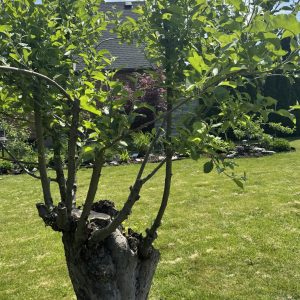
The picture accompanying this blog is that old tree.
The old stump refused to disappear. Before long, new shoots began emerging from the sides of the stump. Those shoots grew rapidly, producing fresh green leaves and extending upward with surprising vigor. From a distance, it looked as though the old tree was making a comeback. It appeared alive, healthy, and full of promise.
But as the growing season progressed, something became obvious. The new growth produced leaves but no blossoms. And without blossoms, there would be no apples.
The stump was alive, but it was not fruitful.
As I watched that old tree, I could not help but think about church revitalization.
When Churches Become Stumps
Many churches find themselves in a similar position.
At one time they produced an abundance of spiritual fruit, people came to faith, disciples were formed, and leaders were developed. The church had a meaningful impact on its community and played an important role in the lives of those it served.
Over time, however, the fruit began to diminish. What once seemed vibrant became routine when the methods that had been effective for a previous generation gradually lost their effectiveness. Attendance declined and community influence weakened when the sense of mission that once animated the congregation began to fade.
Eventually, leaders recognized that something significant had to change.
That moment often feels like pruning when long-established programs are discontinued, familiar traditions are reevaluated, and structures that have existed for decades are altered or removed. For many congregations, those decisions can feel painful because they touch cherished memories and deeply held attachments.
The hope, of course, is that pruning will create space for new life.
Yet that is where many revitalization efforts encounter a subtle challenge.
The Difference Between Regrowth and Renewal
The old stump in my yard teaches an important lesson: Not all growth is the same.
The stump began producing new growth almost immediately, sending out vigorous shoots that quickly filled with healthy green leaves. To anyone passing by, it would have appeared that the tree was making a remarkable recovery and was well on its way back to full health.
Yet the absence of blossoms revealed a deeper reality. The tree was producing activity without producing fruit.
Churches can do the same thing.
A congregation may launch new initiatives, refresh its facilities, redesign its website, update its branding, or add events to the calendar. Energy may increase, activity may become more visible and attendance may even improve for a season.
None of those things are necessarily bad. In fact, many of them may be helpful.
The question is whether they are producing fruit.
Sometimes what appears to be revitalization is simply the reappearance of old patterns in slightly different forms. The same assumptions remain. The same inward focus persists. The same systems continue to shape the culture of the church, even though they have been given a fresh coat of paint.
That is regrowth.
Renewal is something deeper.
Renewal occurs when the gospel takes fresh root in the life of a congregation. It happens when hearts are transformed, priorities are realigned, and the mission of God once again becomes central. Renewal is not primarily about restoring activity. It is about restoring fruitfulness.
What Fruit Looks Like
One of the most important questions leaders can ask during revitalization is not, “Is the church growing?”
A better question is, “What kind of fruit is the church producing?”
- Are people coming to faith in Christ?
- Are believers growing in spiritual maturity?
- Are new leaders being equipped and released into ministry?
- Is the church making a tangible difference in its community?
- Is there growing evidence of love, generosity, repentance, and obedience?
These are the indicators that matter most.
Leaves may attract attention for a season, but fruit reveals the true health of a tree. The same is true of a church.
Jesus taught that a tree is known by its fruit, emphasizing that genuine life is ultimately revealed not through appearances or activity but through the lasting fruit that grows from it.
A Hopeful Warning
There is both encouragement and caution in the image of the old stump.
The encouragement is that life remained even after severe pruning. What appeared dead was not entirely gone. God often works in places that others have written off and He has a remarkable way of bringing new life out of situations that seem beyond recovery.
Many churches that appear to have little future still possess tremendous potential when they surrender themselves to God’s purposes.
The caution is that survival is not the same as fruitfulness.
A church can remain active for years without fulfilling its mission. It can stay busy without making disciples. It can generate programs, meetings, and events while producing very little lasting spiritual fruit.
Faithful leaders must learn to celebrate signs of life while also asking harder questions about the fruit those signs are producing.
As I look at the old apple tree in my yard, I am reminded that God’s goal is not simply growth for growth’s sake. His desire is fruitfulness.
The purpose of church revitalization is not merely to make an aging church look alive again. It is to cultivate the kind of life that produces lasting fruit for the glory of God and the good of others.
After all, a tree covered in leaves may look impressive for a season.
But in the end, it is the apples that matter.