 Mike Puddicombe
 When churches begin the journey of revitalization, conversations naturally gravitate toward preaching, programs, and leadership structures. Facilities, by contrast, are frequently treated as a secondary concern, something to fix when the budget allows. That instinct can quietly undermine the very mission the church is trying to recover.
Before going further, it is worth naming something most leaders already feel. Audits are rarely anyone’s favorite task. They can feel tedious, intrusive, and at times discouraging. They force attention onto what is not working rather than what is. Most of us would prefer to spend our energy building something new rather than carefully examining what already exists.
And yet, audits are necessary. Without them, assumptions go unchallenged, blind spots remain hidden, and decline is often explained away rather than addressed. An audit, when approached properly, is not about criticism. It is about clarity. It gives leaders a truthful starting point, which is essential for any meaningful progress.
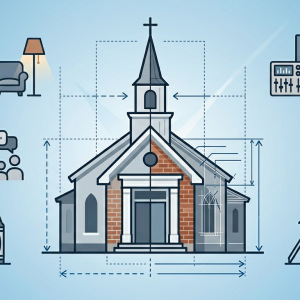
This is why a facilities audit is always one of the first things my wife Karen and I do when we step into a church revitalization context. Before strategies are formed or programs are adjusted, we walk the building, the grounds, and the surrounding area. We pay attention to what a first time guest would experience within the first ten minutes of arriving at the church. Those early observations consistently reveal more about a church’s alignment with its mission than many hours of meetings.
A facilities audit is not fundamentally about buildings. It is about alignment. It asks a straightforward but often uncomfortable question: Do our spaces reflect and support the people we are trying to reach?
Beyond Deferred Maintenance
In many congregations, basic upkeep has been postponed due to financial strain. Peeling paint, outdated signage, or worn carpets are easy to spot. These issues matter, not because aesthetics are everything, but because they communicate something whether we intend them to or not.
However, even churches that have maintained their buildings well can miss the deeper issue. A clean, functional facility can still be misaligned with its community. A building designed for a previous generation may no longer serve the needs, expectations, or rhythms of the current neighborhood.
This is where a thoughtful audit becomes essential.
Start with Context, Not Cosmetics
Before making any changes, the church must understand its context. Who actually lives in the surrounding community? What are their life stages, cultural expectations, and practical needs? A leadership team that takes this work seriously will begin to see the building with new eyes.
What once felt normal may now appear confusing, inaccessible, or unwelcoming to a first time guest.
Facilities should not simply reflect who the church has been. They should anticipate who the church is trying to reach.
Key Spaces That Shape First Impressions
While every church building is different, several areas consistently shape how people experience a congregation.
1. The Lobby
This is not just a pass through space. It functions as the relational front door of the church. Is it inviting? Does it encourage conversation? Or does it feel cramped, unclear, or transactional?
2. Connection Points
Is there a clearly identifiable place where guests can ask questions or take a next step? A well designed connection space signals intentionality. It tells newcomers, “We expected you, and we are ready to help you belong.”
3. Children and Student Environments
For many families, this is the deciding factor in whether they return. Are the spaces safe, clean, and clearly designed for specific age groups? Do they feel engaging and current, or dated and improvised?
4. Outdoor and Entry Areas
First impressions begin before anyone walks through the door. Parking should be clearly marked and accessible. Pathways should be obvious. Lawns should be cut and flower beds weeded weekly. A playground, if present, should communicate care and safety, not neglect.
5. Worship Environment
Lighting, sound, and visual projection are not luxuries. They are part of communication. Poor audio or distracting visuals create barriers to engagement, regardless of how strong the message may be.
Facilities as a Form of Hospitality
At its core, this conversation is theological, not merely practical. The way a church uses and maintains its space reflects its understanding of hospitality.
A well considered facility says, “We have made room for you.”
A neglected or confusing one says, “You are on your own to figure this out.”
Hospitality is not about impressing people. It is about removing unnecessary obstacles so that people can encounter community and, ultimately, the gospel.
Moving from Reaction to Intention
The goal of a facilities audit is not to generate an overwhelming list of renovations. It is to create clarity. Some changes will be immediate and inexpensive, such as improved signage, better lighting, or reconfigured furniture. Others will require long term planning and investment.
What matters most is the shift in posture. Instead of asking, “What can we afford to fix?” the church begins asking, “What do we need to change to better serve our mission?”
That is a very different question, and it leads to very different decisions.
A Final Thought
Church buildings are tools, not trophies. They are not ends in themselves but means through which ministry happens. When they are aligned with mission, they quietly support everything else the church is trying to do. When they are not, they become friction points that no amount of programming can fully overcome.
A facilities audit, done well, is not about creating a better building. It is about creating clearer pathways for people to encounter a welcoming community and a living faith.