
 Mike Puddicombe
 Keeping Church Revitalization Going
Church revitalization is never finished.
There is no point at which a church can declare, “We’ve arrived.”
Communities change. Culture shifts. Generations think differently. Technology accelerates. Expectations evolve. If the church stops adapting, it does not remain steady — it declines.
A humorous commercial from Chick-fil-A captures this perfectly. A man stands in his workplace breakroom, waist-deep in a hole in the floor, eating his lunch. A coworker walks in and remarks, “Tom, you’re really stuck in that rut.” Tom responds defensively, “What rut? I thought I was in a groove.” The coworker replies, “Classic rut thinking.”
It’s funny because it’s true.
Groove vs. Rut
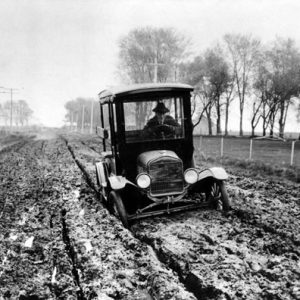
If you have ever driven down a muddy dirt road, you know the difference.
Grooves help guide you. They create smoother travel.
Ruts, however, are grooves worn too deep. When you fall into a rut:
- Steering becomes difficult
- The vehicle undercarriage scrapes
- Movement is restricted
- Eventually, you get stuck
Grooves are helpful.
Ruts are dangerous.
In leadership terms:
- A groove is operating in your strengths, aligned with mission, energized by vision.
- A rut is when the system determines your direction instead of your mission.
Churches slip into ruts when they sanctify structures that once worked but no longer serve the mission.
What once fueled growth becomes the very thing preventing it.
Satisfaction Leads to Atrophy
Think about physical fitness.
Once you reach your goal weight or stamina level, you cannot stop exercising. If you do, decline begins immediately. Muscles weaken. Endurance fades. Strength deteriorates.
The same is true in revitalization.
After a church moves from unhealthy to healthy, the temptation is preservation. Leaders instinctively try to protect what worked in order to prevent regression.
But systems that worked in one season will not work forever.
The danger of revitalization is not failure — it is success without adaptation.
The very patterns that brought renewal can become future obstacles if they are idolized.
Failure to adapt likely contributed to the church’s earlier decline. Repeating that pattern will recreate it.
The Acceleration of Change
In 2010, then-CEO of Google, Eric Schmidt, famously noted that humanity was creating as much information every two days as it had from the dawn of civilization until 2003. That statistic is now outdated — because change has accelerated even further.
Cultural norms shift rapidly.
Communication platforms rise and fall.
Demographic patterns reshape communities.
Expectations evolve.
Engagement habits transform.
What worked ten years ago may not work today.
What works today may not work five years from now.
Some leaders resist this pace.
But Scripture reminds us that transformation is central to the Christian story.
Everything God created moves and develops. Everything He touches is transformed. The only constant is God Himself and His unchanging Word.
The Gospel is not a message of stagnation — it is a message of radical change:
- Death to life
- Darkness to light
- Sin to righteousness
- Earth to heaven
“In a flash, in the twinkling of an eye… we will be changed.” — I Corinthians 15:52
If the message we proclaim is transformation, then we cannot fear adaptation.
Faithfulness is not sameness.
Anticipating What’s Next
Healthy leadership is forward-looking.
Strong churches regularly evaluate:
- Whether their current ministries still align with their mission
- Whether their structures are serving people or simply preserving tradition
- Whether their systems will remain effective in the next cultural season
Waiting until decline becomes visible is reactive leadership.
Preparing before decline begins is strategic leadership.
Momentum can hide vulnerabilities.
Growth can conceal structural weaknesses.
Comfort can mask complacency.
Wise leaders ask: If nothing changes in our approach over the next five years, what will the result be?
Keep Revitalizing
Church revitalization is not a one-time project.
It is a posture of continual alignment with mission.
Now that your church is healthier, it is time to prepare for the next season of renewal.
Because one day:
- Your groove will deepen.
- Your strengths will calcify.
- Your systems will age.
- Your successes will tempt you to settle.
And grooves become ruts when left unchecked.
Stay anchored in Scripture.
Stay sensitive to the Spirit.
Stay courageous in leadership.
Learn from the past — but do not replicate it.
Anticipate the future — and lead into it.
Jesus has no interest in stagnant religious thinking. He is always leading His church forward.
“I press on toward the goal…” — Philippians 3:14
The question is not whether change is coming.
The question is:
Are you steering — or are you stuck?