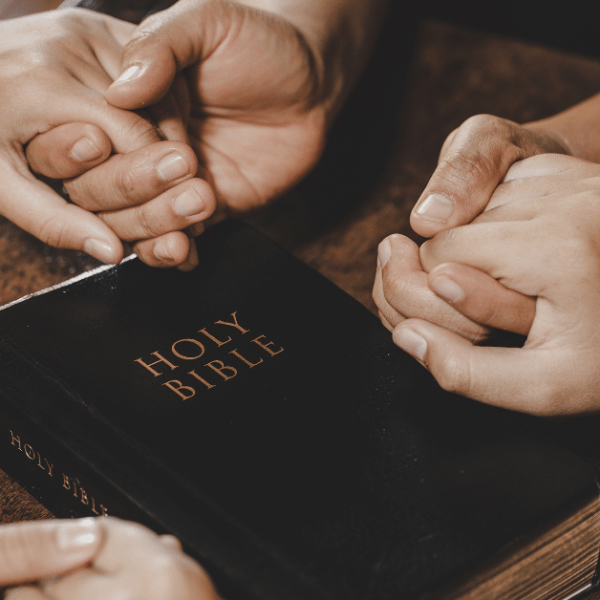

The Dragon of Prayerlessness in Church Revitalization

Prayer is not a secondary support system for church revitalization—it is the foundation.

The church is not merely an organization to be managed; it is a spiritual organism, the living body of Christ. Because of this, renewal cannot be achieved by human wisdom, organizational efficiency, or strategic ingenuity alone. The ultimate answer to every weakness, struggle, and challenge facing the church is found not in our plans, but in the wisdom, will, and way of Jesus Christ.

That is why prayer must remain central to the work of revitalization and renewal.


Prayer Aligns Us With the Will of Christ

At its core, prayer is not about persuading God to bless our ideas. Prayer is the humble act of aligning our will with Christ’s will. It is the recognition of our desperate need for His agenda and direction—and the intentional laying down of our own preferences and desires for the church.

The first response to any issue facing the church should be prayer. But prayer is not simply the starting point. It must permeate the entire revitalization process and govern the implementation of every solution we pursue.

Too often, leaders react to problems by seeking answers instead of seeking God. In doing so, we reveal one of the most dangerous enemies of renewal: prayerlessness.


Jesus Warned Us About Prayer Neglect

Jesus anticipated that God’s people would struggle with prayer. In Luke’s Gospel, He tells the parable of the persistent widow to emphasize the necessity of continual prayer. He then asks a haunting question: When the Son of Man returns, will He find faith on the earth?

That question is inseparable from prayer.

If the declining church is ever to experience renewal, the power of prayer must be released again. The Apostle Paul repeatedly urged believers to be vigilant and faithful in prayer:

  • “Praying always with all prayer and supplication”

  • “Continue earnestly in prayer, being vigilant in it with thanksgiving”

  • “Pray without ceasing”

If Jesus and Paul needed to remind believers to refocus their prayer lives, it should not surprise us that prayerlessness has crept into the modern church.


Prayer Releases God’s Power, Peace, and Forgiveness

Throughout Scripture, the people God used most powerfully were people who prayed.

Prayer is how we experience forgiveness through the work of Christ. It keeps our hearts clean before God. When prayerlessness takes root in a church, repentance becomes the pathway back to peace and spiritual clarity.

Prayer also brings peace. When anxiety and discouragement rise—as they often do in revitalization—the antidote is prayer. God promises to guard our hearts and minds with His peace. That peace becomes the strength needed for the long journey of renewal.


Prayer Fuels Bold Leadership

Revitalization requires boldness, and boldness is born in prayer.

In the Book of Acts, the apostles prayed for boldness—and God answered. Paul regularly asked others to pray for him so that doors would open for gospel ministry. Prayer not only strengthens the leader; it mobilizes the church.

For the church revitalizer, prayer becomes the first step in calling the laity to lift high the name of Jesus. A praying church is a courageous church. When you need boldness, do what Paul did—ask others to pray.

James reminds us, “The effective, fervent prayer of a righteous person accomplishes much.” Fervent prayer releases God’s purposes in our cities and communities. It requires perseverance, holy determination, and a growing desperation for God Himself.


Overcoming the Habit of Prayerlessness

Prayerlessness is often a habit—and habits can be broken.

Psychologists who study habit formation note that many lasting changes happen in “moments of truth.” Prayerlessness may be overcome when leaders and congregations reach a decisive realization: We cannot go on without God.

Revitalization begins when prayer is given priority in the daily rhythm of life and ministry. Set aside time. Guard it fiercely. Make prayer personal and intimate. Learn to listen more than you speak. Use Scripture as your guide. Keep a prayer list. Be specific. Watch for God’s answers—and thank Him when they come.

Read about great men and women of prayer. Let their lives stir your faith. Prayer is not a duty—it is a privilege. It is where intimacy with the Father grows and where hearts are transformed.


A Practical Prayer Plan for Church Revitalizers

Prayer will lead us to:

  • Confession

  • Conviction

  • Conformation to Christ

  • Declaration of truth

  • Righteous decision-making

  • Firmness in Christ

  • A victorious life

Prayer is where we meet God.
Prayer is where we are shaped.
Prayer is the secret of holiness.

Historic leaders understood this well. John Wesley doubted the effectiveness of ministers who did not spend hours in prayer. Martin Luther famously said he prayed an hour every day—unless he was especially busy, then he prayed for two.

Neglecting prayer has always led to stagnation in the Christian life.


Becoming a House of Prayer Again

The most important thing a church can do is pray.

A deep and growing prayer life is a sweet offering to the Lord. When God’s house on earth becomes a house of prayer, God’s house in heaven moves with power and purpose.

The prophet Isaiah declared, “My house shall be called a house of prayer for all people.”

Supernatural power is released when God’s people pray together. We must slow down, remove distractions, and passionately seek the Lord. Let us remove prayerlessness from the declining church and rediscover what God can do through praying people.

So let us pray—earnestly, continually, and expectantly.

Lead Like Nehemiah: 5 Biblical Steps to Revitalize Your Church — One Wall at a Time

Your church is in ruins. The walls are broken. The people are discouraged.

Sound familiar?

That was Jerusalem in 445 BC. That was Nehemiah’s reality.

But in just 52 days, he led a discouraged remnant to rebuild the impossible.

How? He didn’t have a budget. He didn’t have a majority. He didn’t have time.

He had a proven leadership process — straight from Scripture.

Here are Nehemiah’s 5 Leadership Steps every church revitalizer must follow.


Step 1: PRAYED

(Nehemiah 1)

“When I heard these things, I sat down and wept… for some days I mourned and fasted and prayed before the God of heaven.” (Nehemiah 1:4)

Nehemiah didn’t react. He didn’t rally. He didn’t resign.

He prayed.

For four months. With tears. With fasting. With specificity.

Your Move:

  • Start a 40-Day Prayer Guide for your church
  • Daily War Room: You + 3 leaders, 6 AM, 20 minutes
  • Pray by name for:
    • 10 resistant leaders
    • 10 lost neighbors
    • 10 future volunteers
  • Text “PRAY” to your team → instant prayer chain

Warning: No prayer = no power. Strategy without Spirit = stagnation.


Step 2: INSPECTED

(Nehemiah 2:11–16)

“I went to Jerusalem… I set out during the night with a few others… I inspected the walls… No one knew where I had gone or what I was doing.”

Nehemiah didn’t assume. He didn’t announce. He didn’t ask permission.

He assessed.

Quietly. Thoroughly. At night. With data.

Your Move:

  • 90-Day Listening Tour
    • Visit every ministry
    • Interview 20 legacy members
    • Survey: “What broke your heart about this church?”
  • Create a “Wall Report”:
    Area Condition Threat Level
    Worship Crumbling High
    Children Breached Critical
    Outreach Burned Urgent

Step 3: CAST VISION

(Nehemiah 2:17–18)

“Then I said to them, ‘You see the trouble we are in: Jerusalem lies in ruins… Come, let us rebuild the wall… so that we will no longer be in disgrace.’ … They replied, ‘Let us start rebuilding.’ So they began this good work.”

Nehemiah didn’t say:

  • “We need to fix this.”
  • “Someone should do something.”
  • “Let’s vote on it.”

He said: “COME, LET US…”

He painted the pain. He shared the plan. He invited participation.

Your Move:

  • One Sentence Vision:

    “We’re rebuilding [Your Church] to reach [Your Community] for Christ — one family at a time.”

  • Vision Sunday:
    • Show ruin photos
    • Share inspection data
    • Hand out bricks (literal or digital)
    • End with: “Who’s with me?”
  • Repeat the vision 7 times, 7 ways (sermon, video, email, social, etc.)

Step 4: FACED OPPOSITION

(Nehemiah 4:1–3)

“When Sanballat heard… he became angry and mocked the Jews… ‘What are those feeble Jews doing? Will they restore it…?’”

Opposition came immediately. Mockery. Threats. Sabotage.

Nehemiah didn’t:

  • Argue
  • Apologize
  • Quit

He responded with prayer, strategy, and courage.

Your Move:

  • Expect resistance — it’s a sign you’re moving
  • Name your Sanballats (privately)
  • Respond with Nehemiah 4:6:

    “So we rebuilt the wall… for the people worked with all their heart.”

  • Conflict Protocol:
    1. Pray
    2. Meet privately (Matthew 18)
    3. Refocus on mission
    4. Remove if toxic (after 3 warnings)

Step 5: PROTECTED HIS PEOPLE

(Nehemiah 4:14)

“Don’t be afraid of them. Remember the Lord, who is great and awesome, and fight for your families, your sons and your daughters, your wives and your homes.”

Half worked. Half stood guard. Everyone had a sword.

Nehemiah protected:

  • Spiritual health (prayer)
  • Physical safety (guards)
  • Family unity (motivation)

Your Move:

  • Guard the flock:
    • Background checks
    • Financial transparency
    • Emotional safety (no gossip)
  • Protect your family:
    • Weekly date night
    • No church talk after 8 PM
    • Family Sabbath 1x/quarter
  • Arm your people:
    • Train every member to share gospel
    • Equip with “My One” cards (1 person to pray for)

Your 52-Day Nehemiah Challenge

Day Action
1–7 Fast & pray (Nehemiah 1)
8–21 Inspect quietly (Nehemiah 2)
22 Cast vision (Vision Sunday)
23–45 Rebuild with opposition
46–52 Celebrate + dedicate

Goal: One visible win in 52 days (new ministry, new families, new wall section)

Final Charge: Rise Up and Build

“The God of heaven will give us success. We his servants will start rebuilding.”Nehemiah 2:20

Your church isn’t dead. It’s dormant.

Will you weep? Will you inspect? Will you cast vision? Will you fight? Will you protect?

The walls are waiting.

A Prayer-Powered Plan for Church Revitalization: Building Your Spiritual War Room

Church revitalization isn’t a boardroom project—it’s a battlefield. The enemy despises renewal, and he’ll throw every weapon at you: discouragement, division, distraction. Ephesians 6:12 doesn’t mince words: “We do not wrestle against flesh and blood, but against… spiritual forces of evil.” If you’re leading a church through turnaround, your first and fiercest strategy isn’t a new logo or launch event. It’s prayer. Not polite bedtime prayers, but wartime intercession that storms heaven and shifts atmospheres.

You can’t win this alone. You need a prayer team—your spiritual special forces. Here’s a battle-tested plan to build one, fuel it, and watch God turn a dying church into a thriving outpost of His kingdom.


The Power of Prayer Partners: You Can’t Fight Solo

Revitalization is a 3–5 year slog through spiritual trenches. Satan will target your marriage, your health, your vision. Personal prayer is non-negotiable, but it’s not enough. You need prayer cover.

Your #1 move as a revitalizer: Recruit at least 10 committed prayer warriors.

These aren’t casual “thoughts and prayers” people. They’re intercessors who’ll fast, weep, and war in the Spirit for you and the church. This isn’t optional—it’s the single most predictive factor of revitalization success.


Step 1: Recruit Your Prayer Team (Start with 10, Scale to Hundreds)

Don’t wait for volunteers. Ask boldly.

  1. Brainstorm 10 names — faithful pray-ers from your past: former church members, mentors, family, neighbors.
  2. Call or meet them personally. Share the vision: “God’s calling us to breathe life into this church. I can’t do it without your prayers.”
  3. Tap networks: Ask your associational missionary for email lists. Use opt-in forms, not spam.
  4. Empower recruiters: Each of your 10 invites 10 more. Exponential growth starts here.

Pro Tip: Include non-churchgoers. A praying grandma down the street might be your mightiest warrior.


Step 2: Give Them Something to Pray For (Be Specific)

Vague prayers fizzle. Arm your team with targeted, heartfelt requests:

  • For you: Wisdom, endurance, humility, protection from burnout.
  • For your family: Unity, health, joy amid the strain.
  • For the church: Vision clarity, core team formation, financial breakthrough.
  • Against the enemy: Bind division, deception, apathy.

“Lord, protect Pastor Mark’s marriage this week. Give him supernatural patience with the finance committee. Raise up 12 disciples ready to rebuild.”

Specificity breeds faith. Faith moves mountains.


Step 3: Keep the Team Connected (Communication = Oxygen)

A silent prayer team dies. Use weekly updates to stoke the fire:

  • Tools: Use Facebook, WhatsApp, or any other social media tool that works for your group
  • Website: Create a Prayer Team signup form for your church web page
  • Low-tech options: Mailed letters, prayer cards in pews.

Sample Email Structure:

Subject: Urgent Prayer: Unity in Sunday’s Vote

  1. Victory report (last week’s win)
  2. 3 specific requests (this week)
  3. Scripture to claim
  4. Call to action (fast Wednesday?)

Step 4: Build a Prayer Culture (From Emails to Battle Stations)

Don’t stop at updates. Embed prayer into the church’s DNA:

  • Appoint a Prayer Champion — someone to rally, remind, and recruit.
  • Monthly Prayer & Fasting Days — corporate hunger breeds breakthrough.
  • Prayer Walks — circle your building, neighbourhoods, schools.
  • 24-Hour Prayer Marathon — sign-up slots for round-the-clock coverage.
  • Weekly Prayer Meeting — even if it’s just 5 people at first.

Goal: Prayer isn’t an event. It’s the air your church breathes.


Why This Matters: You’re Not Fixing a Church—You’re Reclaiming Kingdom Ground

Revitalization without prayer is like storming a beachhead with no air support. You’ll take hits you can’t see coming.

But a leader backed by a praying army? Unstoppable.

“The church that prays together, stays together—and turns the tide.”


Your Next Move: Start Today

  1. List 10 names (right now).
  2. Call the first one before dinner.
  3. Send your first prayer email this week.

Revitalization doesn’t begin with a vote or a vision casting service. It begins on your knees, surrounded by warriors who refuse to let you fall.

“Grab your 10. Send that email. Watch God move.”

The church isn’t dying—it’s being reborn. And prayer is the delivery room.