
Having a Church Planting Mindset in Revitalization
 Mike Puddicombe
 When churches begin the journey of revitalization, the conversation often focuses on survival.
Leaders ask questions like:
- How can we attract new people?
- How can we rebuild ministries that have faded away?
- How can we stabilize attendance and finances?
These are understandable concerns. When a church has been declining, survival feels urgent.
But revitalization requires more than survival thinking.
It requires a shift in mindset.
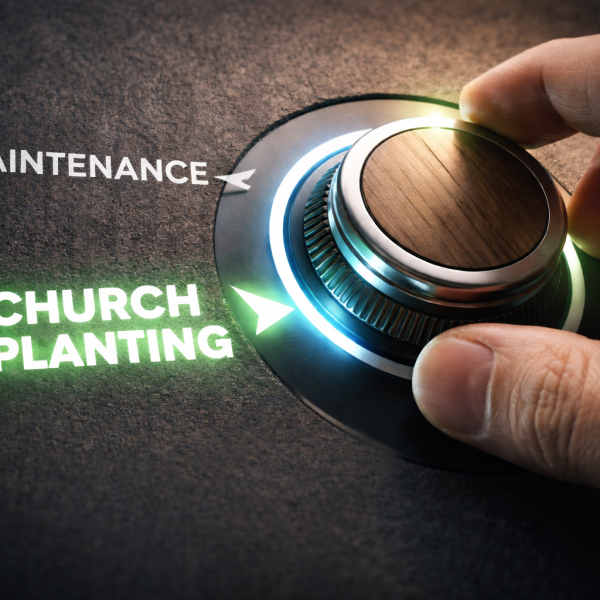
One of the most powerful shifts a church can make is moving from a maintenance mindset to a church-planting mindset.
This does not necessarily mean immediately launching a new congregation. Rather, it means embracing the same missional posture and multiplication thinking that healthy church plants often possess.
A Biblical Vision for Growth
Ephesians 4:7–16 gives us a clear picture of how the church is meant to grow.
Christ gives leaders—apostles, prophets, evangelists, pastors, and teachers—to equip God’s people for works of service so that the body of Christ may be built up until it reaches maturity.
Notice the emphasis.
The church grows when people are equipped, when every member contributes, and when the body builds itself up in love.
Healthy churches are not built around a few people doing ministry while everyone else watches. They are communities where every part does its work.
This is exactly the kind of culture that church plants often develop from the beginning.
What a Church Planting Mindset Looks Like
Church plants usually start with limited resources, small numbers, and uncertain futures. Yet many of them thrive because they share a common mindset.
They think missionally.
They are willing to experiment.
They expect everyone to contribute.
They focus outward rather than inward.
When a revitalizing church adopts this mindset, something begins to change.
Instead of asking, “How do we maintain what we have?” leaders begin asking, “How do we reach the people around us?”
That shift is transformational.
Four Questions Every Church Should Ask
A helpful framework for thinking about revitalization and growth is to ask four simple questions.
1. Why Do People Come?
People usually come because something attracts them.
It might be the preaching, the worship, the children’s ministry, or the warmth of the congregation.
Attraction is not a bad thing. In fact, it reflects the incarnation principle—the church engaging its community in meaningful ways so that people encounter Christ through His people.
But attraction alone is not enough.
2. Why Do People Stay?
People stay when they find involvement.
Visitors become participants when they build relationships, find meaningful ways to serve, and discover a sense of belonging.
Healthy churches move people quickly from spectators to participants.
3. How Does a Church Become Healthier?
Church health grows through reproduction.
Disciples make disciples.
Leaders develop new leaders.
Ministries raise up new ministries.
A church that reproduces spiritually is a church that is becoming healthier.
4. How Does a Church Grow Exponentially?
Exponential growth happens through multiplication.
This is where the church-planting mindset becomes so important.
Instead of thinking only about growing one congregation, the church begins to think about expanding the mission of Christ into new places and among new people.
Multiplication may include:
- launching new ministries,
- starting new gatherings,
- planting new congregations,
- or partnering with others to reach new communities.
Why a Church Planting Mindset Revitalizes Churches
Interestingly, many declining churches rediscover life when they begin thinking like church planters.
Why?
Because a church-planting mindset shifts the focus outward.
It restores a sense of mission.
It raises up new leaders.
It inspires faith and vision.
When a church begins asking, “Who else needs the gospel in our community?” the entire culture begins to change.
Energy replaces complacency.
Vision replaces nostalgia.
Mission replaces maintenance.
From Preservation to Mission
Many churches spend enormous energy trying to preserve the past.
But revitalization is not primarily about preserving what once was.
It is about rediscovering why the church exists in the first place.
The church was never meant simply to gather people together. It was meant to send them into the world with the gospel.
When a church adopts a church-planting mindset, it begins to rediscover that calling.
A Final Thought
If your church is in decline, planting another church might feel unrealistic.
But adopting a church-planting mindset is not unrealistic at all.
In fact, it may be the very thing that restores life to your congregation.
Because sometimes the path to renewal begins when a church stops asking,
“How do we keep what we have?”
and starts asking,
“Where is God calling us to multiply?”