
Every Church Revitalization Needs a Leadership Pipeline
 Mike Puddicombe
 One of the greatest mistakes churches make in revitalization is assuming that renewal will come through a better strategy, a new pastor, or a fresh vision statement. While each of those has its place, lasting revitalization almost always depends on something far more fundamental. It depends on developing leaders.
Healthy churches do not simply recruit leaders. They intentionally train them. They create a culture where ordinary believers are equipped to serve, lead, disciple others, and eventually lead ministries, teams, and even churches.
If revitalization is going to last beyond the current pastor or leadership team, churches must become leadership development centres.
Antioch: A Church That Trained Leaders
One of the best examples of this is found in the church at Antioch.
Ironically, Antioch was not planted by the apostles. Although Jesus had commissioned them to take the gospel to the ends of the earth, the apostles largely remained in Jerusalem. Instead, the church at Antioch was established by ordinary believers who had been scattered through persecution (Acts 11:19).
These unnamed Christians simply shared Christ wherever they went. They crossed ethnic and cultural boundaries and watched God do extraordinary things.
When the church in Jerusalem heard what was happening, they sent Barnabas to investigate. What he discovered was not merely numerical growth but unmistakable evidence of God’s grace transforming lives. Barnabas recognized that this young church needed more than encouragement. It needed leadership development.
He recruited Saul, and together they spent an entire year teaching, discipling, and mentoring believers before the church commissioned them for missionary service (Acts 11:25-26; 13:1-3).
Notice the pattern.
The church did not rush leaders into ministry. It invested in them. Ministry became the classroom, and experienced leaders became mentors. Antioch became both a sending church and a training church.
That remains one of the clearest leadership models for church revitalization today.
Revitalization Requires a Leadership Pipeline
Many churches facing decline share an uncomfortable reality: they have very few emerging leaders.
The common reason for this is because the same people have served in the same positions for years, most ministries depend on a handful of faithful volunteers, and younger leaders have not been identified, equipped, or entrusted with meaningful responsibility. Eventually, the church discovers that its greatest shortage is not money or attendance. It is leadership.
Every revitalizing church needs a leadership pipeline that intentionally moves people from attending to serving, from serving to leading, and from leading to developing other leaders.
Leadership is not discovered by accident. It is cultivated through intentional investment.
Train Ordinary People
One of the most encouraging truths in Acts is that God rarely begins with extraordinary people.
The believers who planted Antioch remain anonymous. Paul and Barnabas later appointed elders in newly planted churches that had existed only a short time (Acts 14:23). Rather than waiting decades for perfect leaders, they recognized God’s work in ordinary believers and helped them grow into leadership.
Revitalization churches cannot wait until someone appears fully prepared. Instead, they must ask, “Who is already serving faithfully? Who demonstrates spiritual maturity? Who is eager to learn?”
God has always delighted in using ordinary people to accomplish extraordinary purposes.
Help People Discern God’s Calling
Training leaders is not simply about teaching skills. It begins by helping people recognize God’s calling on their lives.
Some leaders emerge naturally because others already trust and follow them. Others discover gifts they never realized they possessed when they begin serving in ministry.
The role of church leadership is to prayerfully observe, encourage, and affirm what God is already doing. Calling is often recognized long before it is formally commissioned.
Barnabas saw God’s grace at work in Antioch before anyone laid hands on Paul and himself for missionary service. Wise churches do the same today.
Develop Gifts Through Ministry
Leadership cannot be learned entirely in a classroom. Courses, books, and conferences all have value, but the greatest lessons are learned while serving real people in real ministry situations.
That is exactly how Jesus trained the Twelve. It is how Barnabas mentored Saul. It is how Paul developed Timothy, Titus, and countless others.
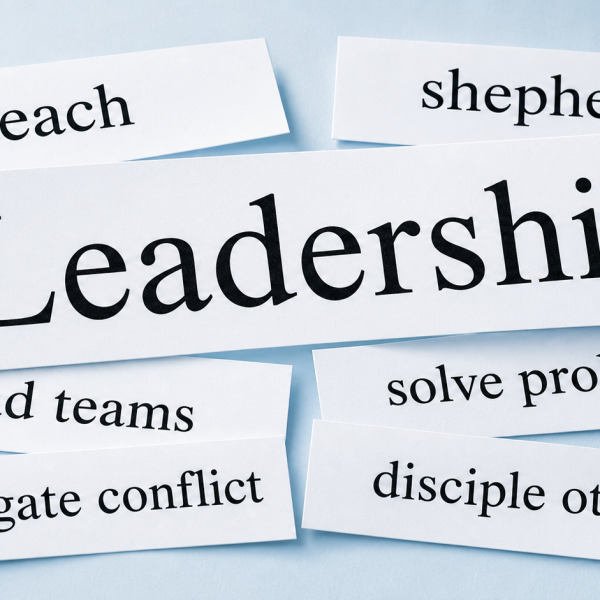
The local church becomes the training ground where people learn to teach, shepherd, lead teams, solve problems, navigate conflict, and disciple others.
Knowledge is important.
Experience is essential.
Healthy churches provide opportunities for both.
Build Character Before Position
One of the biggest temptations in struggling churches is filling roles quickly just to keep things moving. Scripture consistently puts the order the other way around: character comes before responsibility. Paul’s qualifications for elders and deacons stress integrity, humility, faithfulness, and spiritual maturity long before leadership skill.
Revitalization requires leaders whose lives support the message they proclaim.
Competence may attract followers for a season but character sustains ministry for a lifetime.
Teach Flexibility and Resilience
Revitalization is rarely comfortable because leaders often encounter resistance, disappointment, changing circumstances, and seasons when progress feels painfully slow. For this reason, future leaders need more than ministry techniques; they need resilience.
Paul experienced persecution, rejection, imprisonment, hardship, and uncertainty. Yet he continued adapting to new cultures and new opportunities without compromising the gospel.
The best leaders remain lifelong learners. They hold firmly to biblical truth while remaining flexible in their methods.
Churches should intentionally expose emerging leaders to new experiences, new ministries, and new responsibilities that stretch their faith and deepen their dependence upon God.
Keep Leaders Connected to the Team
Healthy leaders never lead alone. Throughout Acts, Paul served in teams, returned to Antioch to report what God had done, and remained accountable to the church that had sent him.
Leadership development is never about creating independent personalities who build their own platforms. It is about raising servant leaders who remain connected to the local church, value spiritual authority, and understand that ministry is always a team effort.
Revitalization flourishes where accountability and encouragement walk hand in hand.
A Church That Trains Leaders Will Make an Impact
The churches that make the greatest long-term impact are rarely those with the most impressive facilities or the largest budgets. They are churches that consistently identify, develop, mentor, and release leaders.
That was the legacy of Antioch. It became a church that reproduced leaders who reproduced churches.
Imagine what would happen if every revitalizing church viewed itself not simply as a congregation to maintain, but as a leadership development centre for the Kingdom of God. Instead of asking, “Who will replace our current leaders?” churches would begin asking, “Who are we preparing today for tomorrow?”
That single shift in thinking changes everything.
Questions for Reflection
As you consider your own church, ask yourself these questions:
- Who is already demonstrating faithfulness and spiritual maturity?
- Who could benefit from intentional mentoring over the next year?
- Are we providing opportunities for emerging leaders to learn by serving?
- Are we developing leaders who will eventually develop others?
Church revitalization is not ultimately about preserving an institution. It is about raising up people whom God can use for His mission.
When churches intentionally train leaders, they position themselves not only for renewal but also for multiplication. That has been God’s pattern from Antioch until today, and it remains His strategy for building His Church.