
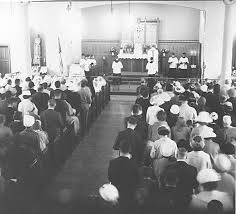
When Yesterday Becomes Your Best Day

A church is in need of revitalization when it believes its best days are behind it.

“We remember the fish which we used to eat free in Egypt, the cucumbers and the melons and the leeks and the onions and the garlic.” Numbers 11:5

Few statements in Scripture are as jarring as Israel’s complaint in the wilderness. After more than 400 years of slavery, God had delivered His people with power, signs, and wonders. And yet, standing on the edge of freedom, they looked back and described slavery as free.

That is a sobering distortion of memory.

A church in need of revitalization is often a church that believes it is free—when, in reality, it has become enslaved.


When Slavery Starts to Feel Like Freedom

Churches can be enslaved in many ways. Some are trapped in the past. Others are bound by tradition, budgets, fear, or unhealthy leadership dynamics. Still others are constrained by internal control, unresolved conflict, or church politics.

What makes this so dangerous is that slavery rarely announces itself as bondage. It often disguises itself as stability, predictability, or faithfulness. Like Israel in the wilderness, churches begin to remember the “free meals” of the past while forgetting the chains that came with them.

As pastors and leaders, part of our calling is to discern where God is moving—and to recognize when our ministries have become enslaved to programs, routines, and predictable environments rather than animated by the Spirit of God.

That raises an important question: How can you tell when your church is in need of revitalization?


Indicators That a Church Has Settled Into Bondage

Here are some common warning signs:

  • Does your church value business meetings more than evangelistic or missional engagement?
  • Do visitors leave as quickly as they arrive?
  • Is there more anxiety about temporarily moving the Lord’s Supper table for a children’s event than prayerful concern for those children to come to Christ?
  • Does pastoral leadership grow anxious when preaching or teaching moves toward change?
  • Is there genuine expectancy and joy in worship—or just familiarity?
  • Is affection for the past stronger than hope for the future?
  • Is there deep concern when a donor nameplate is missing from a pew?
  • Is the church budget dominated by tightly designated line items that leave little room for mission?

When these patterns emerge, the church may feel stable—but stability is not the same as faithfulness.


“The Good Old Days” and What We Really Mean

“The good old days” is often code language for don’t mess with my stuff.

Those days may indeed have been good in some ways—but they were not without conflict, financial stress, politics, fear, or drama. What made them feel safe was not perfection, but predictability.

Israel’s slavery offered predictable meals. Never mind the beatings. Never mind the oppression. Never mind the generational misery. At least life felt known.

Churches do the same thing. They cling to familiar patterns—not because those patterns are fruitful, but because they are familiar.

Ironically, when someone says, “The good old days,” it often opens the door to revitalization.


Using the Past to Invite the Future

When I hear that phrase, I almost always respond with curiosity rather than correction. I ask people to tell me their stories—what made those days so meaningful.

And the stories are often beautiful.

I have heard accounts of intense seasons of prayer, month-long revival meetings, miraculous healings, last-minute financial provisions, powerful preaching, and joyful worship. For many churches, those truly were good days.

After listening, I ask two simple questions:

  • Wouldn’t you like to see that happen again?
  • Wouldn’t it be wonderful if this generation—your children and grandchildren—experienced the same move of God?

Almost without exception, the answer is yes.

And that is where revitalization begins.

As people reflect more deeply, they often recall that those “good days” were not static. They involved change, sacrifice, risk, and obedience. The church adapted. Leaders stepped out in faith. People met God where He was working.


Why Rob the Next Generation?

Why would we deny the next generation the opportunity to experience God’s power, provision, and presence?

This is the moment when pastoral leadership matters most—when the pastor says, “Follow me. We are going to pursue all that God has for us, for the sake of the next generation.”

Yes, it will look different. After all, the desert does not look like the Jordan. But God is no less present in the journey than in the destination.


Guarding Against Mission Drift

Ministry always carries the risk of mission drift. Churches settle into routines, routines become habits, and habits slowly replace obedience.

Pastors and leaders are not immune. Stability can feel like relief after years of hard work. But if we are not careful, resting turns into settling, and settling turns into dependence on systems rather than the Spirit.

Nothing reveals this more clearly than when slavery is remembered as freedom.


The Only “Good Old Days” That Matter

The only true “good old days” are the ones we are living right now—with faith, obedience, and anticipation for what God will do next.

When we step away from obedience and faith, we stop living toward God’s future and begin clinging to God’s past. Revitalization calls us forward—not to abandon our story, but to continue it.

Yesterday was not meant to be your church’s best day.

By God’s grace, the best days are still ahead.

Every Plateaued Church Loves a Revitalization Leader — Until They Get One

Every plateaued church wants revitalization.

They pray for it.
They talk about it.
They form search committees hoping to find the right leader to guide them out of the wilderness and into the promised land.

And then that leader arrives.

What most churches don’t realize is that revitalization doesn’t begin with arrival in the promised land. It begins with a journey through what feels like a dark valley of change—a place marked by discomfort, disorientation, and perceived danger.

You can’t really blame them.
Church boards, search committees, and congregations don’t know what they don’t know. They want renewal without disruption, growth without loss, and leadership without tension.

But revitalization leadership doesn’t work that way.

Here are four reasons churches often struggle with pastors who actually lead.


1. Leading Always Causes Change

Revitalization leaders lead—and leadership always implies movement.

Movement means progress.
Progress means change.
And change means the status quo is threatened.

Many churches vote for change in a weak moment or without fully understanding what they’re consenting to. They want just enough improvement to keep the doors open, the budget balanced, and the routines intact.

What they often discover—too late—is that revitalization doesn’t preserve things exactly as they are. It reshapes them.

When a revitalization pastor begins pointing the church in a new direction and actually moving toward it, reality sets in. The unspoken hope surfaces:

“We didn’t mean this much change.”


2. Revitalization Leaders Are Assertive

One of the key differences between a revitalization pastor and a maintenance pastor is assertiveness.

Assertiveness is the ability to state opinions, ideas, needs, and convictions clearly and firmly—while still welcoming dialogue, disagreement, and discernment.

It is not aggression.

Aggression seeks to impose control through force, pressure, or threat. That has no place in ministry leadership.

Assertive leadership, however, benefits plateaued churches in powerful ways. It creates an environment of trust. When a pastor is willing to speak honestly about intentions, convictions, and concerns, others eventually feel safe to do the same.

The result?

  • Hidden information surfaces
  • Fear-driven silence loosens
  • Better decisions become possible

Not everyone will like this.

In churches accustomed to unassertive leadership, open dialogue can feel awkward or even threatening. Long-standing power brokers—those who maintain control through intimidation or manipulation—often see an assertive pastor as a direct threat.

That’s usually when the trouble begins.


3. Systems Naturally Resist Change

Every church is a system. And every system—without exception—works to preserve itself.

That means resistance is not a sign of failure. It is a sign that leadership initiative has begun.

When a church calls a revitalization pastor, they are agreeing—at least in theory—to deliberate change. The pastor understands something the congregation may not yet realize: resistance, anxiety, and even conflict are not just possible, they are predictable.

As Edwin Friedman famously observed in A Failure of Nerve, resistance to leadership initiative is rarely about the issue itself. More often, it is about the fact that a leader dared to lead.

Systems like the idea of leaders—until they get one.

Seasoned revitalizers understand this and don’t panic when resistance surfaces. In fact, they often quietly rejoice. Resistance usually means that change is no longer theoretical—it’s becoming real.


4. Human Nature Is Wired to Resist Change

There is also a very practical, neurological reason people resist revitalization.

Your brain is already working at capacity.

It processes massive amounts of sensory data, regulates bodily systems, scans constantly for threats, and manages daily decision-making. To survive, it conserves energy by turning most of life into habit.

Roughly 80% of what we do each day happens on autopilot.

Habits protect us. They reduce mental load. And when habits fail, anxiety rises fast.

Think about what happens when traffic suddenly stops on your normal route to work. Confusion sets in. Frustration follows. You don’t have enough information, but you still have to make decisions.

That’s exactly what change does in churches.

  • Asking people to invite visitors for lunch disrupts decades of post-service routines
  • Canceling a sparsely attended service creates uncertainty about what to do instead
  • Encouraging relational evangelism feels awkward to people who’ve learned to keep faith private

Every time you disrupt a habit, you introduce confusion and discomfort.

That’s why resistance feels so personal—and why leaders must not flinch when it comes.


Stay the Course

This reality shocks pastors leading their first turnaround.
It does not surprise seasoned revitalization leaders.

When resistance appears, revitalizers don’t retreat. They don’t lash out. They don’t panic. They stay steady.

Resistance doesn’t mean you’re failing.
Often, it means change is finally landing.

So don’t be discouraged when the people nip instead of applaud. Stay the course. Lead with clarity, courage, and compassion. And watch what God does when a church moves—not just talks—toward renewal.

Credible Church Revitalization Takes More Courage Than You Think

It takes courage for church leaders to begin the arduous task of leading a congregation through revitalization. But I would suggest it takes even more courage to stay the course and finish what was started.

Before we go any further, we need to clarify an important phrase: credible revitalization. Because not all revitalization efforts are created equal—and many fail precisely because they never were credible in the first place.

What Is Credible Revitalization?

The key word is the adjective: credible.

When something is credible, it is believable, authentic, real, trustworthy, reliable, and capable of accomplishing what it sets out to do. Credible revitalization is wholehearted. It is deeply committed. It is honest about the cost and realistic about the timeline. It is the real thing.

By contrast, incredible revitalization—despite how positive that word may sound—literally means unbelievable, inauthentic, unreliable, and incapable of producing lasting results. Sadly, “incredible” is an apt description of many church revitalization initiatives. They look good on paper, sound inspiring from the pulpit, and generate early enthusiasm—but they lack the depth and perseverance required to bring real change.

Why does this happen?

There are countless reasons revitalization efforts stall or collapse, but one rises to the top again and again:

Church leadership fails to persevere.

Revitalization requires time, energy, emotional resilience, and sustained commitment. When leaders pull back too soon, even the most promising effort withers before it can take root.

Here are six of the most common reasons leaders struggle to stay the course.


1. Lack of Unity Among Leaders

Revitalization demands a united leadership front. When senior leaders fracture into camps—some committed to change, others hesitant or resistant—the congregation inevitably follows. Factions form. Conversations become political. Trust erodes.

Without unity at the top, the church loses the collective resolve needed to face the inevitable challenges of revitalization, and the effort collapses under the weight of internal conflict.


2. Lack of Immediate Results

Many churches arrive at decline after decades of accumulated decisions, habits, and assumptions. Yet once revitalization begins, leaders often expect visible results almost overnight.

A few program tweaks are made. A new ministry is launched. Attendance doesn’t spike. Giving doesn’t surge. Momentum feels slow.

And impatience sets in.

Revitalization rarely produces quick wins. It often takes months—or years—for new direction, culture, and trust to mature. When leaders interpret slow progress as failure, they abandon the effort prematurely.

This impatience is often intensified by past failed attempts. Leaders remember previous revitalization efforts that fizzled out and assume the current one will do the same—ironically ignoring the fact that those earlier efforts may have failed for the very same reason: a lack of perseverance.


3. Choosing Improvement Over Transformation

Most churches are deeply program-driven. As a result, revitalization is often reduced to improving existing programs rather than transforming the church’s culture.

The problem? Programs almost always serve insiders.

Better programs may benefit those already attending, but they rarely address the deeper issue behind long-term plateau and decline: an inward focus that no longer engages the surrounding community.

Credible revitalization requires a fundamental shift—away from insider maintenance and toward outward mission. That kind of change is not cosmetic. It demands a reorientation of priorities, values, and expectations. It requires transformation, not just improvement.


4. Pushback When Theory Becomes Reality

Many congregations support change—in theory.

They can rally around vision statements, strategic plans, and inspirational language about reaching the lost. They genuinely believe they are ready for change.

But when change becomes tangible—when beloved traditions are altered, preferences challenged, or comforts disrupted—support often evaporates. What felt inspiring in concept feels threatening in practice.

Some people discover they were never prepared for real change at all. Pushback grows. Resistance hardens. Leaders feel blindsided. Momentum slows.

Revitalization doesn’t fail because people dislike the mission—it fails because real change costs more than many expected.


5. Underestimating the Degree of Difficulty

Revitalization is hard. There’s no mystery here.

Leaders often underestimate the emotional, spiritual, and relational complexity involved. They assume that clear decisions and improved ministries will naturally produce alignment and growth. They assume people will follow simply because leadership has spoken. They assume the community will respond because the plan looks solid.

Those assumptions rarely hold.

Revitalization disrupts systems, exposes fears, surfaces grief, and demands leadership stamina far beyond what many anticipate.


6. Unwelcomed Success

This final reason may sound counterintuitive—but it’s very real.

Sometimes revitalization fails not because it doesn’t work, but because it does.

New people arrive. They don’t know the rules. They don’t fit the culture. They bring messiness, noise, and discomfort.

Here’s a real example:
An aging inner-city church launched a Wednesday evening ministry for neighborhood children. Attendance exploded—over one hundred kids showed up weekly. But the children used rough language and damaged facilities. Custodial complaints followed. Tensions rose.

Instead of adapting, the church canceled the ministry.

The success was real—but it wasn’t welcomed.


The Courage to Finish

These six realities reveal the true nature of church revitalization. It is complex. It is disruptive. It is demanding. And it is deeply spiritual.

It takes courage to begin.
But it takes even greater courage to finish.

Credible revitalization is not about quick wins or image management. It is about faithful perseverance—staying the course long enough for real transformation to take hold.

And that kind of courage is rare—but it is exactly what renewal requires.

Before You Revitalize Your Church, Clean the House

Do you have a room in your house so cluttered with stuff that you instinctively shut the door when company comes over?

Almost everyone does.

It might be a spare bedroom, a basement, a garage, or even a small closet. It’s the place where unfinished projects, old boxes, and forgotten junk quietly pile up. You know it’s there. You know it needs attention. But as long as no one sees it, it’s easier to ignore.

That same condition often exists in the hearts and lives of Christian leaders.

The difference? A cluttered room in your house is embarrassing. A cluttered life affects your ability to lead.

When Inner Clutter Undermines Leadership

Sin left unattended.
Bitterness that hardens over time.
Bad attitudes, unresolved conflict, quiet rebellion, spiritual fatigue.

These things don’t stay private. They slowly clutter the leader’s inner life until spiritual authority is weakened and effectiveness is reduced. No pastor or ministry leader can guide a church into renewal unless they themselves have experienced renewal.

Before a church’s house can be set in order, the leader’s house must be.

Building an Uncluttered Spiritual House

Proverbs 24:3–4 gives us a powerful picture:

“Through wisdom a house is built,
and by understanding it is established;
by knowledge the rooms are filled
with all precious and pleasant riches.”

Wisdom, understanding, and knowledge are the foundational building blocks of a healthy life and effective leadership. When these are applied intentionally, the result is an uncluttered spiritual house—one ready for renewal.

Here are seven steps every leader must take before attempting to revitalize a church.


1. Give Way to the Presence and Power of the Holy Spirit

Scripture reminds us that we are temples of the Holy Spirit. Because He dwells in us, He shapes everything—our attitudes, behaviors, loyalties, and moral standards.

Living under the Spirit’s presence gives us the strength to heed the call to “abstain from every form of evil.” The Spirit convicts, calls us to repentance, and draws us back to our first love—Jesus Christ.

If a leader wants their house in order, the first step is simple but costly: make room again for the Holy Spirit to work deeply and honestly.


2. Get Aligned With the Will of God

Setting your house in order requires realignment.

It means reorganizing priorities, restructuring rhythms, and surrendering personal agendas so that the will of the Father becomes dominant. When the Holy Spirit has His rightful place, He reveals God’s direction with clarity.

Alignment always leads to renewed intimacy with the Father—and renewed clarity in leadership.


3. Take a Personal Inventory

If you want spiritual revitalization in your church, start with yourself.

Ask the hard questions—and answer them honestly:

  • Has my relationship with God grown stronger or weaker?

  • Does my preaching still speak to my own heart?

  • Has ministry become a burden rather than a calling?

  • What am I afraid of?

  • Do I genuinely love the people I serve?

  • Are evangelism and discipleship still priorities?

  • Do I have a God-given vision for this church?

  • Do I have the courage to lovingly challenge the status quo?

Your answers will shape the future of your leadership—and your church.


4. Get Rid of the Weight

Hebrews reminds us to “lay aside every weight, and the sin which so easily ensnares us.”

Not everything that weighs us down is obvious sin. Some habits, relationships, or patterns once served a purpose but now hinder growth. During revitalization, old things must be removed to make space for what God wants to do next.

If something no longer adds spiritual value—or actively limits your effectiveness—let it go.


5. Deal With the Hindrances

Hindrances are unavoidable.

They’ve existed since the fall, and they’ll remain until Christ’s return. They come in many forms—circumstances, conflicts, disappointments, even people. They can feel overwhelming and deeply discouraging.

Leaders don’t avoid hindrances. They learn to confront them faithfully and move forward anyway.


6. Focus on the Right Stuff

Church revitalization demands disciplined focus.

Prayer.
Forgiveness.
Unity.
Peace.
Love.
Mercy.

Nehemiah understood this well. Jerusalem’s walls were broken, the city vulnerable, and opposition constant. Yet he refused to be distracted. His focus on the mission allowed God’s work to move forward despite resistance.

Revitalization stalls when leaders lose focus. It advances when leaders guard it fiercely.


7. Keep on Keeping On

Early in ministry, I learned the power of a simple phrase: keep on keeping on.

An elderly woman prayed for me daily, and every time she spoke with me she repeated those words. They still echo in my heart. Renewal—personal or congregational—doesn’t come quickly. It comes through faithfulness, perseverance, and trust in Christ’s strength.

“I can do all things through Christ who strengthens me” isn’t a slogan—it’s a survival truth.


Start With Your House

Take these seven steps seriously. Let God clean, reorder, and renew your inner life. One day, you’ll look back in awe—not at what you accomplished—but at how God used your obedience to change the course of a church Jesus died for.

Revitalization always begins at home.

The Church After COVID: Lessons We Can’t Unlearn

Six years have passed since the COVID-19 pandemic disrupted nearly every aspect of life in Canada, including how churches gather, lead, and serve. In the early days of reopening, there was a widespread assumption—often unspoken but deeply felt—that once restrictions were lifted, church life would eventually return to “normal.”

That hope was understandable. After prolonged isolation, uncertainty, and fatigue, Canadians longed for familiar rhythms. Churches wanted full rooms, predictable schedules, and a sense that the disruption was finally over. But even then, it was clear that something fundamental had shifted.

The pandemic forced rapid adaptation. Pastors learned new skills almost overnight. Congregations discovered new ways of participating. Communities reshaped how they work, connect, and search for meaning. Canada emerged from that season more digitally integrated, more cautious of institutions, and more aware of human vulnerability.

Six years later, the challenge is no longer whether change happened.
The real question is whether the church allowed those lessons to reshape its future—or whether it tried to move forward by going backward.


Canada Changed. Many Churches Hoped It Wouldn’t Matter.

In Canada, the pandemic accelerated patterns that were already underway. Work became more flexible. Digital engagement became normalized. Trust in institutions continued to erode. Long before COVID, many churches were already facing decline in attendance and influence.

During the pandemic, churches adapted because they had no choice. Livestreams were launched. Online small groups formed. Digital communication expanded. In many cases, churches connected with people they had never reached through physical gatherings alone.

Yet when restrictions lifted, many churches quietly dismantled what they had built.

  • Livestreams were reduced or eliminated.
  • Virtual groups disappeared.
  • Digital discipleship was treated as a temporary solution rather than an ongoing mission field.

The assumption was simple: people would come back.

Many did not.


“Normal” Didn’t Return in a Post-Christendom Culture

Canada is firmly post-Christendom. For many Canadians, church attendance is no longer a default habit but an intentional choice—often approached cautiously, if at all. When connection is disrupted, it is rarely restored automatically.

During the pandemic, many people discovered that hybrid forms of church—both digital and in-person—fit their lives better. Some were managing health concerns. Others were caring for aging parents, working irregular hours, or living far from a physical church. Still others were exploring faith quietly, without being ready to walk into a building.

When churches removed those digital pathways, the message—whether intended or not—was clear: this space is no longer for you.

The church didn’t lose these people during the pandemic.
It lost them after, by equating physical presence with spiritual commitment.


Preservation Replaced Renewal

The greatest loss was not attendance—it was opportunity.

Canadian churches had a rare moment to re-imagine how they disciple, serve, and bear witness in an increasingly secular society. Instead, many focused on restoring familiar systems and protecting what felt stable.

The dominant question became:
How do we get back to where we were?

Rather than:
Who is our neighbour now, and how do we reach them?

In communities marked by loneliness, anxiety, and spiritual skepticism, this shift toward self-preservation came at a cost.


A Missed Moment for Compassion and Witness

One of the defining features of the pandemic in Canada was collective vulnerability. People lost loved ones. They lost employment. They lost confidence in institutions and systems they once trusted. Mental health struggles intensified. Isolation deepened.

This was not merely a disruption—it was an invitation.

  • An invitation to turn outward.
  • An invitation to serve without conditions.
  • An invitation to rebuild trust through compassion rather than programs.

Churches often gain credibility not through bold proclamation alone, but through faithful presence. During the pandemic, many churches embodied this well. But as public urgency faded, so did sustained outward focus.

Yet the need never disappeared.

Scripture’s description remains painfully accurate:

“When He saw the crowds, He had compassion on them, because they were harassed and helpless, like sheep without a shepherd.” (Matthew 9:36)

That reality still defines many communities across Canada today.


We Still Can’t Unlearn What We’ve Learned

Six years on, one truth remains unavoidable.

  • We learned that the church can adapt.
  • We learned that digital space is mission space.
  • We learned that flexibility is not compromise.
  • We learned that people seek faith differently than they once did.

But too often, churches chose comfort over courage.

We didn’t forget the lessons of 2020.
We simply hoped they wouldn’t be necessary anymore.


The Question Facing Canadian Churches Now

Why would we attempt to do ministry the way we did before the pandemic when the community we are called to serve has changed so profoundly?

  • The people are different.
  • The culture is different.
  • The expectations are different.

The good news is that renewal is still possible.

Churches willing to relearn, re-listen, and re-engage can still step into revitalization. But that will require releasing the myth that faithfulness means returning to the past.

We can’t unlearn what we’ve learned.
And perhaps—by God’s grace—that truth is what will keep the church moving forward.

The Hidden Barrier to Church Revitalization (And Why It Might Be You)

If you’re still carrying most of the ministry in your church on your own shoulders, here’s a hard but hopeful truth:
you may be unintentionally slowing the very revitalization you long to see.

Many pastors do this out of faithfulness, not ego. You visit the sick, run the programs, solve the problems, answer the emails, and keep things moving—often because it feels like no one else will. Somewhere along the way, doing the ministry quietly replaced developing ministers.

The results are predictable:

  • Pastors burn out
  • Churches stagnate
  • Congregations remain dependent instead of discipled

And the biblical vision of the priesthood of all believers never fully takes root.

The Good News You May Be Overlooking

God has already given you what you need.

The leaders, servants, and ministers your church requires for renewal are likely already sitting in your pews. Your most important role as a revitalization pastor is no longer to personally carry every ministry—but to discover, develop, and deploy the people God has already placed among you.

Revitalization accelerates the moment pastors stop asking, “How do I do more?” and start asking, “Who do I need to invest in?”


Why Recruiting Volunteers Feels So Hard Today

Let’s be honest: the old strategies don’t work anymore.

There was a time when a well-placed appeal from the pulpit could fill most volunteer roles. That era is gone. Today’s families are stretched thin by work, sports, travel teams, side hustles, and endless digital distractions. The church is no longer the default commitment.

Also, trying to shame or guilt people into serving isn’t just ineffective—it’s unhealthy.

An empty role is actually better than a reluctant volunteer who feels pressured and disengaged.

The real issue isn’t a lack of willing people.
It’s a lack of intentional development pathways.


A Better Way Forward: Stop Filling Positions—Start Developing People

Healthy, revitalizing churches don’t recruit volunteers the way organizations fill job openings. They cultivate disciples who discover their calling.

Here are key shifts that move churches from pastor-centered ministry to a multiplying lay ministry culture:

Look for potential, not perfection

Stop waiting for ready-made experts. Start paying attention to people with character, curiosity, compassion, and a teachable spirit. Many future leaders are overlooked simply because no one ever invited them to grow.

Never do ministry alone

Make it a personal rule: if you’re doing ministry, bring someone with you. Hospital visits, outreach events, small groups, setup teams—every moment becomes an apprenticeship when someone is invited to observe and participate.

People don’t learn ministry from announcements.
They learn it by walking alongside someone who’s doing it.

Let lay people do the work of ministry

Ephesians 4:12 is clear: leaders are called to equip the saints for the work of ministry. Your calling is not to perform for the church but to prepare the church.

When pastors insist on doing everything themselves, they unintentionally teach the congregation that ministry belongs to professionals.

Create a simple leadership pathway

Effective development follows a clear rhythm:

  • Mentor intentionally
  • Teach the “why” and the “how”
  • Provide low-risk opportunities to serve
  • Launch people with encouragement and support

This is how ministry multiplies without overwhelming the pastor.

Become a permission-giving church

Lower the barriers. Invite experimentation. Encourage new ideas. Allow people to try, fail, learn, and try again. Help them discover spiritual gifts instead of forcing them into roles that don’t fit.

Vitality grows where people feel trusted.

Build teams, not committees

Committees discuss ministry.
Teams do ministry.

Younger generations especially prefer teams—they want to contribute quickly, learn as they go, and serve alongside others. Teams are less intimidating, more relational, and far more effective at integrating new people.


The Bottom Line

Healthy, revitalizing churches are no longer one-person shows.

They are communities where the pastor shifts from being the primary minister to the primary equipper.

When you invest in developing lay ministry systems, you:

  • Relieve unsustainable pressure on yourself
  • Multiply the church’s impact
  • Create space for new people to belong and serve
  • Build a leadership pipeline for the future

The era of guilt-driven volunteering is over.
The era of permission-giving, apprenticeship-based, team-oriented ministry has arrived—and it’s far more fruitful.

So take a breath. Look around your congregation. And ask God a better question:

“Who have You already brought here that I need to invest in?”

Then start developing them.
The future health and mission of your church depends on it.

Are You Ready for Church Revitalization?

Church revitalization is not a program you adopt or a strategy you download. It is a spiritual journey that requires honesty, courage, and a willingness to change. Before a church can move forward toward renewed health and mission, it must first ask some hard questions.

These questions are not meant to discourage you. They are meant to help you discern readiness—both in leadership and in the congregation as a whole. Revitalization does not fail because churches lack ideas; it fails because churches are not prepared for the kind of change renewal requires.

Here are eight questions every church should prayerfully consider before stepping into revitalization.


1. Do You and Your People Carry a Burden for the Lost?

Revitalization always begins with a holy dissatisfaction. Healthy churches are not primarily concerned with survival, comfort, or preserving tradition—they are burdened by the spiritual condition of people who are far from God.

Ask yourself honestly:

  • Do we grieve over lost people in our community?
  • Do we long to see lives transformed, not just attendance maintained?
  • Has a leader emerged who is willing to guide the church toward renewal?

Without a genuine burden for the lost, revitalization becomes little more than institutional maintenance.


2. Has Your Congregation Shown a Willingness to Step Out in Faith?

Renewal requires movement—and movement requires faith. Churches that resist all change, even small experiments, often struggle to move forward.

Stepping out in faith doesn’t mean reckless change. It means being willing to:

  • Try new approaches to ministry
  • Release methods that no longer serve the mission
  • Learn from failure rather than fear it

A congregation that refuses to step out in faith will eventually settle for stagnation.


3. Do You Have a Vision for Your City and Region?

Revitalized churches lift their eyes beyond their own walls. They develop a clear sense of calling for their community, city, and region.

Ask:

  • Why has God placed this church here, in this location, at this time?
  • What needs exist around us that God may be calling us to address?
  • Are we shaping ministry around mission—or around convenience?

Vision fuels perseverance. Without it, even good efforts lose direction.


4. Is Your Congregation Spiritually Mature Enough to Discern God’s Movement?

Revitalization is not driven by trends—it is guided by discernment. Spiritually mature congregations learn to listen for God’s leading rather than react emotionally to change.

Spiritual maturity shows up when people:

  • Pray before reacting
  • Seek unity rather than control
  • Trust God even when outcomes are uncertain

Immature churches often confuse personal preference with spiritual conviction. Mature churches learn to follow God together.


5. Has Your Congregation Practiced a Generous Spirit?

Generosity is a spiritual indicator. Churches that are renewing tend to be open-handed—with time, energy, finances, and grace.

Generosity asks:

  • Are we willing to give, not just preserve?
  • Do we invest in ministry beyond ourselves?
  • Do we celebrate what God is doing, even when it stretches us?

A stingy spirit—financially or relationally—often signals deeper resistance to change.


6. Are You Willing to Risk?

Revitalization always involves risk. Playing it safe may feel wise, but safety has rarely produced renewal.

Risk does not mean abandoning wisdom. It means acknowledging that:

  • Faithfulness does not guarantee comfort
  • Obedience often involves uncertainty
  • Growth requires letting go of control

Churches that refuse all risk usually choose slow decline instead.


7. Does Your Congregation Have a Genuine Kingdom Mindset?

A kingdom-minded church understands that God’s work is bigger than one congregation. It celebrates what God is doing beyond its own programs, traditions, or history.

Kingdom thinking asks:

  • Are we more concerned about God’s mission than our reputation?
  • Do we cooperate rather than compete?
  • Do we measure success by faithfulness, not nostalgia?

Revitalization accelerates when a church stops asking, “What do we want?” and starts asking, “What does God desire for His kingdom?”


8. Are You Willing to Invest Resources Toward Renewal?

Renewal costs something. Time. Energy. Money. People. There is no revitalization without investment.

This doesn’t mean reckless spending—it means intentional alignment:

  • Investing people where mission matters most
  • Funding priorities that reflect vision
  • Letting go of ministries that drain energy without producing fruit

Churches reveal their true priorities not by what they say, but by where they invest.


A Final Encouragement

These questions are not a checklist for perfection. They are a framework for discernment. No church answers every question perfectly—but honest reflection creates space for God to work.

Revitalization begins when a church is willing to look in the mirror, tell the truth, and trust God enough to take the next faithful step.

So ask the questions.

Pray deeply.

Listen carefully.

Because when a church is truly ready, renewal is not only possible—it is inevitable.

Avoiding the Trap of C.A.D.D.

Church revitalization is both demanding and deeply hopeful. Pastors and leaders step into this work longing to see spiritual health restored, mission clarified, and momentum rebuilt. Yet one of the most common threats to renewal isn’t resistance or fatigue—it’s loss of focus.

Many revitalization efforts quietly derail because of a pattern that can be described as Church Attention Deficit Disorder (C.A.D.D.). This happens when a church constantly jumps from one idea to the next, chasing the newest program, trend, or “ministry of the month.” Instead of steady movement toward a clear vision, energy becomes scattered, resources are stretched thin, and progress stalls.

The Problem: Church Attention Deficit Disorder (C.A.D.D.)

Churches affected by C.A.D.D. often have good intentions. New initiatives are launched with enthusiasm—fresh outreach ideas, revamped events, new small-group curriculum, or the latest community program. The problem isn’t effort; it’s lack of follow-through.

Nothing is allowed to mature. Ministries are started before others are finished. Leaders are pulled in too many directions. Over time, the congregation becomes tired, confused, and unsure what really matters.

Pastors can fall into this trap as well—moving from one exciting idea to another and mistaking constant activity for progress. But revitalization doesn’t require endless novelty. It requires consistency, clarity, and patience.

The Solution: Do Fewer Things—and Do Them Well

One of the most effective correctives to C.A.D.D. is intentional limitation.

Before launching anything new, leaders must ask one clarifying question:

Does this ministry clearly accomplish our vision—yes or no?

If the answer is no, it doesn’t belong on the calendar. This kind of prioritization isn’t negative or restrictive; it’s responsible leadership. Focus protects momentum and allows the church to invest deeply in what truly matters.

Healthy revitalization efforts tend to share several common commitments:

  • Keep the main thing the main thing – deepening spiritual life and missional impact
  • Clarify core purposes – evangelism, worship, discipleship, service, and fellowship
  • Maintain an outward focus – resisting the pull toward inward-only activity
  • Develop lay leaders – helping people stay committed, connected, challenged, and engaged
  • Build strong small groups – creating relational spaces where faith can grow over time

When churches slow down and focus, ministries gain traction, relationships deepen, and discipleship begins to take root.

Shift Your Preaching—and Keep It Simple

Avoiding C.A.D.D. also requires clarity in communication. Revitalization preaching isn’t about complexity or information overload. It’s about application.

Consider the difference between these two responses after a sermon:

  • “Nice message.”
  • “That really helped me.”

The second response signals impact. People aren’t just hearing information; they’re being equipped to live faithfully in their everyday lives. Clear, practical preaching reinforces focus and keeps the church aligned around its mission.

And a good rule of thumb for revitalization leaders:

Keep it simple.

A Final Word for Revitalization Leaders

Not everyone will be happy during a revitalization process—and that’s normal. Leading change has always involved tension. Your calling isn’t to keep everyone comfortable; it’s to guide the church toward renewed health, clarity, and mission.

By diagnosing and addressing C.A.D.D. early, you create space for real renewal to take root.

Focus on fewer things.

Do them with excellence.

Stay faithful over time.

What ministries in your church need to be evaluated through the question, “Does this truly accomplish our vision?”

That single question may be the key to getting your revitalization back on track.

Ten Warning Signs of Low Morale in Your Church

Low morale rarely appears all at once. It usually develops quietly—shaping attitudes, conversations, and decisions over time—until a congregation feels stalled and discouraged. When these warning signs are recognized early, leaders can pursue renewal rather than resign themselves to decline.

Here are ten common indicators that morale may be slipping beneath the surface.


1. Ministry Turns Inward

Low-morale churches gradually shift their focus from mission to maintenance. Instead of seeing themselves as a channel of God’s grace to their community, they invest most of their energy in preserving internal programs and traditions. Over time, protecting the institution replaces participating in God’s redemptive work.


2. Vision Begins to Fade

As morale declines, clarity of vision weakens. Passion for ministry gives way to uncertainty, and people begin to question whether the church’s work truly matters. When emotional and spiritual energy runs low, change feels impossible, and the church drifts into organizational paralysis.


3. A Sense of Futility Takes Hold

The atmosphere in low-morale churches often feels heavy. Members quietly wonder whether their efforts are making any real difference. Expectations for fruitfulness disappear, and ministries continue without anyone seriously looking for evidence of impact or transformation.


4. Conversations Fixate on What’s Wrong

Instead of celebrating progress, answered prayer, or stories of life change, discussion becomes dominated by criticism. Meetings revolve around problems rather than solutions, and faults receive more attention than faith. This constant negativity drains hope and discourages those who are still serving faithfully.


5. Conflict and Personal Tensions Increase

Low morale both fuels and feeds conflict. As frustration grows, people search for someone—or something—to blame. Issues become personal, disagreements intensify, and relationships suffer. Rather than addressing root causes, members argue over symptoms and wound one another along the way.


6. Leaders Lose Their Joy

Leaders set the emotional and spiritual temperature of the church. When pastors and key leaders become discouraged, their loss of enthusiasm quickly spreads. Conversations shift from testimonies of God’s work to constant problem-solving, and the church enters a downward emotional spiral.


7. Attendance and Membership Decline

When morale remains unaddressed, people begin to leave. Newcomers sense the discouragement and rarely stay long, while loosely connected members drift away first. Each loss further discourages those who remain, reinforcing the cycle. By contrast, high-morale churches often experience growth that fuels even greater hope.


8. Ministry Becomes Mere Obligation

In a low-morale environment, service continues—but joy disappears. Volunteers serve out of duty rather than calling. What was once energized by love for God and neighbor becomes routine and exhausting. Ministry shifts from privilege to burden.


9. The Past Dominates the Conversation

Whether the focus is on nostalgic memories or unresolved hurts, the church becomes stuck looking backward. Talk of where God may be leading fades, replaced by endless revisiting of what used to be—or what went wrong. This fixation prevents the congregation from imagining a renewed future together.


10. Spiritual Perspective Is Lost

Ultimately, low-morale churches stop expecting God to work powerfully through them. Challenges feel overwhelming, resources seem insufficient, and faith shrinks. Instead of trusting God’s provision and power, the church adopts a cautious, short-sighted view of ministry that expects little—and attempts even less.


Moving Toward Renewed Hope

If these signs feel familiar, it does not mean the story is finished. It means the church is ready for honest evaluation and fresh dependence on the Lord.

Naming these patterns is not an act of despair—it is the first step toward renewal. As leaders and members acknowledge what is happening, they can repent where needed, ask God to restore vision and joy, and begin taking small, faithful steps toward renewed health and mission.

Low morale is not the end. With humility, prayer, and courageous leadership, it can become the beginning of new life.

How the Canadian Church Can Engage Generation Z

I’m sitting in a Starbucks as I write this. I sit in Starbucks A LOT. As I look around the coffee shop, I see seniors, Boomers, Gen X (like me), Millennials, and a large group of Gen Z on a break from their high school classes. It is a perfect representation of the community the coffee shop is situated in. I wonder if the churches in this community experience the same representation of ages on a typical Sunday? Is there a large group of Gen Z in the pews?

The Canadian church is standing at a crossroads.

Generation Z—those born roughly between 1997 and 2012—are not abandoning faith because they are hostile to spirituality. In fact, many are deeply curious about meaning, justice, identity, and purpose. What they are leaving behind is institutional religion that feels disconnected from real life.

If the Canadian church hopes to engage Gen Z, it must do more than update its music or social media presence. It must recover authenticity, mission, and relational depth.


Understanding Gen Z in the Canadian Context

Canadian Gen Z has been shaped by a unique cultural environment:

  • A post-Christian society where church attendance is no longer assumed

  • High exposure to pluralism and secularism

  • Increased mental health challenges, anxiety, and loneliness

  • Deep concern for justice, inclusion, and integrity

  • Distrust of institutions—but openness to genuine relationships

Many Gen Z Canadians did not “leave” the church. They were never meaningfully connected to it in the first place.

This means engagement must begin with mission, not nostalgia.


1. Lead With Authenticity, Not Performance

Gen Z has a highly developed radar for hypocrisy.

They are not looking for perfect leaders, polished performances, or religious branding. They are looking for real people who live what they profess. When the church claims love but practices exclusion, or preaches humility while protecting power, Gen Z disengages quickly.

Canadian churches that reach Gen Z:

  • Admit weakness and failure

  • Practice transparency in leadership

  • Align public theology with lived ethics

  • Choose integrity over image

Authenticity is not a strategy—it is the cost of credibility.


2. Create Belonging Before Belief

In previous generations, people often believed first and then belonged. For Gen Z, the order is reversed.

Gen Z wants to know:

  • Do I belong here?

  • Will I be heard?

  • Can I ask hard questions without being shamed?

Churches that insist on doctrinal conformity before relational trust will struggle to engage this generation. This does not mean abandoning truth—it means embodying grace.

Small groups, mentoring relationships, and shared experiences matter far more than programs.


3. Address Mental Health With Compassion and Courage

Mental health is not a side issue for Gen Z—it is central.

Anxiety, depression, burnout, and loneliness are widespread among young Canadians. Churches that minimize these realities or spiritualize them away lose credibility immediately.

Engaging Gen Z requires:

  • Open conversations about mental health

  • Partnerships with counselors and community resources

  • Sermons that acknowledge emotional pain

  • Prayer that is pastoral, not performative

The church must be known as a safe place, not a judgmental one.


4. Move From Attraction to Participation

Gen Z is less interested in attending church and more interested in being part of something meaningful.

They want to contribute, not consume.

Canadian churches that engage Gen Z:

  • Invite them into real leadership—not token roles

  • Engage them in local mission and service

  • Connect faith to tangible impact in their community

  • Emphasize discipleship over entertainment

When Gen Z sees the gospel lived out through action, not just explained from a platform, engagement follows.


5. Speak Clearly About Jesus—Not Just Values

Gen Z is deeply values-driven, but values alone are not enough.

Many Canadian churches talk about kindness, justice, and inclusion but hesitate to speak clearly about Jesus Himself. Gen Z is not offended by Jesus—they are often intrigued by Him. What they resist is vague spirituality with no conviction.

The church must:

  • Teach who Jesus is, not just what Christians support

  • Present the gospel as good news, not moral pressure

  • Show how faith shapes everyday life

  • Invite honest questions about doubt and belief

Clarity builds trust. Ambiguity does not.


6. Embrace Digital Without Becoming Shallow

Gen Z is digitally native, but they are not impressed by churches trying to “act young.”

Social media, online content, and digital communication are essential—but only when they are meaningful. Slick production without substance will not hold attention.

Use digital spaces to:

  • Tell real stories

  • Share testimonies and questions

  • Offer teaching that connects faith to life

  • Extend relationships beyond Sunday

Digital ministry should deepen connection, not replace it.


7. Rediscover Mission as a Way of Life

Ultimately, Gen Z is drawn to churches that know why they exist.

They are not interested in maintaining institutions—they are interested in transforming lives and communities. Churches that prioritize self-preservation over mission will continue to decline.

The Canadian church must recover:

  • A missional imagination

  • A willingness to take risks

  • A posture of listening before speaking

  • A commitment to serve, not dominate

When the church lives on mission, Gen Z notices.


Final Thought: The Future Is Not Lost

Gen Z is not the enemy of the church—they are an invitation.

An invitation to repent of complacency.
An invitation to listen more carefully.
An invitation to follow Jesus more faithfully.

If the Canadian church is willing to change how it engages—without changing who it follows—Gen Z may yet become one of the most spiritually engaged generations in our nation’s history.

The question is not whether Gen Z will engage faith.
The question is whether the church will meet them where they are.