
Church Revitalization Is Different—And It Starts With the Pastor

Church revitalization, church planting, church restart, church growth, and church health are closely related. They often use similar language and share overlapping principles. But while they belong to the same family, they are not the same discipline—and confusing them can set leaders up for frustration.

Church planting creates a new congregation from scratch, gathering new disciples into a fresh community of faith. Church restarts give birth to a new church by transferring the resources of an existing congregation. Church growth focuses on applying proven principles to increase attendance and conversions through evangelism.

Church revitalization, however, is something altogether different.

What Makes Church Revitalization Unique

Church revitalization seeks to restore life to a plateaued or declining church. Unlike a plant or restart, revitalization works within an existing culture—often one marked by fear, fatigue, and resistance to change. These churches are frequently paralyzed by their past and constrained by deeply embedded habits that inhibit spiritual and conversion growth.

Because of this, revitalization requires a different purpose, a different skill set, and—most importantly—a different mindset.

Revitalization leadership is a long-term process of implementing meaningful change in a struggling church that leads to both spiritual maturity among members and renewed conversion growth. It demands the ability to lead change, create momentum, manage difficult relationships, minimize resistance, recruit new leaders, exercise discipline, and persevere through long seasons where progress is hard to see.

But skills alone are not enough.

Church Revitalization Begins in the Pastor

Revitalization starts in the heart and mind of the pastor.

Revitalization pastors see things differently. They view the church, the people, and themselves through a distinct lens shaped by urgency, faith, and responsibility. At the core of that lens is what might be called a holy discontent with the status quo.

Revitalizers reach a moment when they say, “Enough.”
Enough pretending things will somehow improve on their own.
Enough equating faithfulness with inactivity.
Enough ignoring the reality that baptisms have stopped and decline has become normal.

This holy dissatisfaction fuels a productivity mindset—a compelling hunger to see the church flourish again for the sake of the gospel. It marks the difference between a revitalization pastor and a maintenance pastor.

Pastors Are Biblical Change Leaders

When revitalization pastors revisit Scripture with fresh eyes, a crucial realization emerges: pastors are biblical change agents.

Ephesians 4 makes it clear that pastors are given to equip God’s people for ministry so the body may grow into maturity. That growth does not happen accidentally. It requires intentional, continuous, and sometimes uncomfortable change—both in individuals and in the congregation as a whole.

If you do not see yourself as a leader of change—or if you doubt your ability to lead change—then study, training, and mentoring should move to the top of your priority list.

Revitalization Pastors Are Realists

Revitalizers also understand something many leaders learn the hard way: people resist change.

As in Jesus’ own ministry, some disciples will stop following—and may never explain why (John 6:66–67). Revitalization pastors do not take this personally. Instead, they release people graciously, recognizing that discipleship is self-selecting.

Rather than trying to keep everyone on board, revitalizers focus on recruiting early adopters and influencers. Experience shows that if 15–20% of a congregation is genuinely aligned, meaningful change is possible.

Trying to please everyone is not pastoral wisdom—it is a formula for failure.

You Are Not Called to Keep Everyone Comfortable

Many pastors ask, “If the church is fragile, shouldn’t I avoid upsetting people?”
The instinct is understandable—but it is misguided.

The pastor’s calling is not to preserve comfort. The pastor’s calling is faithfulness.

Revitalization pastors hold people loosely. When someone resists change, they respond with honesty and grace—not panic. They are willing to say, “I’m sorry this church no longer feels comfortable for you. We’re doing our best to follow where Jesus is leading. If this is no longer your place, I will help you find a church where you can thrive.”

This posture protects the mission and honors people without surrendering leadership.

Accountability Shapes the Revitalizer’s Mindset

One of the clearest distinctions of revitalization pastors is who they believe they ultimately answer to.

Yes, the church pays the pastor’s salary—and that is part of the church’s obedience to the Lord (1 Timothy 5:18). But the church is not the pastor’s employer.

Revitalization pastors endure criticism, resistance, and pressure not for a paycheck, but because they are accountable to Christ. Scripture reminds us that spiritual leaders will give an account to God (Hebrews 13:17) and that faithful shepherds will be rewarded by the Chief Shepherd Himself (1 Peter 5:1–4).

A sober awareness of that accountability sustains revitalization pastors when the work becomes costly.

So… Do You Have What It Takes?

Church revitalization starts with the pastor.

Have you been shaped by suffering that produces perseverance?
Can you maintain healthy emotional distance while still loving deeply?
Do you understand the practices that lead to conversion growth—and are you developing the skills to implement them?
Who is mentoring you and helping you grow as a leader of change?

You do not have to do this alone. Trusted colleagues, resources, and networks—like Turnaround Pastors—exist to help pastors develop the mindset and skills needed for this demanding work.

Now that you know where revitalization begins, it’s time to step into the blocks—
and be ready when God fires the starter’s gun.


Embracing Change as a Spiritual Discipline

Facing Change with Honesty Before God

When it comes to church renewal, the greatest barrier isn’t programs, budgets, or buildings—it’s fear.
Fear whispers that the church doesn’t have the strength, energy, or faith to take on something new.
But what if change isn’t just a practical necessity—what if it’s also a spiritual discipline?

Tom Cheyney challenges pastors and church members alike to sit with their fears before the Lord. He suggests a simple, but powerful, exercise:

Write down the specific changes that cause you anxiety—those “what ifs” that keep you clinging to the familiar—and bring them honestly before God in prayer.

Because when we name our fears, they lose their power. When we surrender them, God begins to replace fear with faith.


A 30-Day Challenge Toward Joy

Cheyney offers a practical spiritual rhythm:

Take 30 days to pray for joy in the midst of change.

For one month, begin each prayer time by bringing your list of fears to the Lord. Then thank Him for the potential blessings that could come if your church embraced renewal.
Each day, pray through Scripture—passages of hope, faith, and perseverance.
Ask the Holy Spirit to transform anxiety into anticipation.

This isn’t about denying reality or ignoring challenges. It’s about retraining the heart to see change through the lens of God’s promises rather than through human insecurity.


Choosing Joy Over Fear

Joy is not a feeling—it’s a choice of faith.
When fear says, “You can’t handle this,” joy answers, “The Lord is my strength.”

A church that chooses joy begins to rediscover its purpose. Members start praying with expectation again. Leaders regain energy. The congregation begins to anticipate God’s next move instead of dreading what might be lost.

Change no longer feels like punishment—it becomes a pathway to promise.


Handing Fear Over to God’s Altar

Many churches live paralyzed because leaders have never placed their fears on the altar. They cling to security rather than surrendering to God’s sovereignty.

But Cheyney reminds us that renewal requires a spiritual exchange:

“Lay your fear on the altar so that God might stretch you and show you the great things He can still do in your church.”

Perhaps the Spirit is prompting you to do just that.
Take the next thirty days to pray for joy, surrender control, and let God rekindle your imagination for what’s possible.

If you will give God one month of sincere faith, He can begin a work that may reshape your church’s future.


Reflection Prayer

Lord, I confess that change often frightens me.
I want to control outcomes, but You call me to trust.
Replace my fear with joy, my anxiety with peace, and my hesitation with holy boldness.
Teach me to see change as a sacred invitation—to witness Your power again.
In Jesus’ name, Amen.

How to Change the Culture of Your Church

Every church has a culture.
You may have inherited it.
You may have helped shape it.
You may even be frustrated by it.

But whether you like it or not—it exists.

Culture is the invisible force that shapes how people think, act, decide, resist, and respond. And if you’re serious about revitalization, culture change isn’t optional—it’s essential.

Here are four practical, leadership-tested ways to begin changing the culture of your church.


1. Preach About the Culture That’s Needed

Before you can change culture, you have to understand it.

Every church has a cultural fingerprint—a deeply ingrained way of thinking and behaving. Everything you preach, teach, post, blog, or announce is interpreted through that lens. You may think you’re preaching for change, but if your message doesn’t address the church’s cultural heartbeat, you’re not leading transformation—you’re just talking.

That’s why preaching matters so much.

Every sermon must do two things at the same time:

  • Equip believers
  • Reach the lost

This is the hardest part of preaching. You’re not a professor simply transferring information. You’re also not a motivational speaker trying to inspire emotion. You are a Spirit-filled shepherd called to shape hearts, habits, and direction.

This can be called the shotgun method of preaching—each sermon carries multiple pellets:

  • Teaching
  • Encouraging
  • Calling
  • Convicting
  • Reaching

That kind of preaching requires more than preparation—it requires dependence on the Holy Spirit.

“And my speech and my message were not in plausible words of wisdom, but in demonstration of the Spirit and of power.”
1 Corinthians 2:4

Ask the Holy Spirit to reveal the true culture of your church.
When He does—preach it. Clearly. Faithfully. Passionately.


2. Explain the Culture You See

Once you’ve discerned the culture, you must name it.

Use plain, direct language. Avoid vague phrases and spiritual clichés. Describe honestly both:

  • The culture that currently exists
  • The culture the church needs to have

If your church is driven by “us and our traditions,” paint a picture of what that church looks like ten years from now if nothing changes—fully inward, aging, and disconnected from its mission.

Then ask the hard questions:

  • What is the mission of the church?
  • How much of what we do actually fulfills the Great Commission?

Culture doesn’t change through inspiration alone—it changes through instruction and repetition.

People need to understand:

  • How the church is meant to function
  • The mission of the church
  • The ministry of every believer
  • The role of leadership

Repetition is your best friend.
Culture is formed by habits.
Habits are shaped by language.
Language changes as people adopt a new way of thinking.

The old culture didn’t form overnight—and it won’t change overnight either.


3. Train People for What Needs to Be Done

Culture changes when people are equipped, not just exhorted.

Fear often comes from uncertainty. People hesitate to step into new behaviors when they don’t feel prepared. That’s why training matters.

Before any mission trip, teams receive training. The location may be new. The people may be unfamiliar. But preparation builds confidence. Success comes when training matches the mission.

The same is true in the local church.

Train people:

  • How to greet others
  • How to serve effectively
  • How to show up on time
  • How to think beyond themselves
  • How to share their faith

Don’t assume people “just know.”
Train them how.

A church culture changes when new behaviors are practiced often enough to become normal.


4. Show Them the Goal

Every culture has a goal.

In plateaued or declining churches, the unspoken goal is usually self-preservation—keeping things the way they are, protecting comfort, and avoiding disruption.

Culture changes when a new, worthy goal replaces the old one.

Many churches have blurred the line between mission and mere existence. They operate as if all the lost people have already been reached. That’s why the mission must be placed constantly—and visually—in front of the congregation.

When people can see:

  • The goal
  • The steps
  • The path

They are far more likely to move.

Seeing the path helps people remember the destination.


The Bottom Line

Change for a follower of Christ is naturally unnatural.
Yet transformation is part of discipleship.

As culture shifts, people will instinctively know that change is required. That doesn’t mean everyone will embrace it—but awareness always comes before action.

And when that awareness becomes shared behavior?

That’s when you know it’s happened.

The culture has changed.

Busting Revitalization Myths

Church revitalization is full of hope—and just as full of assumptions. Many churches pursue renewal with sincerity, prayer, and hard work, yet find themselves stalled or frustrated. Often the issue isn’t effort or faithfulness. It’s believing myths that quietly shape decisions.

These myths sound reasonable. Some have been passed down for decades. Others feel intuitive in a changing culture. But when left unchallenged, they undermine effective revitalization and lead churches in the wrong direction.

Let’s bust some of the most common revitalization myths—and replace them with healthier, more faithful realities.


Myth #1: If We Refurbish the Building, People Will Come

Updated facilities can be helpful, but buildings do not produce vitality—mission does.

Churches often assume that renovation will automatically result in growth. In reality, revitalization begins by strengthening ministry, clarifying vision, and improving how new people are welcomed and discipled. Without strong assimilation and meaningful ministry, even numerical growth produces little lasting impact.


Myth #2: Don’t Make Changes in the First Year

While caution is sometimes wise, avoiding change altogether often sends the wrong message. In most revitalization settings, early leadership clarity actually builds trust.

The early months of leadership provide a window to:

  • Clarify direction
  • Build alliances with future-focused leaders
  • Address long-standing issues

Delay can unintentionally communicate uncertainty or fear.


Myth #3: Friendliness Is What Brings People Back

Warm welcomes matter—but friendliness alone rarely keeps people connected.

Most visitors are asking a deeper question:

Does this church seem relevant to my spiritual life and everyday challenges?

A friendly environment without purpose, direction, and meaningful engagement often feels polite—but temporary.


Myth #4: Money Has to Come Before Ministry

Financial strain is usually a symptom, not the disease.

In many churches, low giving reflects:

  • Low commitment
  • Unclear vision
  • Weak communication about mission and need

When people understand where the church is going and why it matters, generosity often follows.


Myth #5: Revitalization Leaders Should Only Facilitate

Facilitation works in some settings—but revitalization requires initiating leadership.

Healthy renewal calls for leaders who:

  • Name reality
  • Cast compelling vision
  • Guide change with clarity and courage

Churches that remain small often do so because leadership avoids initiative in favor of comfort.


Myth #6: Community Growth Automatically Means Church Growth

Population growth increases opportunity—but it also increases competition.

New churches start. Existing churches raise the quality of their ministries. Expectations rise. Long-established churches that fail to adapt often fall further behind, even in booming communities.

Growth outside the church raises the bar inside it.


Myth #7: Churches Benefit from Economy of Scale

Unlike businesses, churches rarely get cheaper per person as they grow.

Larger congregations require:

  • Higher ministry quality
  • More diverse programming
  • Greater responsiveness to younger generations

Growth often costs more—not less.


Myth #8: One Worship Service Builds Unity

Cutting back to one service may sound appealing, but it often creates scheduling conflict and attendance loss.

A wiser approach is to:

  • Clarify the purpose of each service
  • Reach distinct groups intentionally
  • Expand capacity without forcing uniformity

Unity comes from shared mission—not shared time slots.


Myth #9: Shorter Sermons Are Always Better

Sermon length is not primarily cultural—it’s contextual.

Larger gatherings often require:

  • More time to form a worshiping community
  • Clear, engaging, well-paced preaching
  • Redundancy, storytelling, and application

Effectiveness matters more than minutes.


A Final Word

Church revitalization doesn’t start with new programs. It starts with clear thinking. Busting these myths creates space for healthier decisions, stronger leadership, and renewed mission.

If your church feels stuck, the real question may not be:
What more should we do?

It may be:
What do we need to stop believing?

Truth creates the conditions for renewal—and where truth is welcomed, growth becomes possible.

The Hidden Barrier to Church Revitalization (And Why It Might Be You)

If you’re still carrying most of the ministry in your church on your own shoulders, here’s a hard but hopeful truth:
you may be unintentionally slowing the very revitalization you long to see.

Many pastors do this out of faithfulness, not ego. You visit the sick, run the programs, solve the problems, answer the emails, and keep things moving—often because it feels like no one else will. Somewhere along the way, doing the ministry quietly replaced developing ministers.

The results are predictable:

  • Pastors burn out
  • Churches stagnate
  • Congregations remain dependent instead of discipled

And the biblical vision of the priesthood of all believers never fully takes root.

The Good News You May Be Overlooking

God has already given you what you need.

The leaders, servants, and ministers your church requires for renewal are likely already sitting in your pews. Your most important role as a revitalization pastor is no longer to personally carry every ministry—but to discover, develop, and deploy the people God has already placed among you.

Revitalization accelerates the moment pastors stop asking, “How do I do more?” and start asking, “Who do I need to invest in?”


Why Recruiting Volunteers Feels So Hard Today

Let’s be honest: the old strategies don’t work anymore.

There was a time when a well-placed appeal from the pulpit could fill most volunteer roles. That era is gone. Today’s families are stretched thin by work, sports, travel teams, side hustles, and endless digital distractions. The church is no longer the default commitment.

Also, trying to shame or guilt people into serving isn’t just ineffective—it’s unhealthy.

An empty role is actually better than a reluctant volunteer who feels pressured and disengaged.

The real issue isn’t a lack of willing people.
It’s a lack of intentional development pathways.


A Better Way Forward: Stop Filling Positions—Start Developing People

Healthy, revitalizing churches don’t recruit volunteers the way organizations fill job openings. They cultivate disciples who discover their calling.

Here are key shifts that move churches from pastor-centered ministry to a multiplying lay ministry culture:

Look for potential, not perfection

Stop waiting for ready-made experts. Start paying attention to people with character, curiosity, compassion, and a teachable spirit. Many future leaders are overlooked simply because no one ever invited them to grow.

Never do ministry alone

Make it a personal rule: if you’re doing ministry, bring someone with you. Hospital visits, outreach events, small groups, setup teams—every moment becomes an apprenticeship when someone is invited to observe and participate.

People don’t learn ministry from announcements.
They learn it by walking alongside someone who’s doing it.

Let lay people do the work of ministry

Ephesians 4:12 is clear: leaders are called to equip the saints for the work of ministry. Your calling is not to perform for the church but to prepare the church.

When pastors insist on doing everything themselves, they unintentionally teach the congregation that ministry belongs to professionals.

Create a simple leadership pathway

Effective development follows a clear rhythm:

  • Mentor intentionally
  • Teach the “why” and the “how”
  • Provide low-risk opportunities to serve
  • Launch people with encouragement and support

This is how ministry multiplies without overwhelming the pastor.

Become a permission-giving church

Lower the barriers. Invite experimentation. Encourage new ideas. Allow people to try, fail, learn, and try again. Help them discover spiritual gifts instead of forcing them into roles that don’t fit.

Vitality grows where people feel trusted.

Build teams, not committees

Committees discuss ministry.
Teams do ministry.

Younger generations especially prefer teams—they want to contribute quickly, learn as they go, and serve alongside others. Teams are less intimidating, more relational, and far more effective at integrating new people.


The Bottom Line

Healthy, revitalizing churches are no longer one-person shows.

They are communities where the pastor shifts from being the primary minister to the primary equipper.

When you invest in developing lay ministry systems, you:

  • Relieve unsustainable pressure on yourself
  • Multiply the church’s impact
  • Create space for new people to belong and serve
  • Build a leadership pipeline for the future

The era of guilt-driven volunteering is over.
The era of permission-giving, apprenticeship-based, team-oriented ministry has arrived—and it’s far more fruitful.

So take a breath. Look around your congregation. And ask God a better question:

“Who have You already brought here that I need to invest in?”

Then start developing them.
The future health and mission of your church depends on it.

Are You Ready for Church Revitalization?

Church revitalization is not a program you adopt or a strategy you download. It is a spiritual journey that requires honesty, courage, and a willingness to change. Before a church can move forward toward renewed health and mission, it must first ask some hard questions.

These questions are not meant to discourage you. They are meant to help you discern readiness—both in leadership and in the congregation as a whole. Revitalization does not fail because churches lack ideas; it fails because churches are not prepared for the kind of change renewal requires.

Here are eight questions every church should prayerfully consider before stepping into revitalization.


1. Do You and Your People Carry a Burden for the Lost?

Revitalization always begins with a holy dissatisfaction. Healthy churches are not primarily concerned with survival, comfort, or preserving tradition—they are burdened by the spiritual condition of people who are far from God.

Ask yourself honestly:

  • Do we grieve over lost people in our community?
  • Do we long to see lives transformed, not just attendance maintained?
  • Has a leader emerged who is willing to guide the church toward renewal?

Without a genuine burden for the lost, revitalization becomes little more than institutional maintenance.


2. Has Your Congregation Shown a Willingness to Step Out in Faith?

Renewal requires movement—and movement requires faith. Churches that resist all change, even small experiments, often struggle to move forward.

Stepping out in faith doesn’t mean reckless change. It means being willing to:

  • Try new approaches to ministry
  • Release methods that no longer serve the mission
  • Learn from failure rather than fear it

A congregation that refuses to step out in faith will eventually settle for stagnation.


3. Do You Have a Vision for Your City and Region?

Revitalized churches lift their eyes beyond their own walls. They develop a clear sense of calling for their community, city, and region.

Ask:

  • Why has God placed this church here, in this location, at this time?
  • What needs exist around us that God may be calling us to address?
  • Are we shaping ministry around mission—or around convenience?

Vision fuels perseverance. Without it, even good efforts lose direction.


4. Is Your Congregation Spiritually Mature Enough to Discern God’s Movement?

Revitalization is not driven by trends—it is guided by discernment. Spiritually mature congregations learn to listen for God’s leading rather than react emotionally to change.

Spiritual maturity shows up when people:

  • Pray before reacting
  • Seek unity rather than control
  • Trust God even when outcomes are uncertain

Immature churches often confuse personal preference with spiritual conviction. Mature churches learn to follow God together.


5. Has Your Congregation Practiced a Generous Spirit?

Generosity is a spiritual indicator. Churches that are renewing tend to be open-handed—with time, energy, finances, and grace.

Generosity asks:

  • Are we willing to give, not just preserve?
  • Do we invest in ministry beyond ourselves?
  • Do we celebrate what God is doing, even when it stretches us?

A stingy spirit—financially or relationally—often signals deeper resistance to change.


6. Are You Willing to Risk?

Revitalization always involves risk. Playing it safe may feel wise, but safety has rarely produced renewal.

Risk does not mean abandoning wisdom. It means acknowledging that:

  • Faithfulness does not guarantee comfort
  • Obedience often involves uncertainty
  • Growth requires letting go of control

Churches that refuse all risk usually choose slow decline instead.


7. Does Your Congregation Have a Genuine Kingdom Mindset?

A kingdom-minded church understands that God’s work is bigger than one congregation. It celebrates what God is doing beyond its own programs, traditions, or history.

Kingdom thinking asks:

  • Are we more concerned about God’s mission than our reputation?
  • Do we cooperate rather than compete?
  • Do we measure success by faithfulness, not nostalgia?

Revitalization accelerates when a church stops asking, “What do we want?” and starts asking, “What does God desire for His kingdom?”


8. Are You Willing to Invest Resources Toward Renewal?

Renewal costs something. Time. Energy. Money. People. There is no revitalization without investment.

This doesn’t mean reckless spending—it means intentional alignment:

  • Investing people where mission matters most
  • Funding priorities that reflect vision
  • Letting go of ministries that drain energy without producing fruit

Churches reveal their true priorities not by what they say, but by where they invest.


A Final Encouragement

These questions are not a checklist for perfection. They are a framework for discernment. No church answers every question perfectly—but honest reflection creates space for God to work.

Revitalization begins when a church is willing to look in the mirror, tell the truth, and trust God enough to take the next faithful step.

So ask the questions.

Pray deeply.

Listen carefully.

Because when a church is truly ready, renewal is not only possible—it is inevitable.

Avoiding the Trap of C.A.D.D.

Church revitalization is both demanding and deeply hopeful. Pastors and leaders step into this work longing to see spiritual health restored, mission clarified, and momentum rebuilt. Yet one of the most common threats to renewal isn’t resistance or fatigue—it’s loss of focus.

Many revitalization efforts quietly derail because of a pattern that can be described as Church Attention Deficit Disorder (C.A.D.D.). This happens when a church constantly jumps from one idea to the next, chasing the newest program, trend, or “ministry of the month.” Instead of steady movement toward a clear vision, energy becomes scattered, resources are stretched thin, and progress stalls.

The Problem: Church Attention Deficit Disorder (C.A.D.D.)

Churches affected by C.A.D.D. often have good intentions. New initiatives are launched with enthusiasm—fresh outreach ideas, revamped events, new small-group curriculum, or the latest community program. The problem isn’t effort; it’s lack of follow-through.

Nothing is allowed to mature. Ministries are started before others are finished. Leaders are pulled in too many directions. Over time, the congregation becomes tired, confused, and unsure what really matters.

Pastors can fall into this trap as well—moving from one exciting idea to another and mistaking constant activity for progress. But revitalization doesn’t require endless novelty. It requires consistency, clarity, and patience.

The Solution: Do Fewer Things—and Do Them Well

One of the most effective correctives to C.A.D.D. is intentional limitation.

Before launching anything new, leaders must ask one clarifying question:

Does this ministry clearly accomplish our vision—yes or no?

If the answer is no, it doesn’t belong on the calendar. This kind of prioritization isn’t negative or restrictive; it’s responsible leadership. Focus protects momentum and allows the church to invest deeply in what truly matters.

Healthy revitalization efforts tend to share several common commitments:

  • Keep the main thing the main thing – deepening spiritual life and missional impact
  • Clarify core purposes – evangelism, worship, discipleship, service, and fellowship
  • Maintain an outward focus – resisting the pull toward inward-only activity
  • Develop lay leaders – helping people stay committed, connected, challenged, and engaged
  • Build strong small groups – creating relational spaces where faith can grow over time

When churches slow down and focus, ministries gain traction, relationships deepen, and discipleship begins to take root.

Shift Your Preaching—and Keep It Simple

Avoiding C.A.D.D. also requires clarity in communication. Revitalization preaching isn’t about complexity or information overload. It’s about application.

Consider the difference between these two responses after a sermon:

  • “Nice message.”
  • “That really helped me.”

The second response signals impact. People aren’t just hearing information; they’re being equipped to live faithfully in their everyday lives. Clear, practical preaching reinforces focus and keeps the church aligned around its mission.

And a good rule of thumb for revitalization leaders:

Keep it simple.

A Final Word for Revitalization Leaders

Not everyone will be happy during a revitalization process—and that’s normal. Leading change has always involved tension. Your calling isn’t to keep everyone comfortable; it’s to guide the church toward renewed health, clarity, and mission.

By diagnosing and addressing C.A.D.D. early, you create space for real renewal to take root.

Focus on fewer things.

Do them with excellence.

Stay faithful over time.

What ministries in your church need to be evaluated through the question, “Does this truly accomplish our vision?”

That single question may be the key to getting your revitalization back on track.

Dealing with Negativity in the Church

The Hidden Barrier to Renewal

Every pastor and church leader has faced it—the sting of negativity.
You cast a vision for change, you pray for renewal, and instead of support, you’re met with criticism, rumours, or resistance.

Negativity is contagious. When it enters a congregation, it can spread like wildfire—discouraging leaders, dividing teams, and derailing God’s work of revitalization. Yet we must remember that even negative saints are still saints, and they still need a shepherd.

The challenge for every church leader is to respond to negativity with both truth and grace.


Seven Ways to Handle Negativity with Wisdom

Church consultant and pastor Ron Edmonson offers seven practical ways to respond when negativity arises in the church. These are not just leadership tools—they are spiritual disciplines that protect your heart and your ministry.

  1. Filter Negative Talk.
    Ask yourself, “Is this true?” Don’t let falsehood control your thinking or your confidence. Dismiss untruths quickly before they take root.

  2. Learn When Necessary.
    Even hurtful criticism can contain a seed of truth. Stay humble and teachable. Growth often comes through gentle correction.

  3. Surround Yourself with Positive People.
    You can’t thrive on a steady diet of negativity. Find encouragers who pray for you, speak life, and believe in your calling.

  4. Remember—Negative People Talk About Everyone.
    If they’re gossiping about you, they’re likely gossiping about others too. Don’t give their voice more power than it deserves.

  5. Confront Untruths with Grace.
    Don’t ignore false stories or divisive talk, but handle it biblically—with truth, love, and gentleness.

  6. Be Truthful and Positive.
    Decide to be a person of encouragement. Your words can shift the tone of an entire congregation.

  7. Remind Yourself of God’s Truth.
    When criticism gets loud, turn up the volume on God’s promises. His approval matters more than anyone else’s.


The Pastor’s Responsibility

When negativity surfaces, it’s tempting to withdraw or retaliate. But revitalizing leaders are called to something higher.
We must lead through love, not reaction.

Jesus didn’t give up on His disciples when they doubted, argued, or misunderstood Him. He shepherded them patiently. Likewise, your calling is not just to manage the positive, but to pastor through the negative.

“Negative saints are still saints—and they need a shepherd.”

This doesn’t mean tolerating toxic behavior indefinitely, but it does mean leading with compassion, clarity, and conviction.


Choosing Positivity as a Ministry Practice

Negativity drains. Positivity fills.
When you choose to be a voice of hope, you give others permission to do the same. Over time, a culture of encouragement can overcome even the loudest voices of dissent.

So decide today: you will not echo negativity. You will speak faith. You will lead with grace. And you will believe that God can bring renewal even through resistance.


Reflection Prayer

Lord, teach me to lead with truth and grace.
When criticism comes, help me to filter it through Your Word.
Give me a gentle spirit and a strong heart.
May my words bring peace and my leadership inspire faith.
In Jesus’ name, Amen.

From Mild to Missional: Why Bold Leadership Fuels Revitalization

Church revitalization rarely fails because leaders care too much. It more often fails because they settle for too little. Mild vision, cautious leadership, and risk-averse worship environments slowly drain energy from congregations that were never meant to be timid.

We are living in a bold world—and the church cannot afford to lead with mildness.

As my mentor, Dr. Tom Cheyney, has stated: our culture has moved from a “Folgers world” to a “Starbucks culture.” What once passed as acceptable no longer does. People now expect depth, excellence, creativity, and authenticity. Even fast-food chains had to rethink their coffee when bold alternatives emerged. In the same way, churches that cling to safe, predictable patterns struggle to connect with a changing world.

Boldness is not new. It is biblical. And it is urgently needed for church renewal.

Boldness Confronts Fear and Complacency

Bold movements disrupt mildness and challenge complacency. They confront fear, inertia, and ambivalence—both inside the church and beyond its walls.

Basil King once wrote, “Go at it boldly, and you will find unexpected forces closing around you and coming to your aid.” Scripture echoes this truth. Hebrews 4:16 urges believers to approach God’s throne “with confidence.” The early church in Acts did exactly that, and their bold witness shook cities and transformed lives.

Church revitalization requires that same spirit. Fear-based leadership preserves the status quo. Bold leadership opens space for God’s power to move.

Bold Preaching Still Wins

Within the church, boldness in the pulpit consistently outperforms mild, unchallenging preaching. Bold preaching is not loud for the sake of volume, but clear, courageous, and compelling.

It carries:

  • Clarity instead of confusion

  • Conviction instead of caution

  • Creativity instead of routine

  • Challenge instead of comfort

  • Energy instead of monotony

Bold preaching cuts to the heart, calls for response, and lifts people toward a larger vision of God’s kingdom. It rallies committed believers and re-engages those who have drifted into passive attendance.

Bold Worship Renews the Church

Worship that is lifeless, predictable, and disengaging does not inspire renewal—it accelerates decline.

When worship becomes quiet, monotonous, and visually stagnant, it often fails to connect with younger generations and men in particular. Worship was never meant to be dull. It was meant to be vibrant, expressive, and awe-filled.

Bold worship engages the senses and the soul. It embraces:

  • Energetic and varied music

  • Creative use of instruments

  • Visual elements that support the message

  • Thoughtful lighting and sound

  • A pace that holds attention

Worship should sparkle with life, not plod along out of habit. When worship is alive, hearts open and resistance to change diminishes.

Boldness Activates Mission

Bold churches do not stay confined within their walls. They take the gospel into the streets, the community, and the everyday lives of people.

Going bold means going public with faith—serving visibly, loving courageously, and inviting others intentionally. The clearer and more confident a church is about its mission, the more likely the community is to pay attention.

Mild churches tend to manage decline quietly. Bold churches invite people into a compelling story of transformation and purpose.

Joy and Energy Matter in Revitalization

Revitalization is not primarily about choosing between traditional or contemporary styles. Those debates are often overblown. What matters far more is vitality—joy, warmth, and positive energy in leadership and worship.

Churches experience renewal when worship is genuinely enjoyable and relational. Simple practices can make a significant difference:

  • Music that is uplifting and memorable

  • A familiar structure mixed with occasional surprises

  • Personal stories and interviews shared in worship

  • Intentional hospitality before services

  • Spaces that feel warm, welcoming, and celebratory

  • Appropriate humor that builds connection

Fun is not frivolous. Joy is deeply biblical. Drudgery and routine are deadly to a renewing church.

Bold Leaders Embrace Change and Learn From Mistakes

Revitalization demands courage. Leaders who take risks will occasionally make mistakes. Bold leaders acknowledge missteps quickly, apologize when needed, and learn from the experience.

Transparency builds trust. Congregations are far more willing to follow leaders who are humble and honest than those who pretend perfection.

Revitalization is a journey. Mistakes are not the enemy—fear and avoidance are.

Choose Boldness Over Mildness

Every revitalization leader faces a series of stark choices:

Choose life over slow death.
Choose community over isolation.
Choose fun over drudgery.
Choose boldness over mildness.
Choose the frontier over the fortress.
Choose now instead of later.

Going mild leads to disengagement, sporadic commitment, and eventual drift. Going bold activates people. It inspires energy, participation, and deeper ownership of the mission.

Bold churches tell the story of Jesus in ways that capture imagination and stir faith. They challenge people to join something meaningful. They refuse to settle for maintenance when God calls them to mission.

Church revitalization does not require recklessness—but it does require courage. Challenge the comfort zone. Be bold. And watch how God reshapes your church into something vibrant, faithful, and alive.

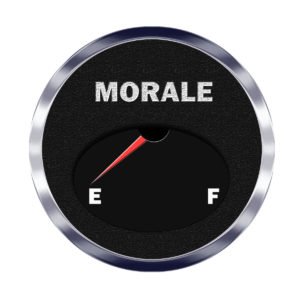
Ten Warning Signs of Low Morale in Your Church

Low morale rarely appears all at once. It usually develops quietly—shaping attitudes, conversations, and decisions over time—until a congregation feels stalled and discouraged. When these warning signs are recognized early, leaders can pursue renewal rather than resign themselves to decline.

Here are ten common indicators that morale may be slipping beneath the surface.


1. Ministry Turns Inward

Low-morale churches gradually shift their focus from mission to maintenance. Instead of seeing themselves as a channel of God’s grace to their community, they invest most of their energy in preserving internal programs and traditions. Over time, protecting the institution replaces participating in God’s redemptive work.


2. Vision Begins to Fade

As morale declines, clarity of vision weakens. Passion for ministry gives way to uncertainty, and people begin to question whether the church’s work truly matters. When emotional and spiritual energy runs low, change feels impossible, and the church drifts into organizational paralysis.


3. A Sense of Futility Takes Hold

The atmosphere in low-morale churches often feels heavy. Members quietly wonder whether their efforts are making any real difference. Expectations for fruitfulness disappear, and ministries continue without anyone seriously looking for evidence of impact or transformation.


4. Conversations Fixate on What’s Wrong

Instead of celebrating progress, answered prayer, or stories of life change, discussion becomes dominated by criticism. Meetings revolve around problems rather than solutions, and faults receive more attention than faith. This constant negativity drains hope and discourages those who are still serving faithfully.


5. Conflict and Personal Tensions Increase

Low morale both fuels and feeds conflict. As frustration grows, people search for someone—or something—to blame. Issues become personal, disagreements intensify, and relationships suffer. Rather than addressing root causes, members argue over symptoms and wound one another along the way.


6. Leaders Lose Their Joy

Leaders set the emotional and spiritual temperature of the church. When pastors and key leaders become discouraged, their loss of enthusiasm quickly spreads. Conversations shift from testimonies of God’s work to constant problem-solving, and the church enters a downward emotional spiral.


7. Attendance and Membership Decline

When morale remains unaddressed, people begin to leave. Newcomers sense the discouragement and rarely stay long, while loosely connected members drift away first. Each loss further discourages those who remain, reinforcing the cycle. By contrast, high-morale churches often experience growth that fuels even greater hope.


8. Ministry Becomes Mere Obligation

In a low-morale environment, service continues—but joy disappears. Volunteers serve out of duty rather than calling. What was once energized by love for God and neighbor becomes routine and exhausting. Ministry shifts from privilege to burden.


9. The Past Dominates the Conversation

Whether the focus is on nostalgic memories or unresolved hurts, the church becomes stuck looking backward. Talk of where God may be leading fades, replaced by endless revisiting of what used to be—or what went wrong. This fixation prevents the congregation from imagining a renewed future together.


10. Spiritual Perspective Is Lost

Ultimately, low-morale churches stop expecting God to work powerfully through them. Challenges feel overwhelming, resources seem insufficient, and faith shrinks. Instead of trusting God’s provision and power, the church adopts a cautious, short-sighted view of ministry that expects little—and attempts even less.


Moving Toward Renewed Hope

If these signs feel familiar, it does not mean the story is finished. It means the church is ready for honest evaluation and fresh dependence on the Lord.

Naming these patterns is not an act of despair—it is the first step toward renewal. As leaders and members acknowledge what is happening, they can repent where needed, ask God to restore vision and joy, and begin taking small, faithful steps toward renewed health and mission.

Low morale is not the end. With humility, prayer, and courageous leadership, it can become the beginning of new life.